Collect

Collect for the Fourth Sunday after Trinity

O God, the protector of all that trust in thee, without whom nothing is strong, nothing is holy: increase and multiply upon us thy mercy; that, thou being our ruler and guide, we may so pass through things temporal, that we finally lose not the things eternal; grant this, O heavenly Father, for the sake of Jesus Christ thy Son our Lord, who liveth and reigneth with thee, in the unity of the Holy Spirit, ever one God, world without end. Amen.
Showing posts with label Carmel. Show all posts

Wednesday, July 23, 2014

Surprised by Hope

I spent this last weekend at a retreat set up by the Gay Christian Network's Side B community.* There were about thirty people there, tucked into a surprisingly expansive resort ground in the Appalachian Mountains. Most of the community came from relatively near, though a few came from further off. Indeed, one of them, I am told, was a foreigner from the wilds of Canada.**


Pictured: A barbarian from the savage lands to the north.
(Though Seth Rogen wasn't there this weekend. That we know of.)

It was a fairly simple affair: meals cooked by a talented amateur chef of our party, some times in prayer, a hike, a few games (I still maintain that I should have won that first round of Cards Against Humanity). It felt rather homey; a feeling I don't often enjoy, and for which I thank the people who were there.

I'd been nervous about going. I don't generally do well in large groups unless I already know everybody there, and even then it isn't entirely predictable; in this group I think I'd previously met two of the people who would be there. Well, I drove down, genially cursing the bad reception. There was dinner, and some introductions, and we all talked casually for a while before going to bed. The hike was the next morning; we made our way through a surprisingly rocky path to a swimming hole and waterfall, complete with a fairly intimidating thirty-foot jump for those who wanted to try it. Rather to my own astonishment, I tried it, twice -- though both times I was only able to trick my brain into thinking that jumping was a good idea and totally not a thing that would make me die by shouting "I am titanium."


It's my coming out song.

All that time, and on the hike back, as I listened to the story of Vincent, a man of about forty, sharing his own very recent coming-to-terms experience, there was something unusual that I could feel. Or rather, the lack of something usual was what I was sensing.

At last, what it was hit me. I was sitting on the couch with Frank, another gay Christian blogwright, and I said something like, "I don't feel uncomfortable, and it's making me uncomfortable."

That, for me, is one of the primary elements of being a gay man: the perpetual feeling of otherness, of alienation even -- not necessarily hostility from the outside, but of needing to be alert and careful and on the defensive. It's so normal that I didn't even notice the feeling until it was gone; the way you can not notice an ache in your joints, until you take medicine for a cold and feel the ache go away. I'm so used to that subconscious feeling that this place is not secure that, when I finally came to a place where I was secure, I didn't know what to do with the feeling. There I was on the couch, taking huge gulps of breath, even crying a little, because I finally had some peace and yet was around people at the same time -- contrary to all of the default settings of my brain, which kept scanning for some kind of computation error. Suddenly being around people who understood, people for whom gayness did not require any explanation and Jesus did not require any justification, was almost startling.

That same feeling has expanded out into these last few days. It's just such a huge experience. Those forty-odd hours together with people who get it, didn't do justice to the magnitude of what it meant. I think it gave me an inkling of what the communion of the saints must be like -- total interpenetration of persons by knowledge and love together, pure intellectual light fulfilled with love as Dante has it. I wonder, too, whether some part of Purgatory may not consist in learning to lay down the habitual defensiveness we have here on earth, learning that it's okay to be simply receptive and open, that nothing There will harm us.

Witty readers may have cottoned on to the potential double entendres in the last couple of sentences. I am content that they should be there; we know well from St. Paul (and St. John of the Cross) that sexuality is, or can be, an image of the entry of God into the soul, tenderly and intimately filling it and bringing it both delight and fertility. I'm not at all perturbed by sexual images of the Divine operations, although, like every created thing, they are unlike God as well as like Him, and this fact must be periodically borne in mind.


Yet another reason to love Baroque art.

And, in the unusual abundance of hugs and even cuddles that I got while I was there, I discovered far more deeply, and wholesomely, what I thought I had already discovered through sex: namely, that sex, while awesome, is really not that important. It feels great -- barring conscience pangs and/or lousy performance -- but it is not, in itself, that fulfilling. Moralists and/or experienced lovers (by which I mean people who have experience in love, not people who have experience in sex) will tell you that often enough; but experienced lovers are hard to come by, and, to be blunt, moralists tend to give the impression of being experienced in neither sex nor love, and it can therefore be hard to take them seriously.

Part of the difficulty, of course, is that it is really hard to get enough touch in a culture like ours outside of a sexual context, and people need to be touched. More than once, I've had sex because I was starving for that, and I won't pretend it doesn't feel good to be touched all over in that way; but this past weekend, I found that the simpler, chaste, affectionate touch I received there was not only free of the pangs of conscience: it was orders of magnitude more fulfilling than sex. It was to illicit sex what a five-course meal is to a bag of potato chips. I got less touch there than I wanted -- chiefly owing to shyness on my part, I think -- and yet, I can still feel some of the effects of the refreshment it obtained me. It's kind of amazing.


One of the reasons that celibacy has been so hard to wrap my head around is that it feels like such a cop-out: the very tone of so many reassurances that "Celibacy doesn't mean living without love" sounds like someone trying hard to convince a pianist who's lost his hands that this doesn't mean he has to live a life without music. I had nothing concrete to connect those assertions of the possibilities of celibacy to, except the love I share with friends; and the brute fact is that, as good as that is, it isn't really the same thing.

But this past weekend, I felt that something more was hinted at: something more intimate and familial, without being at all more erotic or sexual. It wasn't so much that sex would have been "going too far" in that setting, but that it would have felt incongruous, irrelevant. I felt as if I could perceive, if only dimly, what it would be like to be happy without a husband. I feel as if God cracked my heart right open, there in the mountains, and started showing me things inside of it -- some of them nice things and some of them ugly things, all mixed up in a glorious, upsetting mess together.

I'm not surprised, though I am disappointed, to be jealous of my married friends; not that I resent their being happy, but that I'm angry and extremely apt to self-pity at feeling shut out of that possibility. My willingness to snatch at fleeting pleasures out of total despair of ever getting real and lasting affection may seem like a pitiable flaw, but my readiness to disregard the well-being of others in doing so is certainly not. Yet even in the midst of all that, it only took one graced weekend for the feeling of hope for something more -- hope, like gratitude, being something I can barely remember ever feeling in my life -- and that's heartening to me.

That hope is the strangest part of all of this. Faith I sort of get, and love perhaps more so; hope, I can scarcely understand or even desire. Having dealt with depression since I was a small child, having lost so many places and people that I treasured, having slogged my way back to the confessional with the same dismal sins over and over again, I'm so used to pain, defeat, and frustration that I literally do not know what to do with the glimmer of hope that I now have. It's a very scary feeling -- I want to smother it, so it can't trick me and hurt me. The idea that hope could actually be accurate, could be how God and reality really do work, can't even seem to present itself to my mind as a possibility. I suspect, too, that I have been misunderstanding my Carmelite guides for some time now, and interpreting the call to walk in the dark as a call (among other things) to try and do without hope, which is probably like trying to climb Mount Carmel without water.

I'm not sure where this leads. I'm inclined to think that the answer to the perplexities I find myself in with regard to celibacy may well lay in community life, although I must admit that that raises plenty of questions in its own right. For now -- for once -- I am content just to be a little grateful and a little hopeful.
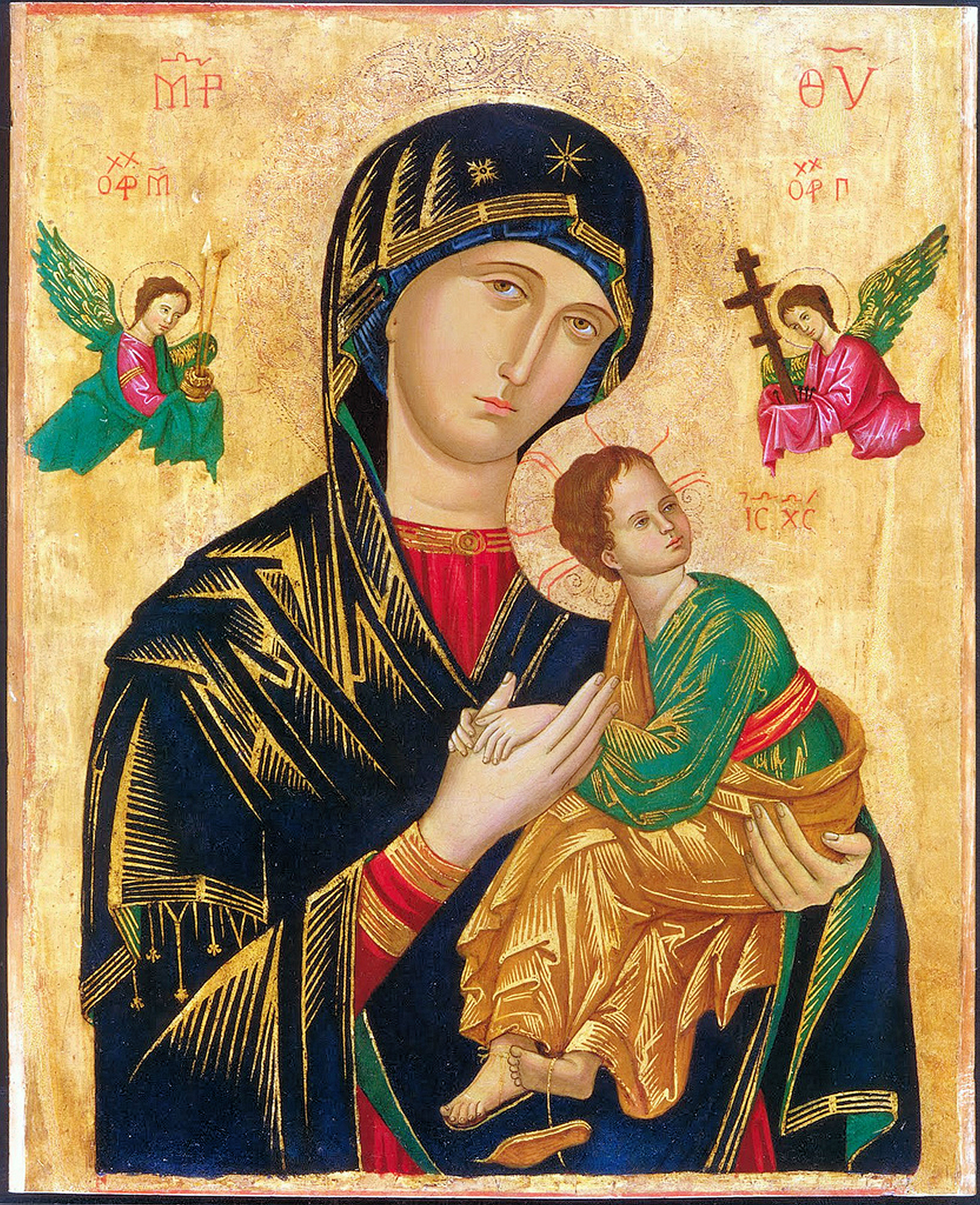

Vita, dulcedo, et spes nostra, salve.


*GCN, founded by Justin Lee (author of the excellent book Torn), has existed for about thirteen years now, and offers space to talk and share to all LGBT-identifying Christians, regardless of their denomination or their convictions on sexual morality. "Side A" and "Side B," terms inherited from the now-defunct Bridges Across the Divide site, signify the progressivist and traditional stances on homosexual behavior -- i.e., Side A believes that God does not forbid gay sex as such (though many do believe that it must be saved for marriage), while Side B believe that gay sex is not part of God's plan for human sexuality. GCN does not take a stance on this issue: the majority of its members are Side A, but the organization as such is primarily oriented toward community and mutual understanding, not towards promoting a specific doctrine of homosexuality, except that GCN does specifically reject the ex-gay approach.


**Not everyone who attended this retreat is out of the closet, for varying reasons, and I do not consider it my business to expose other people's private affairs for any reason whatever. I have been extremely careful in writing and editing this post to leave no tell-tale indication of the presence of any individual person other than myself (I have extended this even to people I know to be out, partly because there's less risk of mixing folks up that way, and partly because a person might be out to some people but not to others, out but not eager to be strongly associated with GCN, and so forth). Correspondingly, names other than mine are pseudonyms.

Thursday, July 17, 2014

Five Quick Takes

I.

I've been gradually starting to deal with the sin of anger (and its countless manifestations -- impatience, outbursts, punitive withdrawal, hurtful sarcasm) over the last year or so. Hitherto, my anger had been so thoroughly repressed that it almost never manifested itself in any form at all, except for gigantic outbursts of frustrated wrath separated literally by years.


Like this, but without the advantage of the stylish indigo pants.

Anger is extremely scary for me. It's horrible to anticipate, horrible to feel, horrible to remember. I hate it because it almost always has the feeling, and very frequently the real-world result, of distorting my perspective, and if there's anything I value, it is fidelity to the truth -- which is inseparable from a fair-minded perspective. However, as the ancient saying goes, that which Christ does not assume, He cannot redeem; hiding things from Him, whether by also hiding them from ourselves or not, does not unite us to Him but rather creates distance. Not by conversion of the Godhead into flesh, but by the taking of the manhood into God: the maxim that governs the Incarnation of the Deity also, and for that reason, governs the deification of our humanity.

+     +     +

II.

I have, after some guilty months of neglect, picked up my copy of Melinda Selmys' Slave of Two Masters, a Catholic treatment of the God-and-Mammon problem. I can't believe I put it off. It brought out one element of economics that had completely escaped me before, which I'd therefore like to quote here:
Once Eve was cursed to have Adam "lord it over her," which aspects of the human endeavor did he choose for himself? It is usually assumed that Adam took the better portion and left the dregs to Eve ... 
But what is it that women produce? Men, arrogantly desiring to claim all of the credit for human achievement, have habitually missed the glaring and inescapable fact that women produce men. Society economics, science, culture, knowledge, politics, and production are all just things that serve human interests; only human persons are ends in themselves. ... 
This has dire consequences for a society in which not only men but also women have rejected women's work in favor of economic accomplishment. John Paul II, in Mulieris Dignitatem, suggests that the increased participation of women in social, economic, and cultural life could serve to positively transform those areas in the light of "women's genius." Yet this can be accomplished only if women's genius itself is preserved -- and that genius is intimately connected to motherhood. 
The economics of motherhood is governed by very different principles than the economics of the marketplace. In domestic life, the stronger do not triumph, or even seek to triumph, over the weak. ... John Paul II expressed a hope that it would be possible to reform economics so that it could be fueled by such an engine of love and affection, rather than being governed solely by self-interest. 
-- Slave of Two Masters, pp. 6-8

+     +     +

III.


Our Lady of Mount Carmel by Pietro Novelli. 1641. The saints depicted below, from left to right, are:

Yesterday was the Feast of Our Lady of Mount Carmel. As I believe I've said before, she and the Carmelite Order are and have been very important to me: the poetry of Saint John of the Cross was one of my first exposures to Catholicism, and Saint Teresa, judging from what I have read of her writings, must have been looking after me for some time. She drives me nuts, mostly by being right.

One oddly persistent trend that I've noticed about the Carmelites is their propensity to attract Jewish converts. Saint Teresa (foundress of the Discalced or reformed branch of the Order), Saint John of the Cross (who helped her found the Discalced), Saint John of Avila (her spiritual director), Saint Angelus of Jerusalem, Venerable Augustine Mary, and Saint Edith Stein, to name just six, were all Hebrew Catholics -- to employ a phrase coined by another Hebrew Catholic who was also a Carmelite, Elias Friedman.


I rather like this trend. I have a drop of Jewish blood myself, though it's well over a century old, and, coming through my father, doesn't count anyway -- but I have always had a sort of irrational fondness for the Jewish people, so that the discovery of a personal connection (however tenuous) was extremely pleasing, and it was a weird and happy coincidence that the Carmelites should seem to forge another link. Why Carmel should have such a draw, I'm not sure, though I have a hunch that it has something to do with the profound theology of suffering and darkness that is a mark of their spirituality. The Jews being no strangers to suffering, I could understand how it would be more naturally sympathetic than some other Catholic traditions. But that's definitely a guess.

+     +     +

IV.

Cole Webb Harter, author of the Andalusian Peafowl, an Eastern Catholic (I think he's Byzantine? I don't know my Eastern Churches that well) pop culture critic and thinker, recently did a piece on the Anarcho-Monarchist politics that he and Tolkien (and I) largely sympathize with, as exampled on My Little Pony: Friendship Is Magic.

Fluttershy is the best pegasus ever and I will not be gainsaid. No matter how

He has since gone on to a piece on the implicitly Distributist economic system that prevails in Equestria, something that tends to go hand-in-hand with Anarcho-Monarchism. I was planning to plug his post anyway -- Catholic Anarchist bronies, being few, ought to stick together -- and the delightful tour de force of his continued analysis of My Little Pony from these perspectives, at once whimsical and really fairly convincing, is a further reason to do so. The fact that Anarchy is grossly misunderstood by most Americans, and that Distributism has sadly made so little impact in this country (despite being the sole economic theory with a serious claim to be endorsed by the Church), is a third reason for me to say: tolle lege, tolle lege.

+     +     +

V.

If you all who are the praying sort would pray for my roommate, I'd be very grateful. He is in his sixties and is planning to go in for hip replacement surgery, which had to be postponed on account of a bout of laryngitis. The surgery hasn't yet been rescheduled, though he did receive Unction this past Sunday. I'll be away over the weekend, so if you would pray for his health and spirits, and for a safe, soon-effected surgery and a swift recovery, I'd be grateful.

Tuesday, May 6, 2014

Untouched

This post is about how going to a gay bar may have saved my Catholic faith.

+     +     +


A good hustler knows that sex is important, but that contact with another human body is even more important -- it's something all people need at some times in their lives, for whatever reasons -- and it's hard to get enough of it.


-- Rick Whitaker, Assuming the Position: A Memoir of Hustling, p. 42

+     +     +

I've always been lousy at celibacy. I espouse the traditional Catholic view of gay sex because I think it's true, and I write about it because I'm the sort of person who's more or less incapable of shutting up, but I have no talent for it at all. It kind of makes me mad when people tell me I'm a good witness. The people who criticize me as a hypocrite, I can understand rather better than the people who idolize me.

I started having sex when I was thirteen. Well, sort of. I've written about this a little bit previously, though, for a multitude of reasons, not in great detail (the previous post is here; be warned that it may be triggering for victims of trauma). Long, hideous story short, I was seduced and raped by a man about six years older than me. Nobody knew, and nothing further happened, for years; then, when I was sixteen, we started surreptitiously meeting up. The third time, we were caught.

Partly in response to all of this, and partly for other causes, I was way too closed off as an adolescent to actually, you know, relate to people in any way. I hardly had any friends until I was seventeen, when I started college.


"Friends? Ha! These are my only friends -- grown-up nerds like Gore Vidal, and even he's kissed more boys than I ever will."
"Girls, Lisa. Boys kiss girls."

During my closed-off period, it was fairly easy not to sex anybody. I mean, I didn't know anybody except other Christians, really, and I certainly didn't know anybody who was openly gay. Whether that counts as being good at celibacy I don't know; I'm inclined to think not. Probably it doesn't much matter.

At any rate, that situation didn't last. Since converting to Catholicism (accompanied by the usual fervor, which made things considerably easier for a while), I have experienced a strange mixture of things that have made even trying to be celibate a lot harder: loneliness and the wounds of loneliness, the incessant pressure of libido, resentment at the obligations of chastity (not very creditable I know, but there it is), trying to reclaim the personal power that was taken from me in the rapes, they all play a role. But one of the things I feel most strongly is the simple, unreflective hunger to be touched. Not touched in some metaphorical or emotional sense. Simply touched. There are definitely times when I've had sex, not because I was all that horny, but because I was starving to be held.

+     +     +

I lived, for a while, as if repressing certain things was not only acceptable but somehow deeply appropriate. I had a mounting feeling that my life had become sufficiently corrupt that there was a kind of justice in my decision to disregard my feelings and my thoughts. I had done enough thinking, enough feeling, enough believing in the myths of progress and self-development and emotional work. The bets I had placed on myself -- as a writer, as an intellectual, as a loving and lovable human being -- were not paying off. It may have been vainglorious to have expected satisfaction in my twenties, but I was genuinely disheartened at the time.

-- Assuming the Position, p. 40

+     +     +

Catholicism is, in my judgment, the only religion for the demimondaine. The doctrine of justification by faith alone, in making good works to be solely the evidence of salvation, was meant as a comfort, but turns for the likes of me into despair; for, if the mark of true faith is an increase of righteousness, what then becomes of the sinner who goes on sinning? Who perhaps suffers many things of physicians, and spends all he has, and is nothing bettered? Even Luther and Cranmer had more sense than to do away with the confessional, and that, much though I owe to Calvinism, is more than can be said of Calvin.

It's often pointed out that the Catholic Church, far more than Protestant bodies, tends to contain a significant proportion of people whose practice of their faith is inattentive, superstitious, or nonexistent. Protestants would have us believe that this is a bad thing. I came in the end to see this as one of the strongest arguments in favor of the Church: namely, her power, in Msgr. Knox's phrase, to retain the affectionate loyalty of the erring; and her tendency to prove ineradicable from any soul that has once been stamped with her imprint. The only religion I can think of with a similar staying power is Judaism.

But it isn't only that Catholicism, in the sacrament of Confession, offers the assurance of individual forgiveness (something that statements of God's-love-for-sinners-in-general-and-therefore-for-oneself, if I may trust my experience, entirely fail to do*). It isn't even only that Catholicism allows that the soul is purified by love and not by intellectual belief alone.**

It is that Catholicism is intrinsically, in a way that few forms of Protestantism -- and very few other religions except Hinduism -- really are, a religion of the body. The Church's attitude to the body has often seemed ambivalent; it is full of unruly passions, which make the sort of people who are likely to become priests (in many religions) rather uncomfortable, and not least when they feel the force of those passions as much as the next man. But her belief about the body, that it is good -- that, in fact, God Himself took on a Body, and that that Body came from a body at once untouched and fruitful, and that Body infuses its own being into our bodies and souls by the bodily means of the Blessed Sacrament, so that spiritual coinherence itself coinheres with physical coinherence -- that belief has always been an unwavering touchstone of orthodoxy. Its persistence even in the face of the grimmest ascetical mood is what distinguishes the Catholic monk from the Gnostic perfectus or the Buddhist boddhisattva.


Behold My hands and My feet, that it is I myself: handle Me, and see; 
for a spirit hath not flesh and bones, as ye see Me have.

It may seem strange to call that a comfort and a reassurance to someone who, like me, seems to be a misplaced child of the Flytes. You would think it would make me more frightened and ashamed over my continual sins of the passions: the exalted significance of the body surely increases the gravity of such sins correspondingly. But comfort it is; partly because, by being a religion of the body, Catholicism is also a religion of beauty. Our own age may not be conspicuous for producing it, but Catholic art -- architecture, music, ritual, literature, poetry, painting -- is astonishing to me in its richness, its diversity, and its power to move the soul; beauty ever ancient, ever new. And participation in that beauty is something that I can do, however imperfectly, even when my attempts at chastity are a complete shambles.

God's curious fondness, during His earthly life, for whores, barflies, and assorted rowdy nogoodniks is a reassurance too, of course. It is, or rather ought to be, impossible to feel quite comfortable with a spirituality that is thoroughly respectable. I cannot quite articulate why the two things -- the splendor of Catholic beauty, and her hold upon thoroughly disreputable people -- seem so firmly connected in my mind, aside from the fact that the one phenomenon is surely a reason for the other. It may be simply that both are bodily: the vividly material glory that makes a monstrance, and the vividly material passions that make a demimondaine.

+     +     +

Some people, if not all of us, need to be fucked hard once in a while, both physically and figuratively. We sometimes need to prove to ourselves, somehow, that we are free, in some sense, from responsibility and from civilization. Most of us are embarrassed by this need, because it seems like an expression of weakness. Certainly I am weak -- to an extreme degree. I long to feel, if only for a moment, that whomever it is that is responsible for all the chaotic business of life, it's somebody other than me.

-- Assuming the Position, p. 154***

+     +     +

The first time I ever went to a gay bar, the total experience -- the decision to go, being there, and the aftermath -- vividly exhibited the strange confluence of sensuality and spirituality I find in myself. I don't think it's intrinsically wrong to go to a gay bar: it depends on your motives for going; but, I wasn't going there to hand out tracts.


And honestly, if I had brought any tracts, they'd probably have looked like this.

The morning after -- but that phrase is so tangled in associations; it instantly calls to mind tangled sheets full of dubious fragrances, a series of gravely paradoxical or at best mysterious memories, and an intense desire that all nerves from the neck up cease relaying any light- and pain-related messages to the brain. But I digress. The morning after, I had thought, I would be crushed by shame, guilt, and fear. Or worse, I'd discover that I simply didn't care anymore -- that my conscience had just been suddenly pulled out of me, like a bad tooth.

Neither happened. That morning, a Sunday, I felt a huge, mysterious sense of gratitude. To God. And this was shocking, not just because it was the exact opposite of anything I had expected, but because, to date, I had almost never felt grateful for anything.

Why that is, I'm not sure (though I suspect it had a great deal to do with the duty of gratitude to God having been firmly impressed upon me from a young age: as C. S. Lewis pointed out somewhere or other, an obligation to feel can freeze feelings). What I was grateful for is hard to articulate, even to myself; it had partly to do with -- there's no point denying it -- having seen a lot of male beauty the previous night, and having been thrilled by it. That response had a great deal of lust in it, but I don't think it can be simply resolved into lust and so summarily dismissed. There was, too, the element of sheer relief in not fighting the theoretically good, experientially dismal and exhausting, fight, if only for a few hours.

There was, too, as a priest I spoke with about the matter later said to me, a new level of self-acceptance involved. The way I held myself, the way I talked, was completely different afterwards: there had always been a stiffness, a frigidity, in all my mannerisms before then, and now, I was just talking. And it wasn't about sex -- that night I hadn't had any. It was just ... you know, I still don't know what it just was. But somehow or other, that night, I made peace with being gay.

Part of that peace was a recognition that accepting myself wasn't incompatible with my beliefs. Most people will take this to mean that simply being gay isn't against Catholicism, and provided all our terms are properly defined, that's true, but it isn't what I'm talking about. It is, rather, that the truth of Catholic teaching and the sincerity of my belief in it, weren't dependent in the slightest upon my behavior. Somehow I'd never digested that fact before. Call it a relic of sola fide, maybe, but I'd been haunted by the fear that my works and my beliefs were tied together in such a way that if I didn't behave myself, I'd become intellectually dishonest. I discovered that night that that wasn't true at all; that the truth remained unblemished and solid whether I heeded it or not. That was a moment of deep liberation. I had feared before, subconsciously, that the truth was something my mind was generating. I knew now that it was real. And it's truth that I want the most.

I have been slowly making my way through The Life of Saint Teresa of Avila by Herself for several months now, and one thing about her writing has impressed itself on me strongly. She spends a lot of time talking about how wicked and foolish she was, and how astonishingly generous it was on God's part to shower favors upon her in the form of consolations, visions, and the like. At first I just thought of this as a sort of pious convention, because many of the saints talk about their own sinfulness, and the rest of us snigger and say, "Yeah, you were just terrible for not even entering a convent until you were fourteen, how could you live with yourself?"


Would you believe this jerk was never even martyred? What a lightweight.

But somehow or other -- I rather think she obtained this grace for me herself; the Carmelites have been looking after me for some time -- it occurred to me to wonder, What if she's just right?

For of course that alters the picture quite drastically. If, by some odd twist of fate, the great saint was not an idiot nor afflicted by a very morbid false modesty, and was, if only periodically, as wicked and silly as she professed to find herself, suddenly God's behavior toward me made a great deal more sense, and was a great deal more encouraging. I didn't and don't claim to thoroughly understand why going to a gay bar should have been followed by an overwhelming sense of love and intimacy with God, but what if He just chose to take an opportunity to show me that He loves me? And what if He did so, not because I deserved it, but because I needed it? Was that really totally incredible?

And the more I think about it, the more it makes sense. I was resorting more and more, as people of a religious temperament so chronically do, to what St. Paul calls the law in his letters, and what Victor Hugo depicted in the character of Javert: the habit, so engrained that it becomes a kind of belief, of putting one's confidence in one's own obedience -- justice without charity, virtue without grace. But that kind of obedience walls the heart against God still more thoroughly than against vice; and in breaking down the wall to admit a vice that was, at the same time, so bound up with a legitimate need, God too came into me.

And conversely, if Saint Teresa and the rest were right about themselves, and God used them gloriously anyway, perhaps I don't need to be quite so self-conscious. Or so egotistical, either.


*Far be it from me to suggest that a doctrine is true or false based on whether or not we find it practical or comfortable. I would suggest, however, that insofar as God made the human heart and understands how it works, we may expect Him to work with it rather than against it. On those grounds if on no others, we might consider the longstanding interpretation of such Scriptures as John 20.21-23 that is common to the Catholic and Orthodox Churches, and is the only recorded Christian view until the Protestant Reformation.

**Which is all the rejection of sola fide meant, if you read the canons of the Council of Trent. This is part of why Pope Benedict, former head of the CDF, was able to say to a synod of Lutheran bishops that the doctrine of sola fide as understood by Luther, i.e. faith inseparably united with love, was strictly compatible with Catholic orthodoxy. It is also presumably what St. James meant when he said in no uncertain terms that a man is justified by works and not by faith alone.

***I wouldn't like to leave the mistaken impression that, in quoting this, I am giving either this particular passage or the book as a whole my unqualified approval. What I am indicating is my recognition of the same impulse and feeling within myself, along with a hunch that it's a common craving among human beings.

Saturday, November 2, 2013

Raw Tact, Part X: Agony, Ecstasy

I've been struggling a lot with depression over the past few weeks. What would have been my anniversary with my ex-boyfriend came up late last month; work has been running me into the ground; and I'm feeling like a real moral no-show -- alternating fits between unchastity and anger, with the occasional nervous breakdown for flavor.


Regrettably, adorable drunk lesbians formed no part of any of this angst.

2013 has been a rough year: a dear friend of our family died, my youngest nephew was born nearly two months premature, one of my sisters had to have her thyroid removed, my car (as of today) is in the shop for the third time in six months, Brett Ratner is still alive.* One of the things I've found disappointing and disconcerting is that, in all of this, my main focus has been on Me: My pain, My loneliness, My holiness, not only in contrast to all the suffering people all around me (that is, everybody), but even in contrast to my family and my friends. In one sense I take that to be a good thing -- I mean, that I'm increasingly aware of my selfishness. Saint John of the Cross says that one of the illuminations Divine grace gives us is an awareness of our imperfections, so that it seems at first as though we are losing ground, simply because we're seeing shortcomings that had escaped our notice before. "Dark with excessive bright Thy skirts appear," Milton says of God somewhere in Paradise Lost** -- the light is so brilliant that, until our eyes adjust, it causes blindness rather than sight. At least, I sure hope that's what's happening.

The question of why I would remain a Catholic through all of this, when I could greatly simplify things by, at the least, renouncing the Church's teaching on sexuality, has been posed to me more than once -- not only by others but by me. The simplest answer is that I'm persuaded that the Catholic faith is true, and with that comes the conviction that the Magisterium is reliable. Any dissent from the substance of her teaching on my part would be intellectually inconsistent, and, for someone built like I am, knowingly engaging in intellectual inconsistency would be the height of dishonor. I can be a whore, and that's one thing; but being a liar -- that would be a far deeper violation. It would remove the conditions by which I am able to sin and still repent, and I need those to function as a Christian. Even, perhaps, to function as a man.
"You think a wife might feel sensitive about her husband's honor -- even if it were sacrificed on her account?" said Miss Stevens. "Well -- I don't know." 
"I should think," said Miss Chilperic, stammering a little in her earnestness, "she would feel like a man who -- I mean, wouldn't it be like living on somebody's immoral earnings?" 
"There," said Peter, "if I may say so, I think you are exaggerating. The man who does that -- if he isn't too far gone to have any feelings at all -- is hit by other considerations, some of which have nothing whatever to do with ethics. But it is extremely interesting that you should make the comparison." He looked at Miss Chilperic so intently that she blushed. 
"Perhaps that was rather a stupid thing to say." 
"No. But if it ever occurs to people to value the honor of the mind equally with the honor of the body, we shall get a social revolution of a quite unparalleled sort -- and very different from the kind that is being made at the moment."***
But there's something else going on, too. Something I don't understand, except that I sense its presence, and it is not simply intellectual; it's deeper than that (by which I don't mean it is emotional -- as important as emotions are, they are not more core to a person than the mind, just different). I certainly haven't got the strength, and don't know whether I will receive the grace, to continue on the path of celibacy. But, deep within, something is happening -- God is doing something in the dark.

Man, this guy. He really knew what was up.

Why remain here in the dark -- without hope of marriage or children or earthly happiness or simple rest? So many answers pop up, even within the doctrinal framework I accept, that I just can't espouse: like You could still get married some day, or Everyone experiences loneliness, but it passes, or Celibacy is a beautiful gift from God -- you can do so many things as a celibate that married people can't, or You can adopt, you know, or ... the mind swims in a sea of meaningless encouragements. 

Meaningless, not because any of them aren't true in fact, but because none of them are what I want. When a man wants water, explaining to him that he can have as much steak as he likes is not likely to console his thirst. And what I want is a husband.


And that, on Catholic premises, I cannot have. Not even "am not allowed to." It just plain isn't possible.

I'm sure (on the basis of my theology) that there is some -- how can I put this -- some legitimate meaning in that desire, which I can have; but I don't really know what it is. I have for many years repudiated the ex-gay explanation that it is a confused mixture of the desires for a father, for male friends, and for a wife (because when you put all those roles in a blender, a husband comes out, obviously). Yet in this confusion and uncertainty, I can sense something happening, some activity of God's. I don't get it, and I don't sense it all the time -- in fact, more often than not, I'm simply unhappy. But when I do sense it, it is unmistakeable.

It would be very easy to interpret all this as comforting self-delusion, built to protect me from the vulnerability of a relationship or the risk of questioning my theology. Given that I'm a convert to Rome who passed through Calvinism, atheism, and witchcraft first, and that I've had gay relationships and gay sex, I do not find that way of reading the facts convincing; but you could read them that way if you insisted. What is at least equally interesting is that one can put the shoe on the other foot and read a lot of the LGBT movement as showing signs of an elaborate evasion of God**** -- not so much in its deviation from traditional morality or the explicit irreligion of some of its members, but rather, in its determined exaltation of romantic love as something almost like salvation. And that, I think, is something that a lot of us can sympathize with, gay or straight. Apart from Divine grace, it is called "idolatry," which is open to people of both sexes and all sexualities. With grace, such love can become something more like an icon of salvation, a means of approaching the Creator through the created -- as Dante did with Beatrice.

But I digress. (Maybe.) The point is, such suffering, and being in the dark about it, are not necessarily signs that God is absent, or uncaring, or trying to nudge me to go in a different direction. Christ Himself, in His agony in Gethsemane, shows us that. What God is doing, I don't know, and I don't know what comes next, nor how I will fall and fail. But my faith is in Him and not myself; if He knows, then the person who chiefly needs to know knows. Consoling? Occasionally. The point, whether consoling or not? Yes.

And when I do feel it, when I do receive consolations --


*Yes I'm still angry; the franchise started so well with X1 and X2, whatever their fridge-logic flaws. And then X3 was -- well, "Everyone says forgiveness is wonderful, until they have something to forgive," C. S. Lewis said.

**I don't know where, because the only place I recall reading this line is in Lewis' Preface to Paradise Lost -- oddly, though I have very little taste for Milton, I find Lewis so engaging as a literary critic that I read his commentary over and over again, at least once a year.

***Gaudy Night, pp. 376-377, by Dorothy Sayers, who was incomparably wonderful in all the ways. This is one of my favorite novels, of hers or anybody's, and gave me a clarity about the interplay of heart with intellect and about discernment that I have never gleaned from any deliberately spiritual manual.

****It should go without saying (but regrettably doesn't) that this would not apply to those Christians who, for theological reasons, take a different view of sexuality, like Justin Lee or Matthew Vines. That is also an important dimension of gay-Christian interaction; but it is a different one.

Monday, September 9, 2013

Raw Tact, Part VII: Wilderness

When I gave up on chastity, a couple of years ago, it hardly felt like a choice at all. At any rate, it didn't feel like a meaningful one. It wasn't that I didn't perceive the gravity of the issue, it was that trying to be chaste quite simply didn't seem possible any longer. I had tried, and I had failed, so often and so thoroughly, that it seemed less immoral -- and less dangerous -- to at the least seek a monogamous and meaningful relationship.


Because, deep down inside, we all want a chance to show that special someone what boredom really is.

I can't really tell whether I've resumed the attempt at chastity now. I suppose I have. I mean, I'm trying to not have sex with guys, inside or outside any relationship. But the reasons I'm trying, and the form that trying now takes, are so alien to me that I don't even know how to classify them. And I'm not saying that as a clever, authorly way of conveying how real virtues are never what they look like from the outside (though that doubtless is also true). I really mean that the strange conglomeration of motives and decisions going on inside me -- they hardly feel like they're morally oriented at all. Even if they were to result in total abstention for the remainder of my life,* talking about these choices in terms of practicing virtue doesn't feel natural.

The thing, I think, that is hardest about the intersection of factors that I and men and women like me find ourselves in -- homosexual, Christian, evidently not called (for the foreseeable future, anyway) to marriage, and apparently not called to the priestly or religious lives -- the thing that seems hardest about it, sometimes, is the shapelessness of it. 

It's easy to feel frustrated and left out, socially and emotionally as well as sexually, when your friends are getting married in droves and having children, and you know you can't -- or at least not without a radical reworking of your personality. A lot of straight Christian readers will want to leap up at this point and say that that's exactly what God's grace and growth in holiness do, is to radically rework your personality. But sit back, for a moment, and try to imagine what it would cost you to enter a way of life in which most of your relational instincts, and nearly all of your sexual ones, are aimed at something that isn't there, and have to be redirected toward a radically different pattern.


No, not that pattern.


... Closer?

Well, what about celibacy? What, indeed. Some of us have callings to the priesthood, or to become consecrated brothers and sisters, yes. But they are always a minority of a population, and being gay is not a mark of that sort of vocation, any more than not having a visa to visit Canada makes you likely to be heading for Mexico. They might coincide -- but it would only be a coincidence.

The catch in that is, most of the structures that support celibacy in the Catholic Church are precisely those structures of the priestly and religious lives. Lay celibacy has long existed in the Church; one thinks of Cordelia Flyte in Brideshead Revisited, who speaks of both her brokenly alcoholic brother and herself, an ex-postulant from a community of nuns, as being "odd hangers-on" who don't quite fit into either the world or the cloister. It makes me wonder whether this is, or was, a more peculiarly European (or at least Old World) phenomenon, as I don't know that I've seen it in America. I have been seeking guidance on living as a lay celibate for years, and thus far, nearly all the advice I've run across has consisted, in substance, of "Make friends." Gee thanks.

But it's more than a lack of guidelines, a lack of forms or rules. Those things, rather, are symptoms of a more general feeling of lack: the lack of a positive choice. As someone -- well, it may not be very holy of me to feel this way, but as someone who has more or less been backed into celibacy by the dissonance between my erotic desires and my religious convictions, I haven't really felt that I was choosing something that existed in its own right. I've only felt the No: not marriage, not priesthood, not monasticism. I haven't felt the Yes, the decision to embrace something with a specific character, a shape of its own.


"Behold the handmaid of the Lord: be it unto me according to thy word."

Cardinal O'Brien, the previous Archbishop of Baltimore, said that young people would give their lives for a mystery but not for a question mark. In pursuing celibacy as a gay Catholic layman, I very much feel that I've been offered a question mark.

It didn't have to be this way. I think that for our "grandchildren," or perhaps some generation further off than they, it won't be: that the accumulated experience of adaptations, mistakes, innovations, and sufferings will have formed a treasure of wisdom that will be equal to mapping this part of the wilderness that is God -- no longer a question mark, still a mystery. But right now it is this way. Right now it seems to be an embrace of something with no shape, a trek in a wilderness that has no roads.

And really it's the future I'm scared of. Few individual moments are unbearable. One reaches the occasional breaking point; and then you break, or mysteriously don't. But it's the prospect of a whole life spent this way that is so intimidating. The remorseless, incessant transitions, the sense of losing friend after friend to a marital or religious life that you can't share or even, really, understand, the feeling that everybody got a real vocation except you -- illusory, to be sure. Unfortunately that knowledge doesn't help much. Or rather, it strengthens without consoling; like a nutritious, flavorless meal, with just enough to quiet hunger pangs and no more. A flavorless meal -- a small, flat disc of white bread, the tiniest sip of wine; just enough. And that being suspended with just enough is really scary, because what if it stops being enough? What if it isn't there next time?


From Hyperbole and a Half, "Depression, Part Two" by Allie Brosh

As so often -- I have no answers, and therefore offer none. I categorically refuse to cite some sanctimonious moral about faith making everything better. That's not what faith is for, and it is most certainly not what faith does. The most I can do is say, with Job, that Though He slay me, yet shall I trust Him -- but with same uncomprehending agony in the background, or rather in the foreground. (How strange that we modern Christians have managed to turn, of all things, the book of Job, that collection of saintly blasphemies, into a source of cute bumper sticker quotations.)

*Fat chance of that. God is admittedly a worker of miracles, but it'd take a miracle for me to be that successful at chastity, and He doesn't generally seem to send miracles merely to accommodate His children's spiritual convenience.

Monday, April 29, 2013

Out of the Whirlwind

I did warn you that I wouldn't whitewash things.

Not so long ago I posted an essay, drawing on some time praying and journaling, in which I talked about reconciling myself more deeply to celibacy. Like most of my posts about growth in virtue, it was ambitious, hasty, and overrated my ... well, most things.

It's been a year and a half since I had any serious belief that celibacy was a viable option for me. I believe as firmly as I ever have that celibacy is right; but that is a rather different matter. Perfection is always right, and always unattainable; save by the strange graces granted to those who, in some fashion, seem to compel the generosity of God in a way that I do not understand.

People will say that such graces are available to anybody who wants them. I shall say boldly that in my experience, that simply isn't true. To be blunt, I think it is wishful thinking, not sound theology. I challenge anyone to do as much as I did to bolster my chastity -- Mass, daily prayer, Confession, the Rosary, scapulars, icons, the Angelic Warfare Confraternity -- and lose as much ground, and as persistently, as I did at the same time I was doing these things. I was told that chastity would become easier as I formed good habits, and that prayer and the sacraments would foster these habits and transform my life. I was told I'd get stronger. I got weaker instead -- more and more exhausted, more and more unable to cope with the pressures of sex and loneliness and misunderstanding. And, because of that, increasingly confused and in pain that God was not helping me like I was told He would.

This is the part where I'm supposed to say something about an epiphany in the confessional, or discovering the saint whose intercessions finally changed everything, or the indispensable support of my friends, or joining Courage, or a light about God's mercy not depending on my efforts breaking on me. And after that everything was (apparently) easy. I have nothing of that kind to offer.

I try not to resent those who do have such things to offer; I am glad that their pains have been relieved. And, while I dare say some of them are being dishonest, I don't automatically assume that about anybody -- it is a very terrible thing to accuse someone of lying, especially about a matter of such grave importance as their relationship with God, and I don't do that lightly. But I would be lying if I set forth a pious conventionality instead of the naked truth, and the naked truth is that, in the thirteen years since I realized I'm gay, it has gotten gradually harder the whole time, no matter what I have done, and no matter what I have asked for from the Lord. And I do think that, whether it is intended or not, the message that those sorts of conventional Aesops send -- that if you just do this one thing, regardless of what this one thing is, you'll experience victory -- is a false and pernicious message.

Nevertheless I don't doubt His goodness. Nor do I seriously doubt the Church's teaching about homosexuality. Is it so very shocking that an infinite being should choose to do something I don't understand? He's done it before. When the Lord answered Job out of the whirlwind, it was with terrible irony and not with answers. Why, I don't know; but Job was strangely satisfied, and I don't find that answers are what I need to be satisfied as Job was. Not right now, anyway.

St. Teresa of Avila is one of my favorite saints, and one of my favorite quotes from her is also one of the quotes I hate the most in the whole world. She said -- I don't know when -- that You must learn to bear for God's sake the trial of being displeasing to yourself. I've been wrestling with that sentence for the last two years, with ferocity and anguish; it has dislocated my hip with a touch. I can't understand it, or am only just beginning to. I can never make up my mind whether it's pride or just a lack of wisdom that makes this saying so dark to me. Maybe it's both.

And where does that leave me, exactly? If what I'm really being taught through this agony of failure after failure is patience -- with God's timing, and with myself, since I suppose I haven't much call to be impatient with me if God isn't -- then, with respect to chastity, what should I be attempting? A celibacy I know already, from a decade of bitter experience, I cannot do? If I'm going out and sleeping with men regularly anyway, is it really better not to get into a relationship, that would at least have the merit of being a humanized experience of sexuality? Why is that a compromise, but years of fruitless attempts are somehow heroic, despite the damage it does to other people -- that damage being exactly what a relationship would avoid? Is it even psychologically possible to try to do the impossible? I don't try to fly by flapping my arms, nor could I, because I know I can't (no seriously, trust me, nobody wanted to fly more badly than I did when I was little).

I have no answers. Therefore I offer none.

Monday, March 11, 2013

Small and Powerless

I went to see Oz the Great and Powerful this weekend. It wasn't terrible: the dialogue and directing were poor, but it had some cute shout-outs to the original sources, and a few outstanding moments of its own, such as (it's near the beginning, so don't need to yell at me) a scene where the wizard, having begged heaven for another chance at life when he thought he was going to die in the tornado that took him to Oz, on realizing that he has landed in one piece, laughs with joy, points skyward and shouts merrily, "You will regret this!"

The total message of the movie was faintly reminiscent of the themes of belief in The Santa Clause, though I think that film did a much better job on most counts, and it also delivered its moral more intelligently. Oz leaves the viewer with the impression, not quite of an end-justifies-the-means mindset, but of an "It came out all right, so we must have done the right thing!" mindset. The former would seem to be the cynical incarnation, the latter its naive counterpart.

This isn't at all unique to that film, or to art in general; it is a (though certainly not the) motive force in our culture -- a sort of pragmatically retrospective optimism. It is a close parody of a number of more creditable attitudes (such as making the best of an admittedly unjust or unsatisfying situation), and is one of the flowerings of the pragmatic element of the American psyche -- the worship of success.

Whether in its naive or its cynical forms, I take success-worship to be essentially opposed, not only to Christianity, but to common sense and human happiness. That cynics are not happy, and that naive optimists are not sensible, seems like a truism. Really both parties are neither. The cynic, who reduces everyone else's motives to either stupidity or self-interest, is just as unintelligent as the naive optimist -- indeed, he is often an optimist who has been soured -- the thing that has changed is the direction in which he oversimplifies, not whether he does so. And the naive optimist may seem happy; but is he? Naivete (not to be confused with purity of heart) is always the result either of immaturity or of stunted growth. Any growth as a human being will come at the cost of that naivete, though not necessarily at the cost of his goodness: the only way to remain naive is by deliberately resisting that growth, and -- "We cannot go on being ordinary, decent eggs. We must be hatched or go bad."*

I rather think that this is one of the things that makes the virtues so hard. We have been sufficiently affected by the surrounding culture that we import its success-worship into our view of growth and holiness. Take fasting. I have been a Christian for as long as I can remember (with one exception that need not detain us now), and yet it is really only within the last year or so that I have begun to practice fasting with anything resembling regularity. Why? Because it's so hard -- so hard that I thought, surely, if God wanted me to fast, it would be easier. Surely doing the right thing would come with -- not instant gratification in the vulgar sense, but at any rate instant interior gratification, instant assurance of rightness and consolation and all of that. Surely it would work!

But of course that isn't how reality is. Donald Miller, in one of his books (Searching For God Knows What, I think), recounts a friend saying to him, "Reality is like a fine wine. It will not appeal to children." An adult spirituality, suited to a corrected palate, is the desideratum: and an adult palate knows not only the milk and the honey of the promised land, but the myrrh and the vinegar of Golgotha. And that does not only indicate repeated hardships, but repeated failures on our part, something I have been grappling with in great anguish over the last two or three years. The choice between settling for the quite livable compromise of mere social decency, and being bad at an attempt at real holiness, is a humiliating one: in either case, you must make peace with a kind of inferiority in yourself -- either you know that you have deliberately refused a greater glory, because it is too shaming to be continually confronted with the ways in which you fall short of it; or you embrace that continual confrontation, and feel the repeated sting of being so far beneath the heroism you aspire to. Either you must know that your heart is too small for a great ambition, or your powers are too small for a great heart. For years, much though I love the saint, I bitterly hated St. Teresa's maxim, but I am starting to grasp it more of late -- here, so applicable: "You must learn to bear for God's sake the trial of being displeasing to yourself."

*C. S. Lewis, from Mere Christianity.