Collect

Collect for the Fourth Sunday after Trinity

O God, the protector of all that trust in thee, without whom nothing is strong, nothing is holy: increase and multiply upon us thy mercy; that, thou being our ruler and guide, we may so pass through things temporal, that we finally lose not the things eternal; grant this, O heavenly Father, for the sake of Jesus Christ thy Son our Lord, who liveth and reigneth with thee, in the unity of the Holy Spirit, ever one God, world without end. Amen.
Showing posts with label natural law. Show all posts

Monday, May 7, 2018

Men and Monsters, Part II

Anybody can enact that murder shall not be punishable by death; nobody can enact that the swallowing of a tumblerful of prussic acid shall not be punishable by death. In the former case, the connection between the two events is legal—that is, arbitrary; in the latter, it is a true causal relationship … When the laws regulating human society are so formed as to come into collision with the nature of things, and in particular with the fundamental realities of human nature, they will end by producing an impossible situation which, unless the laws are altered, will issue in such catastrophes as war, pestilence, and famine. Catastrophes thus caused are the execution of universal law upon arbitrary enactments which contravene the facts; they are thus properly called by theologians, judgments of God. …  

At the back of the Christian moral code we find a number of pronouncements about the moral law, which are not regulations at all, but which purport to be statements of fact about man and the universe, and upon which the whole moral code depends for its authority and its validity in practice. … If they are true, man runs counter to them at his own peril. He may, of course, defy them, as he may defy the law of gravitation by jumping off the Eiffel Tower, but he cannot abolish them by edict. Nor yet can God abolish them, except by breaking up the structure of the universe, so that in this sense they are not arbitrary laws. We may of course argue that the making of this kind of universe, or indeed of any kind of universe, is an arbitrary act; but, given the universe as it stands, the rules that govern it are not freaks of momentary caprice. 

—Dorothy L. Sayers, The Mind of the Maker

✠ ✠ ✠

At first I’d been thinking of beginning with the sociological side of my first post; however, my language of divine judgment provoked more reaction than I’d expected, and anyway, on reflection it makes far more sense to begin with the spiritual. That spiritual side of things is the suggestion I made, or the suspicion I harbor, that the United States is a nation under judgment, due very largely to the war crimes of which we are historically guilty—but that notion needs a lot of unpacking.


To begin with, let’s consider what is meant by judgment. Usually, the image this summons to the imagination is one of God-as-cranky-old-man hitting people with bolts of smite because they’ve annoyed him in some way. This image actually does have a good use, to which we shall return later, but for the most part it’s stupid and terrible, and most of what it says to our minds and emotions should be discarded without hesitation.

A proper understanding of judgment is, rather, grounded in God’s character as the Creator, and the corresponding integrity of creation. In making the universe, God made an ordered reality, a universe in which cause and effect relate to one another in regular harmony. Why he did this is a question I can’t answer with certainty, and I have a hunch that it’s secretly nonsensical, like asking what the shape of yellow is, or whether eleven is solid, liquid, or gas; if God the Son is the Logos, then order is grounded not just in the choices, but in the being of God. At any rate he did make an ordered universe, and creatures like ourselves that not only rely on order to exist, but can’t even really imagine a world without it. The closest we can get is by mixing known elements of our world at random, but even this depends on our understanding of the order and defined things that we know.

This orderly creation in which we live is, also, the prerequisite for free will, which is itself a sine qua non of love. A world of pure chaos would be incomprehensible by definition, and no self-awareness or meaningful choice (which are the things we mean theologically by free will) would be possible. Accordingly, love, which is the most divine choice, would not be possible either.

But if the universe is ordered and governed by cause and effect, and if there are free agents in it, then suffering and evil become real possibilities. Through ignorance or inattention, any free being could run up against the order of the universe in a painful or damaging way; and through deliberate malice, any free being could attempt to violate, break, or circumvent that order. But freelance modifications of creation would require the same power (in the double sense of authority and ability) that the God who made it possesses; and we don’t have that. Accordingly, the effect of such attempts will naturally be as painful and damaging as mistakes made through ignorance, if not more so. And the more a creature perseveres in its error, the worse the consequences will be, until that creature is either destroyed or corrected.


Thus, judgment is not an arbitrary act of God, intruded into creation as a punishment for behavior he doesn’t like. Rather, it is a name for what happens when a creature defies the inner logic of creation, and is met by the self-consistency of that logic, experienced as hostile because of the creature’s own hostility. Judgment may, in that case, sound like a strange choice of name; which leads into the one great advantage of the ‘cranky old man’ depiction of God. By representing the Creator as a Person, this image can remind us that forgiveness, patience, restraint, and mercy are possible, too. C. S. Lewis, in his epistolary on prayer, Letters to Malcolm, wrote:

You suggest that what is traditionally regarded as our experience of God’s anger would be more helpfully regarded as what inevitably happens to us if we behave inappropriately towards a reality of immense power. As you say, ‘The live wire doesn’t feel angry with us, but if we blunder against it we get a shock.’ My dear Malcolm, what do you suppose you have gained by substituting the image of a live wire for that of angered majesty? … The angry can forgive, and electricity can’t. 
And you give as your reason that ‘even by analogy the sort of pardon that arises because a fit of temper is spent cannot worthily be attributed to God nor gratefully accepted by man.’ But the belittling words ‘fit of temper’ are your own choice. Think of the fullest reconciliation between mortals. … Anger—no peevish fit of temper, but just, generous, scalding indignation—passes (not necessarily at once) into embracing, exultant, re-welcoming love. That is how friends and lovers are truly reconciled. Hot wrath, hot love. Such anger is the fluid that love bleeds when you cut it. … Wrath and pardon are both, as applied to God, analogies; but they belong together to the same circle of analogy—the circle of life, and love, and deeply personal relationships.

Fine, fine. But what has all this got to do with describing America as a nation under judgment?

Our nation has, from its inception, been soaked in blood. With the exception of Rhode Island and parts of Pennsylvania, every square mile of US territory was either taken from its indigenous inhabitants by compulsion, or purchased from European powers that had done the same thing—England, Spain, France, Russia. The insultingly named ‘Indian reservations’ (as though they were parks maintained for endangered animals!), whose rights we regularly violate despite their technical status as independent nations, are an embarrassing continuation of colonialism. Our history in the eighteenth, nineteenth, and early twentieth centuries was imperfect even in relating to other Western powers; but we’ve really taken to war crimes since World War II. Interfering with other countries’ internal affairs, [1] killing foreign soldiers with no declaration of war, killing foreign civilian men, women, and children en masse, torturing prisoners of war … And all this is only about how the US deals with other countries, let alone immigrants and internal injustices like slavery, capitalist oppression, racism, and abortion.


John Gast, Spirit of the Frontier, 1872

I believe that, by this history of atrocities and by our general acquiescence to them (if not in many cases outright, vocal approval), we have invoked judgment upon ourselves. This violence indicates contempt for human life as such, and the nature of judgment is to work backwards, so that contempt of human life falls upon us. It certainly has: in the schools where we’ve taught children that destroying First Nation civilizations and killing or deporting them by the thousands was a historical footnote; at the military bases from which we’ve sent our brave boys to bomb Japanese or Vietnamese or Iraqi civilians with nuclear and chemical weapons, whose long-term effects we could never hope to control; in the office towers where the goods of clientele and employees alike are ruthlessly subordinated to profit.

Does this mean the individuals upon whom these judgments have fallen were the most guilty? No. It doesn’t mean they were guilty at all. Societies are vast webs of coïnherence, and as many people suffer for others’ sins as thrive on others’ virtues. This should be no new idea for the Christian: for as in Adam all die, even so in Christ shall all be made alive. The Last Judgment, the final settling of individual accounts, is yet to come, and while it tarries we still have an opportunity to invoke mercy, both for ourselves and for our society.

What does this invocation of mercy involve? First of all, individual repentance, because nothing can be done until and unless individual people—that is, you and I—own our thoughts, words, and behavior. To the extent that we’ve involved ourselves in social sins, whether by active approval or passive indulgence, we must repent: i.e., say that we’ve done wrong and that we’re sorry, ask for forgiveness from anyone we’ve wronged (God or neighbor), and resolve to do better.
And then, as far as possible, we must participate in societal repentance. Now, maybe our own influence on society is a very small thing. Maybe all we can do is swallow our pride by letting someone win a Facebook argument and switch to fair-trade coffee. But, in truth, those things aren’t nothing. Small decisions to foster peace are where the power to make biggers decisions for peace comes from; it’s like lifting: you don’t start with benching 350 pounds. Then again, maybe our influence on society is a bigger thing than we think. Maybe we can sponsor the education of a child in a war-torn country, or write music that celebrates kindness and honesty, or help organize an anti-war campaign, or all sorts of things. But it’s always those little things coming from us individual people that multiply and grow and finally start moving whole cultures. Bartolomé de las Casas, William Wilberforce, Susan B. Anthony, Cardinal Manning, Eugene Debs, Mahatma Gandhi, and Martin Luther King Jr made things happen because they did not wait for others to act. They went and did something. It was that which inspired others to do something too.

✠ ✠ ✠

[1] I’m not saying that this is never justifiable. I am saying that we are way too ready to dictate to other states what they may and may not do.

Wednesday, May 3, 2017

Natural Lawyer Jokes, Part IV

‘For every work of creation is threefold, an earthly trinity … First, there is the Creative Idea, passionless, timeless, beholding the whole work complete at once, the end in the beginning: and this is the image of the Father. Second, there is the Creative Energy begotten of that Idea, working in time from the beginning to the end, with sweat and passion, being incarnate in the bonds of matter: and this is the image of the Word.’ …

The writer cannot even be conscious of his Idea except by the working of the Energy which formulates it to himself. That being so, how can we know that the Idea itself has any real existence apart from the Energy? Very strangely: by the fact that the Energy itself is conscious of referring all its acts to an existing and complete whole. In theological terms, the Son does the will of the Father. Quite simply, every choice of an episode, or a phrase, or a word is made to conform to the pattern of the entire book, which is revealed by that choice as already existing. This truth, which is difficult to convey in explanation, is quite clear and obvious in experience. It manifests itself plainly enough when the writer says or thinks: ‘That is, or is not, the right phrase’—meaning that it is a phrase which does or does not correspond to the reality of the Idea.

Dorothy L. Sayers, The Mind of the Maker1

✠     ✠     ✠


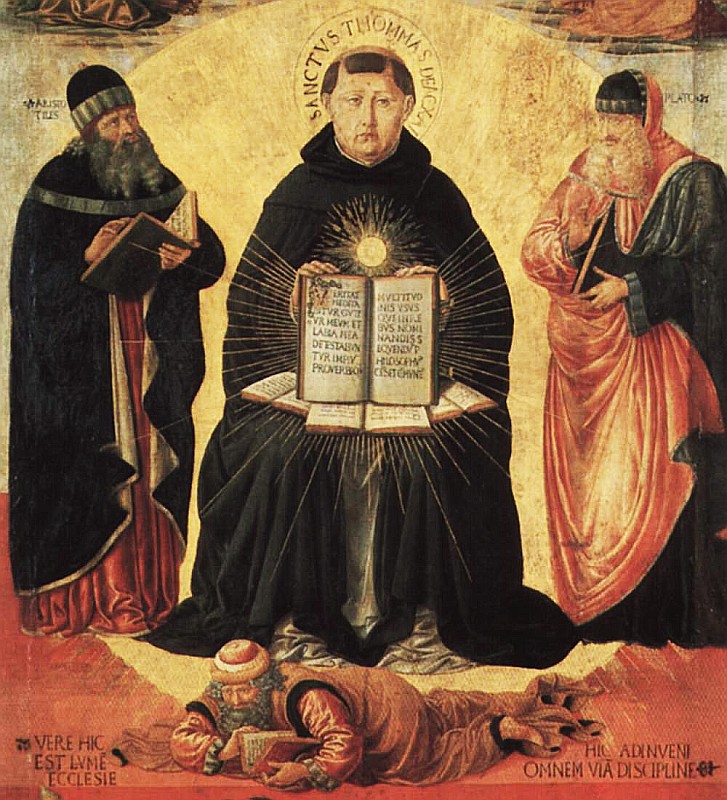
Benozzo Gozzoli, The Triumph of St Thomas Aquinas, 1471

The Thomistic approach to knowledge has, as one of its key axioms, Nihil est in intellectu quod prius non fuerit in sensu: ‘Nothing is in the intellect which was not first in the senses.’ This is part of the reason that Thomists are so confident in their rationalism; they consider their philosophy to be based in an appeal to the universal testimony of everyone’s eyes and ears and brains, and to be constructed by rational steps that practically anyone can understand and accept. But I believe there is a fatal flaw in this epistemology, one that can hamstring not only apologetics but thought as such. This flaw isn’t unique to Thomists—it’s a favorite flaw of modern philosophers from Descartes forward—but it needs correcting wherever it occurs.

The problem is this. All data gathered by the senses is, by definition, sense data: colors, tastes, sounds, textures, temperatures, and so on. The theory of knowledge set forth by Aristotle and championed by St Thomas and his successors avers that, after gathering such data (over a period of years at the beginning of our lives, and more easily later), the intellect abstracts and identifies the essences of things. For example, we see certain arrangements of colors and shapes, and perhaps feel certain textures and smell certain scents, and we’re told by our parents, ‘This is a tree.’ Then we perceive different arrangements of colors, shapes, textures, and scents, and those are trees too; and bit by bit we assemble a general idea of Tree as distinct from the individual trees that exemplify it.

The problem (as Aristotle and St Thomas alike should have seen2) is that you can’t validly move from a particular statement to a universal statement, ever. You can’t truthfully say ‘This X is Y, therefore all X are Y.’ Logically (and logic is one of the governing principles of the mind, as St Thomas insisted), you can’t abstract Tree from trees. And no matter how much sense data you gather, you cannot perceive Tree with any of your senses—you can only perceive trees. On these premises, you can’t know the natures of things, because it can’t ever be in your senses. At most, you can make educated guesses. Which is fine if that’s all you want to do, but if you want to reason out how things ought to be on the basis of what things they are, then that theory of knowledge decisively prevents you from ever doing so. In other words, if you want to practice Natural Law Theory, you have to start by rejecting Thomist epistemology.


This doesn’t bother me, because I am not attached to Thomist epistemology. I’ve preferred something more like Neo-Platonism since I was a child. If the human mind is going to recognize essences and not just appearances, it has to do so by some kind of intuition—recognition, if you will. The intellect must be lit from within as well as from without. There must be something in the human mind that is ready in advance for Tree, if trees are to prepare its way; the senses can, by all means, be the prophets and scribes of Tree, but they cannot be its only means of entry into the mind; the mind must conceive Tree apart from their touch, virginally.

This virginity is an affront to those men who wish all knowledge to enter the mind through the senses, whether they are scientists or theologians. The lust of objectivity—its own kind of objectification—is all but insatiable; less, I think, because of the natural human love of truth, than because we want very badly not only to be right, but to be right in such a way that other people’s wrongness is culpable. We like the idea that either we can persuade others of whatever we think, or else they’re just being stubborn. This is not perhaps our most amiable quality. But it’s better to admit that it’s there, and as rampant among scholars and apologists as anybody else, than to feign a neutrality we do not possess.

What is belief really? … It is a human way of taking up a stand in the totality of reality, a way that cannot be reduced to knowledge and is incommensurable with knowledge; it is the bestowal of meaning without which the totality of man would remain homeless, on which man’s calculations and actions are based, and without which in the last resort he could not calculate and act, because he can only do this in the context of a meaning that bears him up. … Meaning is the bread on which man, in the intrinsically human part of his being, subsists. Without the word, without meaning, without love he falls into the situation of no longer being able to live, even when earthly comfort is present in abundance. … No man can pull himself up out of the bog of uncertainty, of not being able to live, by his own exertions; nor can we pull ourselves up, as Descartes still thought we could, by a cogito ergo sum, by a series of intellectual deductions. … Meaning, that is, the ground on which our existence as a totality can stand and live, cannot be made but only received.3


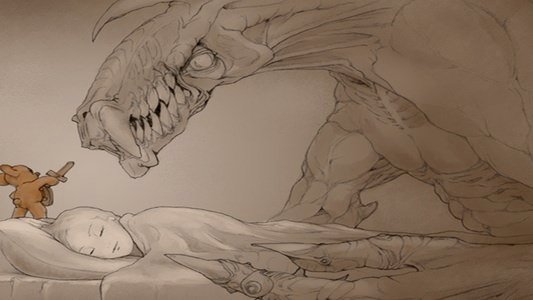
A teddy bear is always a gift.

So what do I mean when I talk about intuition and recognition? I mean that certain things are, in some rudimentary fashion, present in our minds by nature: the basic mathematical-logical laws of thought, the basic principles of right and wrong, and at least some basic ideas of what things are, or what kinds of things are. This isn’t to say we innately know everything, even about the rudiments of ideas that we possess. But it is to say that we must have something to work with if we are to know and reason at all; unto every one that hath shall be given, but from him that hath not shall be taken away even that which he hath. Put more simply, I’m saying ‘Tabula rasa is a load of bull-honkey.’4

I won’t pause here to try and puzzle out what all of these innate ideas are; I don’t have the talent to do so without a lot of assistance, time, and space, but also it isn’t essential to our purpose. But the three categories I mentioned above—those of logic, morality, and beings5—must (I think) be in our minds from the start, as things we just see, or we can’t know or learn anything. Call them knowledge of the possible, knowledge of the good, and knowledge of the factual. Again, I’m not saying we know any of these things exhaustively from birth, even in a latent state; still less am I saying that you never find odd gaps in certain minds, or that every person is able to express the knowledge they possess. I’m saying only that there is a standard outfit, and that it is the only thing that makes both individual knowledge and a communion of minds possible.

The generally shared character of human morals, across ethnicities, eras, and religions, is in my view one of the strongest testimonies for this view. Human moral codes do differ, to be sure, but the commonality is considerable (C. S. Lewis’ summary in the appendix to The Abolition of Man is an excellent source), even on points that are disadvantageous to their practitioners, like courage in battle or kindness to the poor.

This seems to me to be the only way to rescue Natural Law Theory. Many of its devotees may not regard this as much of a salvage, since it would have to be content with more modest claims: since we don’t know what the gaps in someone’s mind may be, including our own, we must be ready both to accept instruction and to allow others the liberty of not seeing something we find obvious. Because maybe they don’t, or maybe we’re missing something they do see. However, that’s a price I’m willing to pay in return for a consistent epistemology.


The difference this makes to NLT is that all the mucking about with averages and proportions and figuring out what counts as what, which I wrote about in my last post, can be swept away—because we do recognize the difference between animals and humans, don’t we? And we do intuit a distinction between the intrinsic purpose of something and its bonus effects. We don’t need to get all of our premises from observation: there are some that are axiomatic. I don’t know whether we intuit that homosexuality, contraception etc., are wrong (I sure don’t); there, I do consider NLT useful and sound. But the basis on which it’s constructed must, must be internally coherent, and as far as I can see, the basis set forth by Thomism just isn’t.

✠     ✠     ✠

1I have been forced (alas) to truncate Miss Sayers’ thought grossly here; I warmly recommend The Mind of the Maker to anybody who will stand still long enough. The first part of the epigraph is a quotation from one of her plays, The Zeal of Thy House, which expresses in dramatic form what Mind expresses in essayistic form.
2And perhaps they did. I don’t know any passages in which either one addresses the matter, but my acquaintance with both sages is amateur.
3Introduction to Christianity, pp. 72-73.
4Tabula rasa (Latin for ‘blank slate’) is the phrase famously used by John Locke, the English Liberal philosopher, to describe the human mind at birth.
5Vaguely put, I know. I haven’t come up with a good word for this category; universals might do. While of course we learn about beings as we go, the notion that there are kinds of things—that John and Jane and Mary are all humans, as opposed to just a bunch of objects—is not an obvious one when you think about it. Or rather, it’s only obvious because our minds are built that way, whether you regard that as accidental or significant.

Wednesday, April 26, 2017

Natural Lawyer Jokes, Part III

‘Give your evidence,’ said the King.
‘Shan’t,’ said the Cook.

Lewis Carroll, Alice’s Adventures in Wonderland


✠     ✠     ✠

Returning to my analysis of Dr Feser’s piece, I’m going to move backward a little from my last post, because the arc of the argument is fairly extended. The first important set of premises begins under the heading General Sexual Ethics, and addresses the new dimension given to human behavior by the fact that, in addition to our animal bodies, we possess rational souls.

Now these latter, higher, rational activities do not merely constitute distinctive goods; they also alter the nature of the lower, animal goods. For example, both a dog and a human being can have a visual perception of a tree. But there is a conceptual element to normal human visual perception that is not present in the dog’s perception. … That perception in our case participates in our rationality makes of it a different and indeed higher sort of good than that of which non-human animals are capable. Other goods we share … with animals similarly participate in our rationality and are radically transformed … Thus, meals have a social and cultural significance that raises them above mere feeding; games have a social import and conceptual content that raises them above the play of which other mammals are capable … Our sexual faculties are no different.1


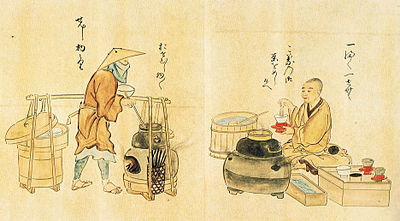
Illustration of tea ceremony from 17th century Japan

So far, so good (and a valuable rejoinder to most anthropologists, who seem to have carefully trained themselves to be unable to recognize the non-animal reasons people do things). He continues his treatment of the merely animal aspect of sex thus:

Giving pleasure is not the end of sex, not that for the sake of which sex exists in animals. Rather, sexual pleasure has as its own natural end the getting of animals to engage in sexual relations, so that they will procreate. … So, sex in animals exists for the sake of procreation, and sexual pleasure exists for the sake of getting them to indulge in sex, so that they will procreate. And we’re built in such a way that sexual arousal is hard to resist and occurs very frequently, and such that it is very difficult to avoid pregnancies resulting from the indulgence of that arousal. The obvious conclusion is that the natural end of sex is (in part) not just procreation, but procreation in large numbers. … Apart from the Aristotelian jargon, everything said so far could be endorsed by the Darwinian naturalist … whether or not such a naturalist would agree with the moral conclusions natural law theorists would draw from it.2

A plausible assertion. But not, I think, quite so certain as Dr Feser believes. Permit me a brief zoölogical detour.

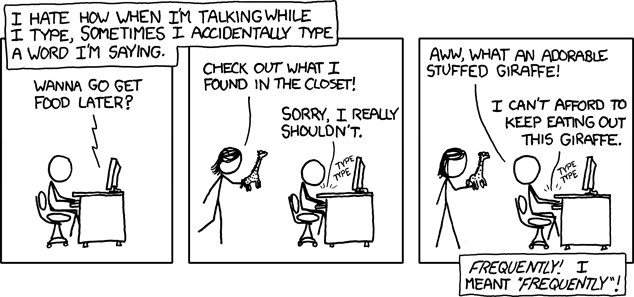
As I mentioned in my first post of this series, homosexual behavior is well-known in the animal kingdom, and in some species, such as giraffes, is far more prevalent than heterosexual behavior. Bonobos form a particularly interesting case, since (along with chimps3) they are the living primates most closely related to humans: 60% of all sexual activity among bonobos is lesbian, and sexual activity, of whatever kind, is frequently used to defuse tension and reconcile after conflict. Now, the mere existence of homosexual behavior among animals really isn’t a threat to Natural Law Theory; the idea is not that whatever happens is natural, but that there is a pattern built into nature by its Creator, and deviations can be measured from that pattern, not just by man-made convention. But—I may be mistaken, and if so I’m sure a Natural Law theorist or six will emerge from the æther to correct me—the normal test proposed for finding out what’s natural is to look at what effect nature usually brings about. And if, in at least some cases, sex appears to have far more to do with social bonding than with procreation even on a strictly animal level, and that among some of our closest animal relatives—well, it rather sounds like the Natural Law theorist has some mansplaining to do.


That said, one of the basic tenets of Catholic Christianity is that we live in a fallen world: i.e., a world that does not wholly fulfill the design of its Maker, not only in being as yet incomplete, but in active distortion and corruption. No Christian, on seeing that something exists, must necessarily approve of it in principle; unlike the pantheist who considers all being a manifestation of divinity, or the Buddhist who considers the world as we know it fundamentally illusory, the Christian insists that imperfection and evil are real, and that they matter. The problem for the Natural Law theorist, then, is to sort out the design that nature (imperfectly) strives for, from the evil that diverts and weakens it, and to set forth a principle by which to do the sorting. But a simple study of what usually happens is not a satisfying technique for such sorting, because you then need another rubric for determining which results count and which don’t. I mean, does the behavior of bonobos demonstrate a legitimately non-procreative purpose of sex even at an animal level, especially given that they so strongly resemble humans, or does that not count? And if not, why not—because most other animals aren’t like that (even if a surprising number are)? Well, which animals count and which don’t, for the purpose of determining what nature usually does? Do bacteria, for whom sex is always non-reproductive?

To at least some degree, Dr Feser recognizes the epistemic4 problem here. In seeking to justify a fully Catholic moral outlook on sex on grounds of Aristotelian-Thomist philosophy, he raises some important distinctions:

Since the natural ends of our sexual capacities are simultaneously procreative and unitive, what is good for human beings vis-à-vis those capacities is to use them only in a way consistent with these ends. … It cannot possibly be good for us to use them in a way contrary to those ends, whether or not an individual person thinks it is … This is true whatever the reason is for someone’s desire to act in a way contrary to nature’s purposes—intellectual error, habituated vice, genetic defect, or whatever—and however strong that desire is. … A clubfoot is still a clubfoot, and thus a defect, even though the person having it is not culpable for this and might not be able to change it. … What has been said so far clearly supports a general commendation of confining sexual activity to marriage and the having of large families, and a general condemnation of fornication, adultery, contraception, homosexual acts, bestiality, masturbation, pornography, and the like. …

But this might still seem to fall short of establishing the absolute moral claims made by Catholic teaching. Consider a devout Mormon couple who have a large family of nine children, but who have occasionally used contraception so as to space their children evenly … It would certainly seem strained and even unjust to accuse them of having a ‘contraceptive mentality’ … insofar as their attitude toward sex is obviously different from those who regard sex as mere recreation and children as an inconvenience to be avoided. … It may also seem to have proved too much. For if it is good for us to pursue the procreative and unitive ends of sex and bad for us to frustrate them, wouldn’t it follow that it is wrong to refrain from marrying if one had the opportunity to do so? [Or that] it is wrong for sterile and aged married couples to have sexual intercourse? … If there is to be an absolute prohibition on contraceptive acts, masturbatory acts, and the like as such, even though there is no such prohibition on merely refraining from sex or on sex between sterile spouses, then there must be something about the nature of the former acts that makes them inherently contrary to the good for us[.]5


To this, modern readers—myself among them—will readily add homosexuality. For even a casual acquaintance with gay culture and people shows that we’re as likely as anybody to want children, and (to some degree) apt to lament the fact that we can’t have biological children with our preferred partner; the prevalence of both adoption and surrogacy suggest how strong the desire can be. In other words, from the point of view of intention alone, plenty of LGBT couples are in exactly the same position as infertile straight couples.

The ‘perverted faculty argument’ into which Dr Feser moves from here seems to be quite well constructed, and when I write about it I may do little more than agree with him. But the epistemic problem of how to evaluate the evidence doesn’t seem soluble to me on the Thomist axiom that Nihil est in intellectu quod prius non fuerit in sensu, ‘Nothing is in the understanding which was not in the senses first.’6 The problem with that is: how the hell do you get a standard for evaluating evidence out of the evidence you’re evaluating? I plan to deal with this problem, as best I can, in my next.

✠     ✠     ✠

1Neo-Scholastic Essays, p. 388.
2Ibid., pp. 389-390.
3Chimpanzees (Pan troglodytes) and bonobos (Pan paniscus) are very closely related to each other; evidence obtained by genetic and anatomical studies suggest that the two species only became distinct from each other about a million years ago, and that the latest common ancestor of the two split off from the hominid line (e.g. Homo habilis, Homo erectus, Homo sapiens) only six or seven million years ago. The commonality is close enough that some scientists assert that the Pan and Homo genera should be treated as one, though this is controversial.
4I.e., a problem of epistemology, the branch of thought that studies how we know things—not in the physiological sense of how information is stored in the brain, but in the philosophical sense of how we can have confidence in our premises and the conclusions we draw from them.
5Ibid., pp. 396-398.
6St Thomas Aquinas, De Veritate II.3.xix.

Tuesday, April 4, 2017

Natural Lawyer Jokes, Part II

The lover sees the Lady as the Adam1 saw all things before they foolishly chose to experience good as evil … The phenomenal Beatrice—Beatrice as she is in this fallen world—has for an instant been identical with the real Beatrice—Beatrice as she (and all things) will be seen to be, and always to have been, when we reach the throne-room … Romantic Love is neither necessarily joined to bodily fruition nor necessarily abstracted from it: the way to which the glory invites us may run through marriage or it may not. Unless it were possible—and heavenly—to be enamoured of the glory without desiring the woman, how should we ever grow mature for the life of heaven where that glory in its fullest meridian blaze will clothe every woman and every man, every beast, blade of grass, rock? (‘In the third heaven the stones of the waste glimmer like summer stars.’)

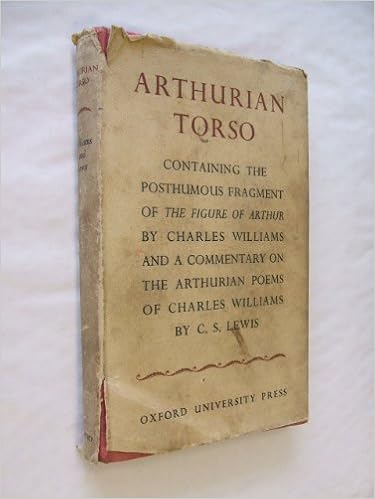
C. S. Lewis, Arthurian Torso pp. 116-118


✠     ✠     ✠

Continuing in my analysis of Dr Feser’s paper, I have again come across a total, categorical disagreement. Let’s start with his allusion to The Four Loves:

C. S. Lewis usefully distinguishes Eros from Venus. Venus is sexual desire, which can be (even if it shouldn’t be) felt for and satisfied by any number of people. Eros is the longing associated with being in love with someone, and no one other than that one person can satisfy it. Obviously Venus can and very often does exist without Eros. Eros typically includes Venus, but it not only focuses Venus specifically on the object of romantic longing, but carries that longing to the point where Venus itself, along with everything else, might be sacrificed for the sake of the beloved if necessary. … As Lewis wisely notes, it is an error to think that Venus without Eros is per se morally suspect. … Eros is too unstable and outside our control to think it essential to the moral use of Venus. Sometimes mere affection (which, like Venus itself, can be felt for any number of people) has to suffice to civilize Venus.2

So far, so good, and a sound reminder to our culture, which is (I think) more Eros-crazed than sex-crazed, and that irrespective of Christian belief. As Lewis points out through the mouth of his devil Screwtape, the fact that we think marrying for the sake of preserving chastity and raising a family is low, as compared to marrying for love, is a symptom of how far from the idea of marriage as a sacrament we’ve really come.

But then Feser takes a turn in his argument in which I absolutely cannot accompany him.

Like Venus, Eros is natural to us. It functions to channel the potentially unruly Venus in the monogamous and constructive direction that the stability of the family requires. Of course, a respect for the moral law, fear of opprobrium, and and sensitivity to the feelings of a spouse can do this too, but unlike Eros the motivations they provide can all conflict with the agent’s own inclinations, and are thus less efficacious. … Venus and Eros, then, considered in terms of their natural function, might be best thought of not as distinct faculties, but as opposite ends of a continuum. Venus tells us that we are incomplete, moving us toward that procreative action whose natural end … requires the stability of marital union for its success. Eros focuses that desire onto a single person with whom such a union can be made and for whom the Erotic lover happily forsakes all others and is even willing to sacrifice his own happiness. Eros is the perfection of Venus; mere Venus is a deficient form of Eros. … ‘Consummate love’ … combines all three of the basic kinds of love—commitment, the intimacy of friendship, and the passion that begins with mere infatuation but develops into something more stable. It is difficult to achieve, but is commonly regarded as definitive of the best marriages.3


The Birth of Venus, Sandro Botticelli, 1486

A credible theory; but, as a student of history, a poet, and a lover,4 I firmly assert that it’s all wrong. To begin with, Eros does have a tendency—probably even a predominant tendency—to fix the lover’s desire upon a single beloved. But this tendency does little else to govern Venus, and as a rule Eros (in its ‘chemically’ pure state, without the governance of a well-formed conscience) has no interest in any moral law whatever. Among the passions, none (except maybe religious passion!) shows a stronger tendency to resemble the Unfettered archetype. So to describe its natural direction as ‘constructive’ is, in my opinion, special pleading.

Then there’s the observation that principle, shame, and decency can all serve the same purpose Dr Feser assigns to Eros, but that they may conflict with the person’s inclinations. What, and Eros can’t? My life is the very story of Eros conflicting with others of my own inclinations. And I am sure I’m not the first edition of that story. It isn’t clear to me that Eros even tends to streamline one’s motives, let alone that it was designed to do so.

Thirdly—and this is a lesser point, but it’s important, given the claims made by Neo-Scholasticism for what shows something to be natural—it must be pointed out, as a matter of historical record, that romantic love was not regarded as a dignified or spiritual phenomenon until the twelfth century, at least in Christendom and its Euro-Levantine predecessors5—except, in Greece and later in Rome, for homosexual Eros. To revere romantic love, that fanatical, self-abasing, inconstant, reckless, and involuntary phenomenon, was as ridiculous to our Christian ancestors of the early Middle Ages as it was to their pagan ancestors of the classical era. Nor, until the eighteenth and nineteenth centuries, was the romantic tradition linked to marriage even by Romantics; for the Troubadours who originated the tradition of courtly love, adultery was of its essence.6 The idea that Eros is shown by actual human habits to be naturally directed toward marriage is an artifact of a long and localized cultural development—or, more bluntly, pure moonshine.


In other words, the original rock stars were groupies for their fans.

As I’ve written about several times before, both in contemplating homoeroticism and in commenting on poetry, I think the basic function of Eros is something quite different, which C. S. Lewis, Dorothy Sayers, and above all Charles Williams wrote about.7 Returning to The Four Loves, it’s easy to forget the initial threefold division that he sets up, which cuts across the four: namely, the loves of need, gift, and appreciation.

Need-love cries to God from our poverty; Gift-love longs to serve, or even to suffer for, God; Appreciative love says: ‘We give thanks to thee for thy great glory.’ Need-love says of a woman, ‘I cannot live without her’; Gift-love longs to give her happiness, comfort, protection—if possible, wealth; Appreciative love gazes and holds its breath and is silent, rejoices that such a wonder should exist even if not for him, will not be wholly dejected by losing her, would rather have it so than never to have seen her at all.8

This appreciative love, Eros-as-awe if you will, is not primarily directed toward union with the beloved. It is not a way of possessing, nor even of giving, but of seeing; it is contemplative, where need-love is (usually) penitent and gift-love is active. All three have their place. But contemplative Eros will not be directed to an end other than contemplation. Lord, dost thou not care that my sister hath left me to serve alone? bid her therefore that she help me; and he would not.

Of all the loves [Dante] had known … [his love for Beatrice] is the one which, with will and judgment assenting, he declares to be a revelation of divine truth. It is not the febrile anguish of the death-Eros, in which possession forever mocks desire; nor yet the simple and affectionate exchange which does not look beyond possession. … It is a love whose joy—and therefore its fulfillment—consists in the worshipful contemplation of that which stands over and above the worshipper. True to its origins in courtly love, it finds its entire happiness in being allowed to do homage to an acknowledged superior.9


I don’t deny that Eros-as-need and Eros-as-gift exist, and of them, Dr Feser’s evaluation might possibly be accurate. But those experiences are so irrelevant—I almost said, so alien—to Eros-as-awe, they’re nearly as different from it as they are from the other loves. I’m tempted to say, oxymoronically, that need-Eros and gift-Eros aren’t even Eros.

I won’t quite go that far in fact. When defied, language has a way of avenging itself. And I’ve studied enough Greek mythology to be wary of invoking the wrath of any of the gods, let alone such potent deities as Eros and Apollo. But I will say that Eros is an essentially different thing from conjugal love, and that it’s not psychologically or morally necessary to have both for the same person, nor both at the same time—nor, indeed, to have either one at all. I think conjugal love is more a matter of storgê (governed by the virtue of justice) than of Eros necessarily.2 I therefore disagree entirely with Dr Feser’s assertion that ‘it is hard to see how marriage and family as institutions could survive unless Erotic and consummate love were generally honored … and approximated at least to some significant extent in most marriages.’ Marriage and family existed for a minimum of centuries in Euro-Levantine culture before marital Eros was honored by anybody.

But all this is actually quite consistent with a Thomistic metaphysic—consistent, if not perhaps very characteristic of its proponents. Then again, we had to wait seven hundred years between Dante and Charles Williams: philosopher-kings are plentiful and may be bought in bunches at any bookstore, but the philosopher-poet, the visionary of ‘the feeling intellect,’ the scholar of Romantic Theology, these are rare men.

This should conclude the erotic digression; my analysis of Dr Feser’s work will continue in a subsequent post.

✠     ✠     ✠

1Charles Williams (and Lewis in discussing Williams’ work) often refers to unfallen man, of both sexes, collectively as ‘the Adam.’ Since the Hebrew ’adham does simply mean ‘human,’ generically, there is a linguistic case to be made for this. Williams himself may have derived the habit from his all-important doctrine of the Coïnherence of humanity (what could inadequately be summarized as the mutual inter-animation of mankind), or from his magical training as an adept of the SRIA.
2Neo-Scholastic Essays, pp. 392-393; the famous ‘four loves’ written of by Lewis, derived from the various Greek words translated ‘love,’ are storgê, philia, erôs, and agapê, which roughly equate to familial affection, friendship, sexual love, and unconditional love.
3Ibid., pp. 393-394.
4Or at any rate, as one who has been a lover.
5I am ignorant of the romantic traditions of Indic, Oriental, Polynesian, Amerindian, and African cultures, indeed I don’t even know if there were any. I mean, I expect there were, since all men have roughly similar impulses regardless of what they do with them. But what I’m writing here, I only know to be true of the web of cultures spanning the Morocco-Iceland-Russia-Arabia region.
6I’m oversimplifying here, but not for the reason you’d probably think. Courtly love was expected to be directed to a Lady whom you weren’t married to, and who was almost certainly married to somebody else: you, the lover, were a poet, and your beloved was a noblewoman you desired to glorify. (The element of social superiority was key in the development of courtly love; fossilized aspects of it survive even now, as when a man kneels to propose.) There were two ‘schools’ of courtly love: one considered the apex of courtly love to be enjoying one’s Lady sexually; the other considered sex to be kind of beside the point (whether opposing it on moral grounds, or just artistically indifferent), because it viewed love’s true consummation as the adoration of the Lady’s person. The former school gave us poetry like The Romaunt of the Rose; the latter, poetry like The Divine Comedy.
7All three of them, Williams especially, would shake their heads and sigh if I neglected to mention here that Dante and Wordsworth were their great ancestors in this tradition of romantic theology. Milton, Donne, Blake, and just possibly Austen may belong on the list as well.
8P. 17.
9Dorothy Sayers, Introduction to the ‘Purgatorio,’ p. 43.