
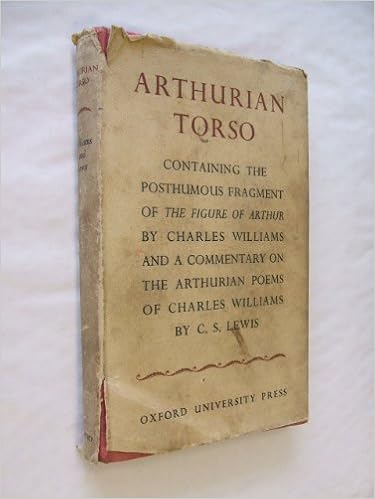
The lover sees the Lady as the Adam1 saw all things before they foolishly chose to experience good as evil … The phenomenal Beatrice—Beatrice as she is in this fallen world—has for an instant been identical with the real Beatrice—Beatrice as she (and all things) will be seen to be, and always to have been, when we reach the throne-room … Romantic Love is neither necessarily joined to bodily fruition nor necessarily abstracted from it: the way to which the glory invites us may run through marriage or it may not. Unless it were possible—and heavenly—to be enamoured of the glory without desiring the woman, how should we ever grow mature for the life of heaven where that glory in its fullest meridian blaze will clothe every woman and every man, every beast, blade of grass, rock? (‘In the third heaven the stones of the waste glimmer like summer stars.’)
—C. S. Lewis, Arthurian Torso pp. 116-118
✠ ✠ ✠
Continuing in my analysis of Dr Feser’s paper, I have again come across a total, categorical disagreement. Let’s start with his allusion to The Four Loves:
C. S. Lewis usefully distinguishes Eros from Venus. Venus is sexual desire, which can be (even if it shouldn’t be) felt for and satisfied by any number of people. Eros is the longing associated with being in love with someone, and no one other than that one person can satisfy it. Obviously Venus can and very often does exist without Eros. Eros typically includes Venus, but it not only focuses Venus specifically on the object of romantic longing, but carries that longing to the point where Venus itself, along with everything else, might be sacrificed for the sake of the beloved if necessary. … As Lewis wisely notes, it is an error to think that Venus without Eros is per se morally suspect. … Eros is too unstable and outside our control to think it essential to the moral use of Venus. Sometimes mere affection (which, like Venus itself, can be felt for any number of people) has to suffice to civilize Venus.2
So far, so good, and a sound reminder to our culture, which is (I think) more Eros-crazed than sex-crazed, and that irrespective of Christian belief. As Lewis points out through the mouth of his devil Screwtape, the fact that we think marrying for the sake of preserving chastity and raising a family is low, as compared to marrying for love, is a symptom of how far from the idea of marriage as a sacrament we’ve really come.
But then Feser takes a turn in his argument in which I absolutely cannot accompany him.
Like Venus, Eros is natural to us. It functions to channel the potentially unruly Venus in the monogamous and constructive direction that the stability of the family requires. Of course, a respect for the moral law, fear of opprobrium, and and sensitivity to the feelings of a spouse can do this too, but unlike Eros the motivations they provide can all conflict with the agent’s own inclinations, and are thus less efficacious. … Venus and Eros, then, considered in terms of their natural function, might be best thought of not as distinct faculties, but as opposite ends of a continuum. Venus tells us that we are incomplete, moving us toward that procreative action whose natural end … requires the stability of marital union for its success. Eros focuses that desire onto a single person with whom such a union can be made and for whom the Erotic lover happily forsakes all others and is even willing to sacrifice his own happiness. Eros is the perfection of Venus; mere Venus is a deficient form of Eros. … ‘Consummate love’ … combines all three of the basic kinds of love—commitment, the intimacy of friendship, and the passion that begins with mere infatuation but develops into something more stable. It is difficult to achieve, but is commonly regarded as definitive of the best marriages.3

The Birth of Venus, Sandro Botticelli, 1486
A credible theory; but, as a student of history, a poet, and a lover,4 I firmly assert that it’s all wrong. To begin with, Eros does have a tendency—probably even a predominant tendency—to fix the lover’s desire upon a single beloved. But this tendency does little else to govern Venus, and as a rule Eros (in its ‘chemically’ pure state, without the governance of a well-formed conscience) has no interest in any moral law whatever. Among the passions, none (except maybe religious passion!) shows a stronger tendency to resemble the Unfettered archetype. So to describe its natural direction as ‘constructive’ is, in my opinion, special pleading.
Then there’s the observation that principle, shame, and decency can all serve the same purpose Dr Feser assigns to Eros, but that they may conflict with the person’s inclinations. What, and Eros can’t? My life is the very story of Eros conflicting with others of my own inclinations. And I am sure I’m not the first edition of that story. It isn’t clear to me that Eros even tends to streamline one’s motives, let alone that it was designed to do so.
Thirdly—and this is a lesser point, but it’s important, given the claims made by Neo-Scholasticism for what shows something to be natural—it must be pointed out, as a matter of historical record, that romantic love was not regarded as a dignified or spiritual phenomenon until the twelfth century, at least in Christendom and its Euro-Levantine predecessors5—except, in Greece and later in Rome, for homosexual Eros. To revere romantic love, that fanatical, self-abasing, inconstant, reckless, and involuntary phenomenon, was as ridiculous to our Christian ancestors of the early Middle Ages as it was to their pagan ancestors of the classical era. Nor, until the eighteenth and nineteenth centuries, was the romantic tradition linked to marriage even by Romantics; for the Troubadours who originated the tradition of courtly love, adultery was of its essence.6 The idea that Eros is shown by actual human habits to be naturally directed toward marriage is an artifact of a long and localized cultural development—or, more bluntly, pure moonshine.

In other words, the original rock stars were groupies for their fans.
As I’ve written about several times before, both in contemplating homoeroticism and in commenting on poetry, I think the basic function of Eros is something quite different, which C. S. Lewis, Dorothy Sayers, and above all Charles Williams wrote about.7 Returning to The Four Loves, it’s easy to forget the initial threefold division that he sets up, which cuts across the four: namely, the loves of need, gift, and appreciation.
Need-love cries to God from our poverty; Gift-love longs to serve, or even to suffer for, God; Appreciative love says: ‘We give thanks to thee for thy great glory.’ Need-love says of a woman, ‘I cannot live without her’; Gift-love longs to give her happiness, comfort, protection—if possible, wealth; Appreciative love gazes and holds its breath and is silent, rejoices that such a wonder should exist even if not for him, will not be wholly dejected by losing her, would rather have it so than never to have seen her at all.8
This appreciative love, Eros-as-awe if you will, is not primarily directed toward union with the beloved. It is not a way of possessing, nor even of giving, but of seeing; it is contemplative, where need-love is (usually) penitent and gift-love is active. All three have their place. But contemplative Eros will not be directed to an end other than contemplation. Lord, dost thou not care that my sister hath left me to serve alone? bid her therefore that she help me; and he would not.
Of all the loves [Dante] had known … [his love for Beatrice] is the one which, with will and judgment assenting, he declares to be a revelation of divine truth. It is not the febrile anguish of the death-Eros, in which possession forever mocks desire; nor yet the simple and affectionate exchange which does not look beyond possession. … It is a love whose joy—and therefore its fulfillment—consists in the worshipful contemplation of that which stands over and above the worshipper. True to its origins in courtly love, it finds its entire happiness in being allowed to do homage to an acknowledged superior.9

I don’t deny that Eros-as-need and Eros-as-gift exist, and of them, Dr Feser’s evaluation might possibly be accurate. But those experiences are so irrelevant—I almost said, so alien—to Eros-as-awe, they’re nearly as different from it as they are from the other loves. I’m tempted to say, oxymoronically, that need-Eros and gift-Eros aren’t even Eros.
I won’t quite go that far in fact. When defied, language has a way of avenging itself. And I’ve studied enough Greek mythology to be wary of invoking the wrath of any of the gods, let alone such potent deities as Eros and Apollo. But I will say that Eros is an essentially different thing from conjugal love, and that it’s not psychologically or morally necessary to have both for the same person, nor both at the same time—nor, indeed, to have either one at all. I think conjugal love is more a matter of storgê (governed by the virtue of justice) than of Eros necessarily.2 I therefore disagree entirely with Dr Feser’s assertion that ‘it is hard to see how marriage and family as institutions could survive unless Erotic and consummate love were generally honored … and approximated at least to some significant extent in most marriages.’ Marriage and family existed for a minimum of centuries in Euro-Levantine culture before marital Eros was honored by anybody.
But all this is actually quite consistent with a Thomistic metaphysic—consistent, if not perhaps very characteristic of its proponents. Then again, we had to wait seven hundred years between Dante and Charles Williams: philosopher-kings are plentiful and may be bought in bunches at any bookstore, but the philosopher-poet, the visionary of ‘the feeling intellect,’ the scholar of Romantic Theology, these are rare men.
This should conclude the erotic digression; my analysis of Dr Feser’s work will continue in a subsequent post.
✠ ✠ ✠
1Charles Williams (and Lewis in discussing Williams’ work) often refers to unfallen man, of both sexes, collectively as ‘the Adam.’ Since the Hebrew ’adham does simply mean ‘human,’ generically, there is a linguistic case to be made for this. Williams himself may have derived the habit from his all-important doctrine of the Coïnherence of humanity (what could inadequately be summarized as the mutual inter-animation of mankind), or from his magical training as an adept of the SRIA.
2Neo-Scholastic Essays, pp. 392-393; the famous ‘four loves’ written of by Lewis, derived from the various Greek words translated ‘love,’ are storgê, philia, erôs, and agapê, which roughly equate to familial affection, friendship, sexual love, and unconditional love.
3Ibid., pp. 393-394.
4Or at any rate, as one who has been a lover.
5I am ignorant of the romantic traditions of Indic, Oriental, Polynesian, Amerindian, and African cultures, indeed I don’t even know if there were any. I mean, I expect there were, since all men have roughly similar impulses regardless of what they do with them. But what I’m writing here, I only know to be true of the web of cultures spanning the Morocco-Iceland-Russia-Arabia region.
6I’m oversimplifying here, but not for the reason you’d probably think. Courtly love was expected to be directed to a Lady whom you weren’t married to, and who was almost certainly married to somebody else: you, the lover, were a poet, and your beloved was a noblewoman you desired to glorify. (The element of social superiority was key in the development of courtly love; fossilized aspects of it survive even now, as when a man kneels to propose.) There were two ‘schools’ of courtly love: one considered the apex of courtly love to be enjoying one’s Lady sexually; the other considered sex to be kind of beside the point (whether opposing it on moral grounds, or just artistically indifferent), because it viewed love’s true consummation as the adoration of the Lady’s person. The former school gave us poetry like The Romaunt of the Rose; the latter, poetry like The Divine Comedy.
7All three of them, Williams especially, would shake their heads and sigh if I neglected to mention here that Dante and Wordsworth were their great ancestors in this tradition of romantic theology. Milton, Donne, Blake, and just possibly Austen may belong on the list as well.
8P. 17.
9Dorothy Sayers, Introduction to the ‘Purgatorio,’ p. 43.


