Collect

Collect for the Fourth Sunday after Trinity

O God, the protector of all that trust in thee, without whom nothing is strong, nothing is holy: increase and multiply upon us thy mercy; that, thou being our ruler and guide, we may so pass through things temporal, that we finally lose not the things eternal; grant this, O heavenly Father, for the sake of Jesus Christ thy Son our Lord, who liveth and reigneth with thee, in the unity of the Holy Spirit, ever one God, world without end. Amen.
Showing posts with label Melinda Selmys. Show all posts

Tuesday, May 30, 2017

Five Quick Takes

✠     ✠     ✠

I.

I haven’t forgotten my series on natural law theory and Dr Feser’s essay on the perverted faculty argument. To my surprise, I’ve found still more to disagree with in his last few pages—the range of possible thoughts is huge, isn’t it—and so I’ll be writing one last post to address that.

Chesterton probably didn’t have my sort of (ugh) lifestyle in mind when he said that the walls of Catholic dogma were the walls of a playground, but I very much find it to be true. I feel so much more at ease in a definite world, even one with aspects I definitely dislike, than I ever did as a Protestant; in nine years that delight has never gone away. Some of my optimism, not to say naïveté, about the Church has indeed gone away—heaven and earth shall pass away, but my word shall never pass away.

II.

Four months into Trump’s presidency, and and impeachment has already become something much more than the wishful thinking of the die-hard left. Time flies, doesn’t it.

III.


In my incessant quest to waste as much time as possible on Netflix, I’ve finally branched out a little from ‘Archer’ and started watching a couple of more controversial programs: ‘The Keepers’ and ‘13 Reasons Why.’ I’m only one episode into the former, so I won’t offer a detailed opinion on it except to say that so far it’s pretty good. I still haven’t finished the latter, so I will opine cautiously about it, but I will say a few things.

One is that I’m not totally seeing where the controversy over it is coming from.1 I thought about suicide every six months, at least, when I was in high school—actually pretty much through all my teen years. And so far the depiction of Hannah Baker’s life is pretty convincing. (And it must be said, the acting, script, and directing are all outstanding. The show should get an Emmy.) Both teens and grown-ups do act like that sometimes, up to and including the huge project that forms the framing device of the series. If people are concerned that watching a series about suicide might influence a teenager toward suicide or self-harm of their own, that’s a valid concern; but most works of art are ill-suited to some audience or other. It’s a reason to recommend the work judiciously, not a reason to criticize the art or the artist.

Of course, there is a far less creditable possibility: namely, that the people who feel themselves represented in the show resent the implied criticisms it makes of them. Teachers, counselors, and administrators aren’t portrayed in an altogether flattering light, including failure to respond adequately to allegations of sexual assault or notice signs of suicidal thoughts; but that isn’t exactly unknown. I don’t know if anybody at my school or among my friends or even in my family knew I thought about it. And the brute fact is that authority figures aren’t always appealing as confidantes, not because they can be intimidating but because they can be annoying.
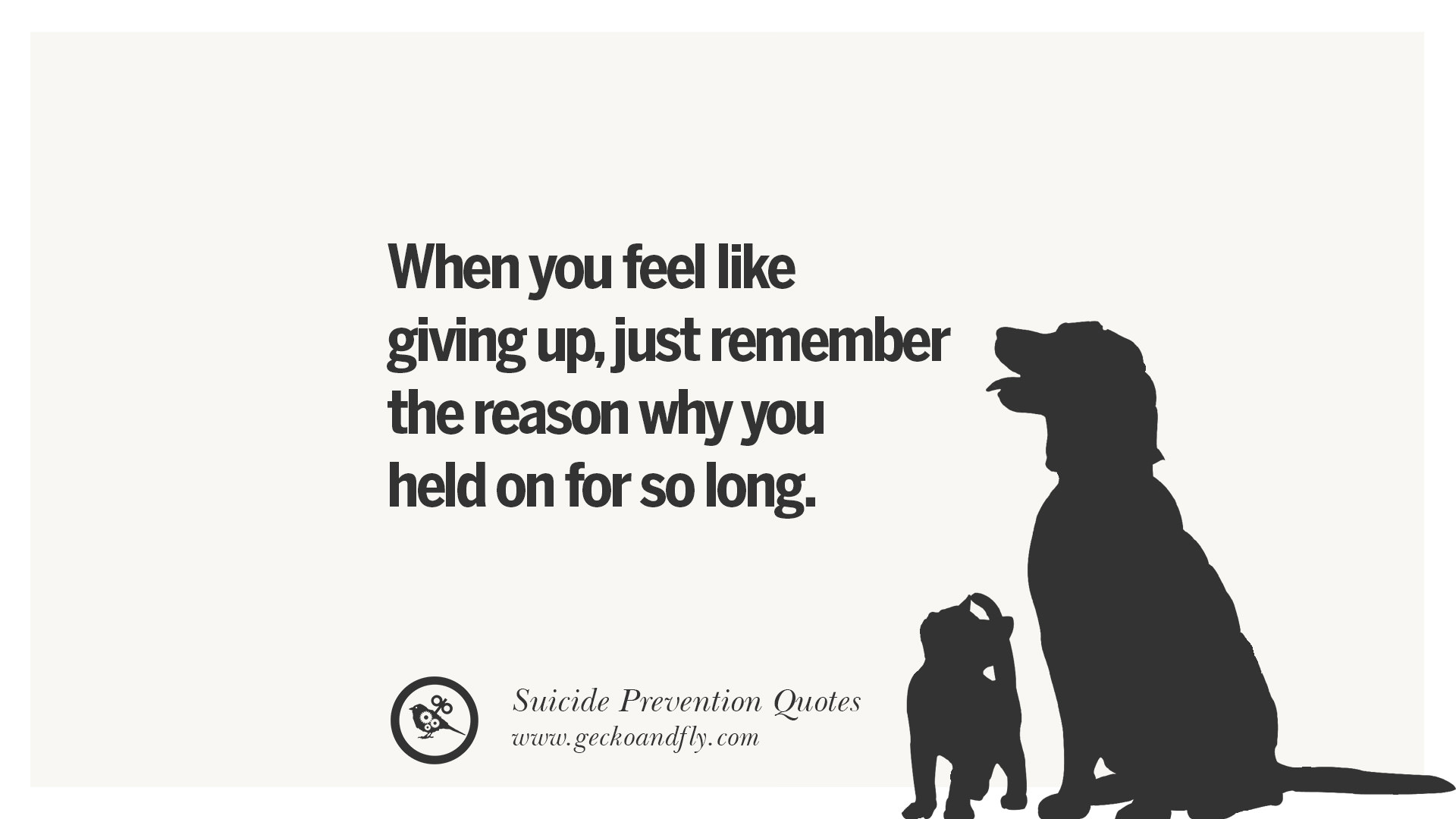

See, saying cutesy stuff like this to someone whose reason was 'I was too scared to do it before 
and now I'm not' or 'Because last time my mom was still alive' is actually a fairly shitty idea.

I know that when I was young, depressed, and contemplating self-slaughter, the ‘suicide prevention’ lectures were certainly no help. From them, I learned the correct way of slitting my wrists, and that my only hope was to traipse off to the guidance office, bare the recesses of my soul to a flaky, middle-aged woman like the one hosting the series, and put myself on happy pills. I recall sitting in the back of the auditorium, with my black skirts swirling around me like a pool, ruminating on the cluelessness of the people who had arranged the lecture series. Their understanding of my psychology, I concluded, was utterly puerile.2

And leaving school personnel aside, not every person is eager to deal with the effects their actions, even the smallest ones, can have upon others. Judging from what I’ve watched thus far, Hannah’s character kills herself over an overwhelming heap of things that crushed her, not over one thing she couldn’t endure—and not over depression or mental illness, which are often but not always linked to suicidal ideation, because people are not machines where everything will go smoothly as long as you get all the default settings right.

IV.

Most of my earliest memories were made on Fort Ord, which was cheek-by-jowl against Monterey, California, and you were never too far from the sound and scent of the ocean there. Ever since, I’ve never felt totally right when I’m too far inland—I’ve got to be near a coast, at least able to drive out and see it if I have a day off. It isn’t the same as watching the sun set, red and gold, in the Pacific, sitting on one of those big, ragged rocks on the coast of Monterey Bay, while the salt wind whips against your face; but I’ll take what I can get.


I kept telling myself last summer that I was going to make a trip to Rehoboth. Or some beach, anyway, and Rehoboth happens to be one of my favorites that’s within a day’s drive: it doesn’t have the trashiness and commercial hugeness of Ocean City, or the face-dissolving pollution of the Chesapeake (and the less said about the putrescent smell of Baltimore’s Inner Harbor the better, though I’m not above going there when I really want a fix of seaside). It’s a cozily built town, and you can find parking before you gnaw your own leg off from ennui. Fingers crossed to get out there some time this summer.

V.

Bacardi white rum sucks. I said it. I’m not sorry. Tastes like margarine. What doesn’t suck is Jameson and Grand Marnier over ice with a few dashes of Angostura bitters (kind of a poor man’s Manhattan, but without the vermouth because I didn’t feel like buying any, and without the twist of lemon because I was too lazy to cut a lemon).

✠     ✠     ✠

1Probably the silliest critique I’ve yet encountered was by a reviewer from the New York Times, who found it unbelievable that somebody would listen to the recordings made by the suicide victim slowly instead of all in one go, saying that ‘It makes no sense as anything but a plot device,’ because people only behave in one way, ever, and would never be reluctant or intimidated to hear a close friend’s explanation of why she killed herself.
2Melinda Selmys, Sexual Authenticity, p. 30.

Tuesday, April 5, 2016

Gay and Catholic, Part II: The Clobber Passages

‘Oh, if only we knew!’ said Jill.
‘I think we do know,’ said Puddleglum.
‘Do you mean you think everything will come right if we do untie him?’ asked Scrubb.
‘I don’t know about that,’ said Puddleglum. ‘You see, Aslan didn’t tell Pole what would happen. He only told her what to do.’
—C. S. Lewis, The Silver Chair


✠     ✠     ✠


My own reasons for being Side B rather than Side A have very little to do with the ‘clobber passages’: i.e., those verses of Scripture cited as grounds for considering homosexuality wrong. However, they certainly must be dealt with, honestly and frankly, so I’ll try and knock them out in one go here. The texts in question are: Genesis 19.1-11, the story of Sodom; Leviticus 18.22 and 20.13, Mosaic laws against homosexuality; Romans 1.24-27, part of a Pauline speech about the corruption of the Gentiles who refuse to acknowledge God; and I Corinthians 6.9-11 and I Timothy 1.8-11, passing references on St Paul’s part.


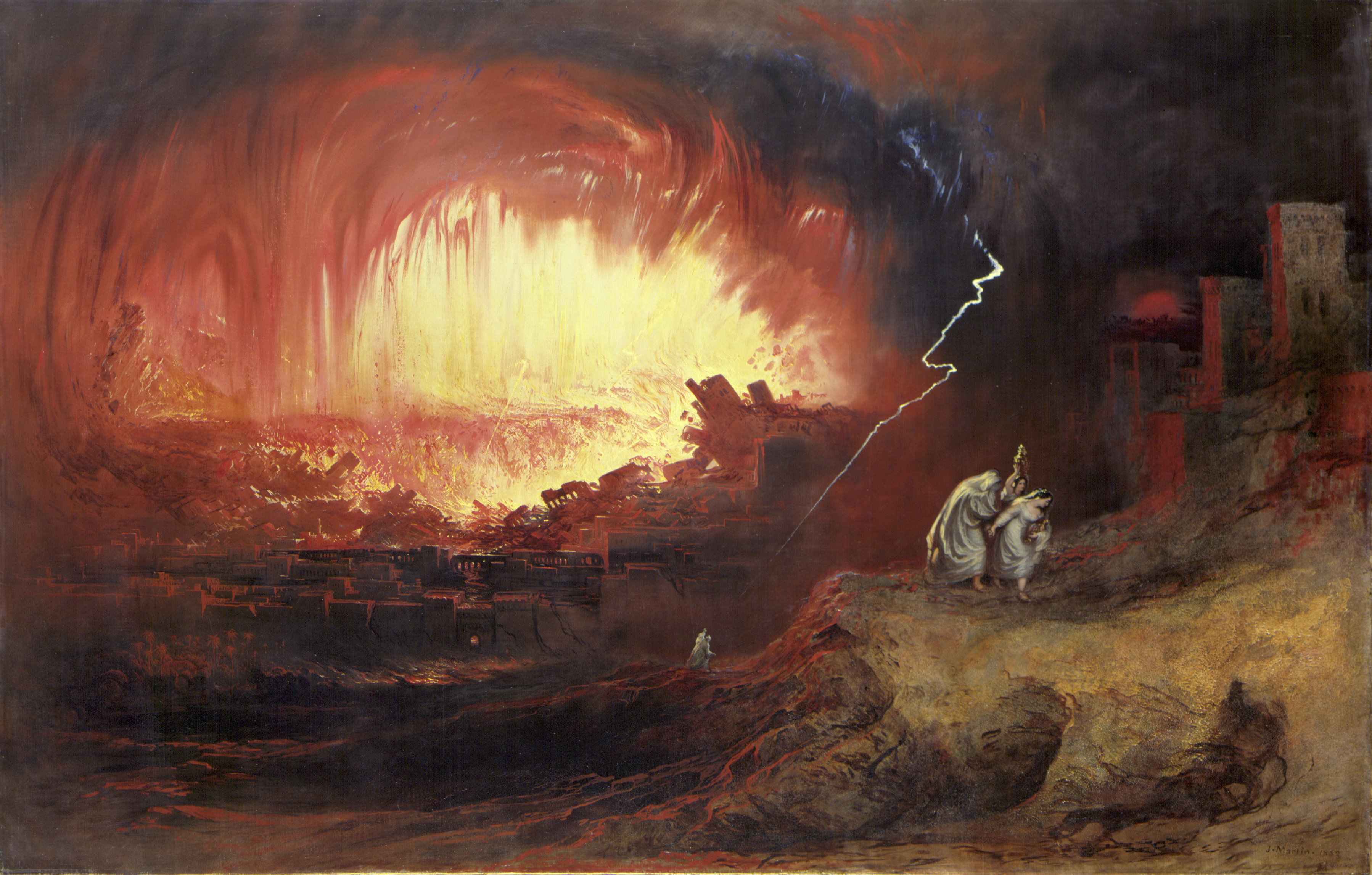
First, the story of Sodom. As we all know, two angels came to visit Lot and his family, before Sodom and Gomorrah were destroyed for their wickedness, as was the style of the time. And when these two angels had been received by Lot as his guests, the men of the city came to Lot’s front door demanding to use his guests’ back doors.


Which, gotta say, rude. You could've at least bought them a drink, men of Sodom.

Melinda Selmys pointed out in her first book that the atmosphere of the scene isn’t at all like an orgy, as some commentators and preachers imply, but rather like that of a lynch mob. The xenophobic and aggressive humiliation of the strangers by rape, rather than any satisfaction of lust, seems to be the intent; and this seems to be borne out by the rest of Scripture, which never cites homosexuality as the characteristic sin of Sodom and Gomorrah, but does consistently speak of their arrogance, their cruelty to the poor, and their lazy indifference. But even if this weren’t the motive, the fact remains, we’re talking about gang rape. Gang rape is wrong anyway, regardless of the genders of the participants. So Genesis 19 is not a good text to appeal to in defense of a traditional perspective; indeed, given the sins of Sodom that Ezekiel writes about, it sounds more like a warning to America as a whole than to American gays in particular.


Secondly, the Levitical laws. These are the famous ones about Thou shalt not lie with mankind and Their blood shall be on their own heads and Margaret Cho used to be a lot funnier. Now, one alternate interpretation is that these laws actually concern the practice of male prostitution, especially in Canaanite paganism. It’s an appealing theory in some ways—though it has to be said that the death penalty for male prostitutes still comes off as a little harsh. The problem with it is that Hebrew has a word for male prostitute, קָדֵשׁ (qadesh), and doesn’t use it here; it uses the generic term זָכָר (zakar), which just means ‘male.’ And the simplest explanation, as so often, is that the text just means what it says.


The other alternate views of these verses tend to run into similar problems. Some presume that it’s about male rape—without any textual support. Some make it a ritual prohibition, along the lines of abstaining from pork or not wearing clothing with mixed fibers; the catch being, isn’t that a pretty colossal burden to lay arbitrarily on gay people just for the sake of marking out how weird the Jews were supposed to be for God?


A much more economical explanation would be that God is cruel or imaginary. This would then make these passages only examples of human passions, and in that way, a very ordinary thing, though not less hateful for that. But of course, I’m explaining why I am Side B, and one of the defining characteristics of Side B is Christianity. If I took either of those views, I wouldn’t bother with religion, and there’d be nothing to explain.1


Passing to the New Testament, we come to Romans 1.24-27. Because this passage is so often quoted, disputed, dissected, redacted, and finally buried in soft peat for three months and recycled as a fire-lighter, I shall quote it in full2:


Therefore God gave them up in the lusts of their hearts to impurity, to the dishonoring of their bodies among themselves, because they exchanged the truth about God for a lie and worshiped and served the creature rather than the Creator, who is blessed for ever! Amen. For this reason God gave them up to dishonorable passions. For their women exchanged natural relations for those that are contrary to nature; and the men likewise gave up natural relations with women and were consumed with passion for one another, men committing shameless acts with men and receiving in themselves the due penalty for their error. (English Standard Version)


It’s not a pretty picture, and I don’t like it any more than the next guy; indeed, a great deal less, since the next guy is, statistically, probably a breeder. But let’s look intelligently at the arguments that have been made over it.


Some have argued that these clearly aren’t loving relationships, and therefore would come under condemnation in any case. The problem here is twofold: first, the text doesn’t say anything about these people not being in love; and second, Scripture never implies, even a little bit, that falling in love with somebody makes it okay to pork them. The only thing the Bible connects sexuality to is that much more demanding, because more concrete, state called marriage.


Others have taken the view that what St Paul is condemning here is wanton homosexual experimentation by heterosexually oriented people—taking words like exchanged and gave up to mean that these people were departing from an established personal heterosexuality, which they ought not to violate, whereas someone with a homosexual predisposition is not exchanging anything, and therefore isn’t under discussion. Even if this didn’t erase bisexuals from the conversation, I’d find it hard to view it as anything other than a load of dingo’s kidneys. Categories of sexual orientation (however useful they are) didn’t exist in St Paul’s time, and the idea that we are responsible to maintain our predispositions is not a recognizable theme in Scripture; if anything, the general theme is one of change, especially that kind of change called repentance. There is nothing else in Romans, in the Pauline corpus, in the whole Bible, to add weight to this view.


Another suggestion is that this has reference to idolatrous rites common in Rome at the time which involved homosexuality (hence the extensive links, both in the verses themselves and in the wider context, to forsaking the truth about God, worshiping created things, and so on). This isn’t impossible: it could even be read as an attack on the priesthood of Cybele in Rome, who were widely considered effeminate, and many of whom were castrates.


You can totally see it in whatever the fuck this thing is.

There are two problems with this interpretation: first, it doesn’t give a good explanation of the inclusion of women in verse 26 (which may be the only Biblical allusion to lesbianism3); and second, Paul is framing this behavior as a consequence of idolatry, not a form of it. If it were an attack on pagan priests as such, we might have expected the more traditional, and more Pauline, charge of sacrificing to demons. As he goes on through a whole dirty-laundry list of sins in the following verses, sins that we know only too well are not the special preserve of pagans or of their priests, I think the traditional reading of Romans 1 is the most persuasive.


He makes two more allusions to the subject, in I Corinthians and I Timothy, both containing the vexed word ἀρσενοκοίτης (arsenokoitês). Broken into its constituent parts, the word literally means ‘male bed’; its recent history is vexed because, since it isn’t a standard Greek word,4 its meaning is hotly disputed. Translations from ‘homosexual’ to ‘male prostitute’ to ‘pedophile’ have been put forward.


And here again, I find the traditional interpretation the most convincing. For ἀρσενοκοίτης parallels the Septuagint, the then-current Greek translation of the Old Testament, word-for-word in its rendering of Leviticus 18.22 and 20.13. Just as the Hebrew uses the generic term זָכָר , the translators of the Septuagint used the generic word ἄρσεν ‘male,’ paired it with a very normal verb meaning ‘to sleep with,’ and St Paul—perhaps coining a word that, by its awkwardness, drew attention to its source in the Greek text of Leviticus, so that he would not be misunderstood—put the two together. I don’t think we can make a good case that Paul meant anything other than what Leviticus meant; and I don’t think Leviticus is unclear.


If only our brother Paul would write some things that are hard to understand, maybe he wouldn't bum me out so bad.


A few vitally important notes remain:


1. Though I do think the teaching of Scripture on this subject clear, I don’t find it emphatic. Five or six verses out of thirty-five and a half thousand-odd, does not make for what we could call a book to which homosexuality is of central importance. This doesn’t entitle us to disregard Scripture, but it does put things in perspective—for instance, it serves as a quiet rebuke to many Christian homophobes, who will fulminate against gay sex as a specially corrupt, peculiarly damnable sin; while casually gossiping about the faults of others, ignoring the needs of the homeless and underprivileged, living lifestyles of incredible wastefulness, and imagining all the vices other people indulge in private in order to feel superior.5


2. This does not settle any political question. That Biblical revelation is true is one thesis; that Biblical revelation should be imposed by force at a state level—something that our Lord specifically declined to do at His arrest, trial, and murder—is another idea entirely. No amount of referring to Scripture does, or could, establish whether things like gay marriage ought to be legal.


3. This is not an answer to the question, ‘How do I live my life as a gay Catholic?’ As Eve Tushnet memorably put it, nobody has a vocation of ‘No.’ Not only is not-having-sex not adequate as one’s purpose in life, it isn’t even adequate as one’s purpose in celibacy; nor are these commandments a theology of sexuality. They are no more than they claim to be: individual instances of what God tells us. The why, the deeper reality of sexuality and of the body, is where we have to go to understand this (or try to). I can’t live on a law. I need something deeper, something I can stretch out in. And the clobber passages ain’t it.


✠     ✠     ✠


1I will go into more detail about why I do bother with religion in a later post in the series. But to do it now would seriously derail the post.
2Well, ‘in full.’ This is, after all, four verses out of a sixteen-chapter letter.
3A different interpretation, which I do think persuasive, would make the behavior of the women in verse 26 a reference not to lesbianism, but to contraception. (Contrary to popular belief, contraceptives have a very long history, from abortifacient herbs and fruits to diaphragms made of lemon halves or dried crocodile dung, because the world was awful.) The references to nature, φύσις (phusis) in Greek, may be a sort of etymological pun; for the noun comes from the verb φύω (phuô), meaning ‘to grow.’ Insofar as contraception is anti-growth, as it were, it may be this that the Apostle has in mind.
It is also possible—and, since this was indulged in as one form of contraception in the ancient world, this overlaps with the previous interpretation—that the activity in question (shared by ‘the men likewise’) is, well, butt stuff.
4It may seem bizarre to say that this isn’t a standard Greek word when it’s made of Greek parts. However, it doesn’t appear in other contemporary literature, and has the feel of a word that a non-native speaker has stuck together, the way a non-native speaker of English today might refer to a restaurant as a foodhouse: it’d be comprehensible, but it’d stick out to a native speaker as a weird thing to say.
5Some of them probably go as far as to write whole blog posts about others’ vices. Thank God I am not like that!

Sunday, March 27, 2016

Five Quick Takes

I.


I’ve been taking some time off the interweb, to help me relax into the Paschal season. It has helped a good deal. I had my first really pleasant Easter in several years (big holidays often trigger loneliness for me), and I took a few more days off than usual—sleeping until I’m done is quite a treat in itself. (They don’t really tell you what being a grown-up is like, do they?)


I am working on a new series, on why I am Side B; but since that involves dealing in such strong and frequently painful emotions, it felt super weird to post it on Easter Sunday! So I’m just doing some quick takes, and one thing I wanted to share was this really lovely prayer from the Vigil last night, the blessing of the Easter fire from which the Paschal Candle is lit:


O God, who, through thy Son, hast bestowed upon thy faithful people the fire of thy brightness: we beseech thee that thou wouldst sanctify this new fire to be profitable to our service: and grant unto us, that by this paschal feast we may be so inflamed with heavenly desires, that we may with pure hearts and minds attain unto the feast of thy eternal brightness; through the same Jesus Christ our Lord. Amen.


✠     ✠     ✠


II.


I’ve seen a number of particularly good articles on trans issues lately: a topic about which I’m considerably out of my depth. I’ve written a little about it, as a sort of observer, but I don’t feel competent to deal with the psychological or theological ramifications of trans experience. Of course, in one sense, I don’t have to, not being trans or genderqueer myself.


But on the other hand, all men (including women) are of one blood, and that goes double for my fellow Christians—not a few of whom, such as Anna Magdalena, Aoife Assumpta Hart, and Lindsey of A Queer Calling, are trans. I can’t not care about my brothers and sisters; if they’re human, they matter. And, in caring about them, I need to be prepared to frankly admit my ignorance: if I don’t know something but pretend that I do, the best case scenario is that I’ll get laughed at by people who know what they’re talking about, and the worst case is that I’ll seriously hurt someone who’s already confused and scared. Not worth it.


But there’s nothing like the horse’s mouth, especially when the horse is articulate and intelligent.1 The aforementioned Anna is on my blogroll at The Catholic Transgender, as is Lindsey (with his partner, Sarah) at A Queer Calling. Magdalene Visaggio (not to be confused with Anna Magdalena!) blogs at Sex, Death, & Revolution, though admittedly her posts are a little intellectually heavy for me—she is a theology student; Aoife2 can be found at AoifEschatology, as well as on Twitter. And last, but not least, the inimitable Melinda Selmys (whose recent horror collection Against Nature was a creepifying delight) has done several posts on her Patheos blog, Catholic Authenticity, addressing trans issues.


1I just finished rereading The Horse and His Boy, okay?
2Pronounced EE-fah.


✠     ✠     ✠


III.


Speaking of difficult subjects about which I’ve read articles I liked (now there’s a pickup line!), a friend of mine posted this piece from Christianity Today about one Daryl Davis, a black man who has made a point of befriending and learning about white supremacists. This has, not infrequently, led to their repenting their diseased ideology. From the article:


Davis goes to Klan rallies. He has invited Klansmen to his home and visited them. He calls some of them ‘friend’ even as they call him inferior. … Davis met the daughters of an incarcerated Klan member at the airport and drove them to the prison so that they could visit their father. Eventually the man’s family noticed that none of the man’s Klan colleagues were serving or loving them as much as Davis was. Their ideology of hate collapsed in the face of undeserved compassion.


‘When something bothers me, I try to learn about it,’ Davis told me in an exclusive interview … Part of what makes him so effective at talking to the Klan is that he has read every book he can find on the subject. He asks questions. He gathers information. He listens. Often, it is readily apparent that he knows more about the Klan, its history, and its practices, than does the person with whom he is dialoguing. ‘I never set out to convert anyone’ … Through a mix of diplomacy and Socratic questioning, he will sometimes see a racist begin to think about his ideology rather than simply proclaim it. Eventually, ‘they end up converting themselves.’


Read the whole thing here, and/or, for a more fuckword-laden parallel story from an ex-neo-Nazi’s perspective (sorry if I just spoiled all your future Christmases with the best present ever), go here.


✠     ✠     ✠


IV.

Writing is super fun sometimes, you guys. There’s a wonderful sense of discovery when you suddenly see the solution to a plot or character difficulty, and it’s artistically right and you know it’s right—there’s hardly any feeling like it. There are periods where it’s just a long, rough slog, sure, but the sweat of thy brow is included in pretty much anything worth doing. And as C. S. Lewis was fond of noting, a faint ache in the joints after a good day’s hike can be a positive pleasure: likewise here. I recently worked out an important, and significant, change in the plot of the novel I’m currently working on, the sequel to Death’s Dream Kingdom. Or, I don’t know, interquel, since it’s to be a trilogy, because of course it’s going to be a trilogy.


I won’t lay it out in detail, since I don’t want to turn the blog into a spoiler landmine; but I will say that it gave me a feeling sort of like one I got while working on the first book. I came up with the basic image from which my vampire novel grew in 2010, and sketched out some scenes, culminating in a first draft, over the next year or two. Then I did a plot treatment, complete with a dorky outline like they teach you to do in middle school; and only at this point did I say to myself, Geez, this story about undead superpowered cannibals has a lot of death in it.


✠     ✠     ✠


V.


I am gradually coming to the conclusion that it is John Donne, more than William Shakespeare, who deserves the title of the finest poet of the English language to date. Reading Shakespeare is a pleasure, but reading Donne is an intoxication. His wit—his power to play on words and also, as it were, play on thoughts—is superior to that of any author I have read; hardly any author even approaches him, save Gerard Manley Hopkins (in sound) and G. K. Chesterton (in significance). Consider the dazzling weave of this poem3—and don’t just read the words; read them aloud, savor the sensuous pleasure of the tongue and the ear in reading.


Till now, Thou warmd’st with multiplying loves
Two larkes, two sparrowes, or two Doves,
All that is nothing unto this,
For thou this day couplest two Phœnixes;
Thou mak’st a Taper see
What the sunne never saw, and what the Arke
(Which was of foules, and beasts, the cage, and park,)
Did not containe, one bed containes, through Thee,
Two Phœnixes, whose joyned breasts
Are unto one another mutuall nests,
Where motion kindles such fires, as shall give
Yong Phœnixes, and yet the old shall live.
Whose love and courage never shall decline,
But make the whole year through, thy day, O Valentine.


They did, and night is come; and yet wee see
Formalities retarding thee.
What meane these Ladies, which (as though
They were to take a clock in peeces,) goe
So nicely about the Bride;
A Bride, before a good night could be said,
Should vanish from her cloathes, into her bed,
As Soules from bodies steale, and are not spy’d.
But now she is laid; What though shee bee?
Yet there are more delayes, For, where is he?
He comes, and passes through Spheare after Spheare,
First her sheetes, then her Armes, then any where.
Let not this day, then, but this night be thine,
Thy day was but the eve to this, O Valentine.


Here lyes a shee Sunne, and a hee Moone here,
She gives the best light to his Spheare,
Or each is both, and all, and so
They unto one another nothing owe,
And yet they doe, but are
So just and rich in that coyne which they pay,
That neither would, nor needs forbeare nor stay;
Neither desires to be spar’d, nor to spare,
They quickly pay their debt, and then
Take no acquittances, but pay again;
They pay, they give, they lend, and so let fall
No such occasion to be liberall.
More truth, more courage in these two doth shine,
Than all thy turtles have, and sparrows, Valentine.


3The poem is An Epithalamion, or Mariage Song: On the Lady Elizabeth, and Count Palatine Being Married on St. Valentines Day, which seemed a little prohibitively long for inclusion in the main text. The stanzas chosen are the second, sixth, and seventh.