Collect

Collect for the Fourth Sunday after Trinity

O God, the protector of all that trust in thee, without whom nothing is strong, nothing is holy: increase and multiply upon us thy mercy; that, thou being our ruler and guide, we may so pass through things temporal, that we finally lose not the things eternal; grant this, O heavenly Father, for the sake of Jesus Christ thy Son our Lord, who liveth and reigneth with thee, in the unity of the Holy Spirit, ever one God, world without end. Amen.
Showing posts with label music. Show all posts

Monday, December 31, 2018

2018 Year in Revue

It’s time for my annual New Year’s Eve arts review. Music was (for me) a little thin this year, except that Florence + the Machine released High as Hope, from which the singles ‘Big God’ and especially ‘Hunger’ were remarkable. The imagery of the music video for ‘Hunger’ is intensely eucharistic—a statue that seems to provoke religious rapture in multiple people, with holes in its hand and its chest (one person puts his finger into the latter, like St Thomas), from which plants are shown growing; a man whispering into another man’s ear in a wide, church-like building, irresistibly evocative of both confession and the intimacy of lovers; the use of arches, stained glass, and light falling from above; a kneeling man surrounded by men who have laid their hands on his shoulders, as if consecrating him; the very title of the song (originally rooted in her confession of an eating disorder, and then reworked as a reference to desire in general); and the overpowering line You make a fool of death with your beauty. Every time I watch it I am reduced to tears.


Van Hansis and Kit Williamson as Thom and Cal in EastSiders

Film and television were stronger. I actually went to theaters to see two different movies this year: Love, Simon and A Quiet Place, both of which I reviewed; Netflix’s Alex Strangelove was a fun, forgettable knockoff of the former. There were a number of excellent TV shows I discovered, though I was often late to the game. Kit Williamson’s EastSiders, a dark gay comedy set in LA which I think wrapped up its final season this year, has some of the best acting I’ve ever seen and a very biting humor; Ken Arpino’s The Queens Project on YouTube (a show I admit I only started watching for B. J. Gruber’s pecs), a light gay comedy set in New York, is a witty, endearing, ludicrous delight, and they had better make a fourth seasons or I will be extremely angry. Big Mouth is an animated surrealist comedy about adolescence, the brainchild of Nick Kroll and featuring John Mulaney among others: it released a mostly-disappointing and frequently disgusting (but not in a funny way) second season this year, but the first season was golden and I retain the hope that the third season will be a return to form.

Finally, the second and fifth seasons of American Horror Story (Asylum and Hotel) were quite engaging, and the seventh, Cult, was an outright masterpiece that proves that Evan Peters and Sarah Paulson between them should have all of the academy awards forever. Asylum, set principally in a Catholic institute for the insane in the 1960s, got rather squirrely and didn’t really seem clear on what arc it wanted for the monsignor’s character; on the other hand, Frances Conroy’s performance as the Angel of Death was beautiful, and Jessica Lange as Sister Jude was by turns infuriating, tragic, and winsome, a masterful execution of an exceptionally complex character. Hotel, which famously featured Lady Gaga in a leading role, was more cohesive, and showcased the wider talent of Peters and Paulson, as well as Mare Winningham and Kathy Bates; it combines vampires on the one hand with serial killers and ghosts on the other, with the rewarding effect of keeping both properly horrifying, striking the balance that Anne Rice successfully did (and that her successors have cheapened) between humanity and monstrosity which makes such creatures artistically interesting in the first place.

But Cult is head and shoulders above its predecessors. I can think of one plot problem; that is the sole charge I have to lay against it. Set during and after the 2016 election, it follows both a quasi-political cult centered on the charismatic but unbalanced Kai Anderson (played by Peters), and the terrorizing of Ally Mayfair-Richards (Paulson) by possibly hallucinatory clowns: partly as a nod to the unbelievably creepy real life clown sightings of 2016, and partly because come on, clowns are that disturbing. I won’t spoil it—unless you are a Patreon sponsor, in which case I’ve posted a spoileriffic review of the thematic links between AHS: Cult and the fairy-tale The Snow Queen, many of them revolving around the often-forgotten plot element of the evil mirror that lies behind the latter story: the mirror shows only the ugliness of the world, and has been broken into countless shards that are scattered through the world. The acting, writing, pace, and costumes in Cult are all extraordinary, which, given the complexity of the plot (much of which is rooted in 60s and 70s despite the contemporary setting) and of some of the principal roles (especially Peters’ and Paulson’s), is a laudable accomplishment. I recommend it to anyone who has any taste for horror.


The Snow Queen by Elena Ringo, 1998

And last of all, to my ten chief readerships the world over:

Happy New Year
С Новым Годом
Bonne Année
Щасливого Нового Року
Frohes Neues Jar
Szczęśliwego Nowego Roku
Bhliain Nua Sásta
سنه جديده سعيده
শুভ ণববষ
Feliz Ano Novo

See you all in 2019!

Sunday, December 31, 2017

2017: A Year in Revue

✠     ✠     ✠

2017, the year of Are You Kidding Me With This Shit, has drawn to its close; some of my family have chosen theme words for 2018 (I guess it’s a custom like a New Year’s resolution?). I have selected the word blood-feud.

I generally do an arts review for the past year on New Year’s Eve, and this year is no exception. First up, much to my own surprise, is Kesha. She started making music when I was in college (in fact, we both went to the University of Maryland, though we never met), and I had always assumed she was just a forgettable, fun, kind of trashy singer who would have a few years of popularity and then fade. However, this year—after a lengthy legal battle with her ex-producer—she released a new album, and when I heard the single Praying, I was floored. Not only is it head and shoulders above her earlier work, it’s a good song in its own right: in particular, it showcases her remarkable vocal range, which I’d never guessed at before. The music video is compelling, too, featuring a lush mixture of Christian and Hindu religious symbolism, from Salvation Mountain, a dramatic example of American Christian folk art, to Holi, the Indian ‘festival of colors,’ which celebrates renewal, forgiveness, and the triumph of goodness over evil.

Though decidedly late to the party, I also have to give props to The Young Professionals, an Israeli pop-electro fusion band that I discovered thanks to a friend. Their music is fun and catchy, as pop should be, with a delicious Middle Eastern edge that sets it apart. Their music videos are deeply baffling; they’ve been compared to a high-end Milanese fashion show, and they’re certainly as bizarre as anything I’ve ever seen on a catwalk. But despite this, they are well-suited to the music, and their imagery is striking rather than repellent in its weirdness.

Another instance of me being late to the party would be that, thanks to Film Theory, I’ve just discovered Gravity Falls. I haven’t finished Season One yet, but I’m already a solid fan: it’s almost as good as Rick and Morty. In fact, there are some pretty persuasive fan theories that the two shows are secretly connected—theories bolstered by the fact that Alex Hirsch, the creator of Gravity Falls, is friends with Justin Roiland, one of the two minds behind Rick and Morty. (Falls has the added bonus of being something you could watch even if the kids are still up.) I’m not familiar with Hirsch’s other work, but I’ll keep my eyes peeled for his name in future.

In writing, I am super excited that the lovely and talented Eve Tushnet has another novel in the works, which she kindly asked me to beta-read. It’s about 250 pages and I got through it in three or four days; usually when I’m reading or watching something, even something I like, I’ll take frequent breaks, because I have the attention span of a coked-up squirrel. Not this. Every page of her writing makes me want to read the next one. If you’d like to get a taste of her fiction RFN (and you do), I strongly recommend her novel Amends, in which a group of alcoholics are put into a rehab reality show. It’s one of the cleverest, funniest, most empathetic, and shrewdest books I’ve ever read: her characters are so well-crafted that I feel like I’d recognize them if we met in real life.

Lastly, but not leastly, I recently found out about Drew Magary, author of several iterations of The Hater’s Guide to the Williams-Sonoma Catalogue. Apparently he’s been at it since 2012, and a friend of mine recommended it to me. Reminiscent of Mallory Ortberg or P. J. O’Rourke, Magary roasts the Williams-Sonoma Christmas offerings (SEE WHAT I DID THERE?) not only with gusto, but with profound, nay, philosophical insight into the raving stupidity that would make any single product advertised seem worth the price.

Finally, as the custom is, I’d like to wish my ten biggest readerships, or at any rate my best guess at them, a happy 2018. This year it’s English, Russian, French, Ukrainian, German, Polish, Irish Gaelic, Portuguese, Hindi, and Indonesian.

Happy New Year
С Новым Годом
Bonne Année
Щасдивого Нового Року
Frohes Neues Jahr
Szczęśliwego Nowego Roku
Bhliain Nua Sásta
Feliz Ano Novo
नया साल मुबारक हो
Selamat Tahun Baru

Catch you all on the flip side!

PS: I have been having some seriously strange formatting problems, hence the absence of pictures and mixture of fonts; advice is welcome.

✠     ✠     ✠

Tuesday, November 21, 2017

Five Quick Takes

✠     ✠     ✠

I.

The assault of Christmas has begun, complete with terrible music. I don’t hate Christmas music per se, but I find that the selection played in public is mostly of that segment I do hate. Generally I prefer religious to secular Christmas songs, not on principle, but simply because there are lots of religious songs in the genre that I like and few secular ones. (That, and some of the secular ones, like Baby It’s Cold Outside, are frankly creepy.) I strongly prefer something that has a mysterious, almost a haunting, note to it, something Mediæval; I’ve always found that note to evoke certain qualities of Christmas—the sense of nestling together with cold outside and warmth within, the traditional magical associations, and the grand mystery of God entering his own creation secretly in the dead of night—which the sugary, sentimental music about presents and Santa and family just fall so far short of.

The movie The Santa Clause, of all things, actually presented a surprisingly complex and winsome picture of the mythos that incorporated a sense of ancientry, that taste of spice and well as sugar, that even a secular Christmas needs in order to keep from being merely just another toothaches-and-hangovers festival. Loreena McKennitt’s enchanting album To Drive the Cold Winter Away does the same; my family opens presents to it every year.

II.


And Thanksgiving also exists. I did a Thanksgayving celebration last year, with a small group of friends who lived away from their families. (My family usually observes the holiday on the following Saturday, since both my sisters are married and have large families-in-law, so the scheduling is a headache otherwise.) I’m not sure what I’ll do this year; possibly, bask in my lack of obligations.

III.

I saw IT: Chapter One with a friend in Pittsburgh, near Halloween. I haven’t read the book, so I don’t know exactly how faithful it was to the source material, but it was a pretty good film; I give it a B+.

It got me thinking about horror as a genre. What is it we go to horror looking for? I mean, to be scared, obviously, but why and how? I mean, you can read or watch true crime stuff, which is often pretty frightening yet clearly touches a different nerve; even when the antagonist of a horror movie is a ‘mundane’ threat like a serial killer, there’s always something else, some element of being beyond our normal frame of reference, that makes it more than just a story about a crime. Whether it’s a fantastic element like a ghost or a witch or a vampire, a sci-fi element like an alien or an AI, or merely a realistic yet unknown element like a cult or a lunatic, horror seems to appeal to our sense of being unprotected from an Other.

This, to me, makes it a perfect vehicle for exploring religion. Not only in the sense that sincerely religious characters make excellent horror villains (and excellent heroes, too, like Vanessa Ives and Ethan Chandler in Penny Dreadful), but in the sense that horror, I suspect by its nature, involves itself with some kind of intrusion into the known world by an unknown, which is very largely what religion deals in as well: certainly Semitic religion, such as Judaism and Christianity, and several varieties of neo-paganism as well. It’s said that the most frightening thing to the mind is the unknown, and there’s nothing more incomprehensible or uncontrollable than Deity.

IV.

I could do with prayer, Mudbloods. I’m not in great shape, spiritually speaking. I have no one to thank but myself, and in fact God’s arranged things so that I don’t have to deal with a tithe of the consequences of my actions; but I do need to work on my problems all the same, and one of those problems is not praying well, or much. So, I could use your help.

V.


If my check on Friday is as good as I think it’s going to be, I’ll be able to afford not only Christmas presents, but my next tattoo. I want to get an IHC monogram (a representation of the name of Jesus as written in Greek letters), over my left pec. I have two already: on my left shoulder, the cross and M from the back of the miraculous medal, and on my right, my two favorite lines from Dante’s Purgatorio.1 The monogram would be my third, and I want the sign for Virgo as my fourth, maybe on one of my calves. I’d like to get a few more after that; we’ll see.

✠     ✠     ✠

1The lines in question are:
‘Sovegna vos a temps de ma dolor,’
Poi s’ascose nel foco che gl’affina.
These roughly translate to: ‘“Think ye betimes of how I suffer here,” / Then plunged him in the fire which refines them’ (Purg. XXVI.147-148); the words are spoken by a soul in Purgatory, coming to the edge of the purifying fires that sanctify the Lustful to beg Dante for his prayers, and then casting himself back into the penance that strengthens his love for God. I had the first line done in black and the second in red, in imitation of the instructions in a missal or sacramentary (text printed in black is what to say, and text in red is what to do). This doubles as an allusion to T. S. Eliot, another favorite author of mine, who quoted these lines in several of his poems.

Thursday, December 31, 2015

2015 Year in Revue

I decided to something fun this New Year's Eve, i.e., I'm staying home with a bottle of port and some actual time to write. I traditionally do a short happy new year video to you all, specially to my international readers, in which I embarrass myself and mangle your languages with my wild-ass guesses at pronunciation; this year I thought I'd expand it a bit into a retrospective of stuff I dig that happened this year.

For me, this chiefly means music. 2015 did modestly well here; I mean, it wasn't 2011, which even Fleet Foxes, Justin Bieber, and Nickelback between them couldn't ruin, but you don't get years like that very often. We got excellent new albums from Passion Pit, BØRNS, and Florence + the Machine.

Kindred, particularly "Lifted Up (1985)," maintained the childlike energy that characterized Manners and Gossamer, but with a slightly more house-inspired, wall-of-sound ethos that feels like Michael Angelakos has sort of filled out artistically. It would've been easy to go very conventionally pop, but he still has the lightness and the ambient motifs that grabbed my attention in the first place.


BØRNS is a newcomer, and an outstanding one. Harking back to the unabashed flamboyance and glamor of bands like Journey and Cutting Crew, but with a deeper, more substantial sound that the synth of the eighties tended to lack, Dopamine is one hell of a debut album. His lyrics could be accused, not quite unjustly, of being a bit generic, but even so they're much better written than most other generic lyrics, and frankly, he can afford it anyway: the layers of sound contained in "Electric Love," and the patient control with which it builds, put the trite pretensions of glam metal to shame. (Be warned before watching the linked music video that, if you attended Woodstock or the Summer of Love, you may think you're having an acid flashback.)

Similarly, the inimitable Florence Welch brought us How Big, How Blue, How Beautiful, a worthy follow-up album to her unforgettable, baroque fantasia, Ceremonials. She infused a wonderfully strong rock vibe into her new production, above all in the arresting single "What Kind of Man" (warning: brief boob shot), which literally makes the hair stand up on the back of my neck, it's so good. She's one of the few contemporary popular artists other than Lady Gaga who's made a bold use of religious imagery in her work, and I think that's one of the main reasons that her work exhibits such power: it taps into an element of human experience that is largely ignored by modern art (save for the occasional, usually juvenile, blasphemy), and does so in a way that evokes the grandeur and mystery of the religious impulse without cheapening it by reducing it to sex -- even if it sometimes combines the two, as in "Bedroom Hymn" -- or diminishing it to mere sentimentality.


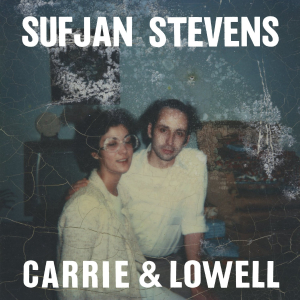
But above all, it is impossible to let Sufjan Stevens' latest pass us by. He's almost the sole contemporary Christian musician (mewithoutYou and Psalters are the only others that spring to mind) that I actually find interesting enough to listen to, partly because he's not afraid to deal in grit, uncertainty, spiritual conflict, and his own ugly aspects and experiences -- something many Christians are, to be blunt, too cowardly for. And I think I say this every time he releases an album, but Carrie & Lowell may be his best work yet. I didn't think he would ever surpass The Age of Adz, and his stuff is so good that I didn't even care. Still less did I think that piling achievement on top of achievement would come by revisiting the sound that characterized some of his earlier albums, like Michigan and Seven Swans. But Carrie & Lowell is, words fail me, great. Elusive without being annoying, melancholy without self-indulgence, spare and haunting and magical. "Fourth of July," "Drawn to the Blood," "All of Me Wants All of You," "John My Beloved," and "No Shade in the Shadow of the Cross" are -- well, nearly half the album, but some of my favorites. Seriously, I just, no words. Go forth and buy.

There were also some new book releases this year that I warmly recommend, among them Bill Hoard and Ben Faroe's episodic Hubris Towers, a Baltimore-based homage to John Cleese's beloved Fawlty Towers series, for which I think phrases like "a madcap romp" are most appropriate. Hoard, additionally, just recently released his own first book, The Dagger and the Rose, a classically constructed fairy-tale, which I'll be reviewing next month.

And now, turning to 2016, which is fast upon us, and which many of my readers are already in. My top ten readerships come from here in the US, Great Britain, Canada, France, Ukraine, Russia, Germany, Australia, Poland, and Malaysia. Greece and Belgium have been more to the fore of late, and, for whatever reason, my Russian readership has been way up over the last month. I always like wondering what prompts people from other countries to read my blog; surely some of them are Americans or other native Anglophones overseas, but I expect that at least some do hail from the countries they're reading from. I can't help but have my curiosity piqued by guessing at what could make a gay, anarchist Catholic interesting to a Russian reader.


In any case, thank you all so much for reading my blog; I'm glad you enjoy it (assuming you do -- but if you hate Mudblood Catholic, I wish you wouldn't read it, since I can only suppose it must be rotten spending your time on it). I hope you find it uplifting and thought-provoking, and, to you all,

Happy New Year
С Новым Годом
Bonne Année
Щасливого Нового Року
Frohes Neues Jahr
Szczęśliwego Nowego Roku
Selamat Tahun Baru
Εὐτυχισμένο το Νέο Ἔτος

And don't forget to go to Mass tomorrow in honor of the Mother of God. Goodnight.

Friday, December 25, 2015

Prayers for Christmas

Some of the prayers for midnight Mass on Christmas Eve, according to the Anglican Use. (I've included the Sanctus-Benedictus, though it is part of the ordinary of the Mass, on account of the unique translation used by the Ordinariate.)

Kalenda, or Christmas Proclamation

Today the twenty-fifth day of December,
When ages beyond number had run their course from the creation of the world, when God in the beginning created heaven and earth, and formed man in his own likeness;
When century upon century had passed since the Almighty set his bow in the clouds after the Great Flood, as a sign of covenant and peace;
In the twenty-first century since Abraham, our father in faith, came out of Ur of the Chaldees;
In the thirteenth century since the People of Israel were led by Moses in the Exodus from Egypt;
Around the thousandth year since David was anointed King;
In the one hundred and ninety-fourth Olympiad;
In the year seven hundred and fifty-two since the foundation of the City of Rome;
In the forty-second year of the reign of Caesar Octavian Augustus, the whole world being at peace,
JESUS CHRIST, eternal God and Son of the eternal Father, desiring to consecrate the world by his most loving presence, was conceived by the Holy Spirit,
And when nine months had passed since his conception, was born of the Virgin Mary in Bethlehem of Judah, and was made man:
The Nativity of Our Lord Jesus Christ according to the flesh.

Blessing of the Creche

Almighty and everlasting God, who as on this night didst cause thine only-begotten Son to be born of the blessed and glorious ever-Virgin Mary for our salvation:
Vouchsafe, we beseech thee, so to hallow and bless this Crib, wherein are shown forth the wonders of that sacred birth; that all those who, beholding the same, shall ponder and adore the mystery of his holy incarnation, may be filled with thy heavenly benediction unto life eternal;
Through the same Jesus Christ our Lord. Amen.

Introit for Christmas Eve

The LORD spake, and said unto me: Thou art my Son, this day have I begotten thee.
Why do the heathen so furiously rage together, and why do the people imagine a vain thing?
Glory be to the Father, and to the Son, and to the Holy Ghost: As it was in the beginning, is now, and ever shall be, world without end. Amen.

Collect for Christmas Eve

O God, who hast caused this most holy night to shine with the brightness of the Light of life:
Grant, we beseech thee, that as we have known the revelation of his light upon earth, so may we attain unto his heavenly joys;
Who liveth and reigneth with thee and the Holy Spirit, one God, world without end. Amen.

Preface of Christmas

It is very meet, right, and our bounden duty, that we should at all times, and in all places, give thanks unto thee, O Lord, Holy Father, Almighty, Everlasting God:
Because thou didst give Jesus Christ, thine only Son, to be born for us; who, by the overshadowing of the Holy Spirit, was made very Man, of the substance of the Virgin Mary his mother; that we might be delivered from the bondage of sin, and receive power to become thy children.
Therefore, with Angels and Archangels and with all the company of heaven, we laud and magnify thy glorious name, evermore praising thee and saying:

Sanctus-Benedictus

Holy, holy, holy, Lord God of hosts: heaven and earth are full of thy glory. Glory be to thee, O Lord most high.
Blessed is he that cometh in the name of the Lord. Hosanna in the highest.

This is the Mass my parish used last night: Tomas de Victoria's Missa O Magnum Mysterium, a lovely example of late Renaissance polyphony (we omitted the Credo, using a shorter version habitual at our parish, but did the rest of the ordinary).


And finally (though, alas! it is not part of any liturgy I know), the music and the lyrics of Sufjan Stevens' magnificent Star of Wonder.


I call you
From the comet's cradle
I found you
Trembling by yourself
When the night falls
Lightly on your right-wing shoulder
Wonderful know-it-all
Slightly where the night gets colder

Oh, conscience!
Where will you carry me?
I found you
Star of terrifying effigies
When the night falls
I carry myself to the fortress
Of your glorious cost
Oh, I may seek your fortress

When the night falls
We see the star of wonder
Wonderful night falls
We see you, we see you

I see the stars coming down there
Coming down there to the yard
I see the stars coming down there
Coming down there to my heart

Saturday, April 25, 2015

Five Quick Takes

I.

I am sick as a dog right now; I've got one of those awful, blitzkrieg colds that abruptly sets up shop in your nasal passages and won't go away. My head feels like Keith Richards has been living in it: my throat is sore, my nose is running, my eyes are burning, and my sneezes have become that wretched hot-breath kind that build up beforehand and sort of linger afterward. On top of which, my roommate has already turned the heat off, but the cold snap Baltimore's gotten means my room feels like a broken fridge, so I'm slowly accumulating a sort of nest in my bed where the blanket is, with orange juice and bottled water beside me, as well as a rapidly increasing plateful of kleenex (stop judging me, I was having dinner and then when I finished the trash can was far away). I've also discovered that Safeway-brand generic Mucinex tastes like grape-flavored candy. Related: fuck you, twenty milliliters every four hours, I'm a grown-ass man, and I'm going to do what it takes to make this virus take a dirt nap.

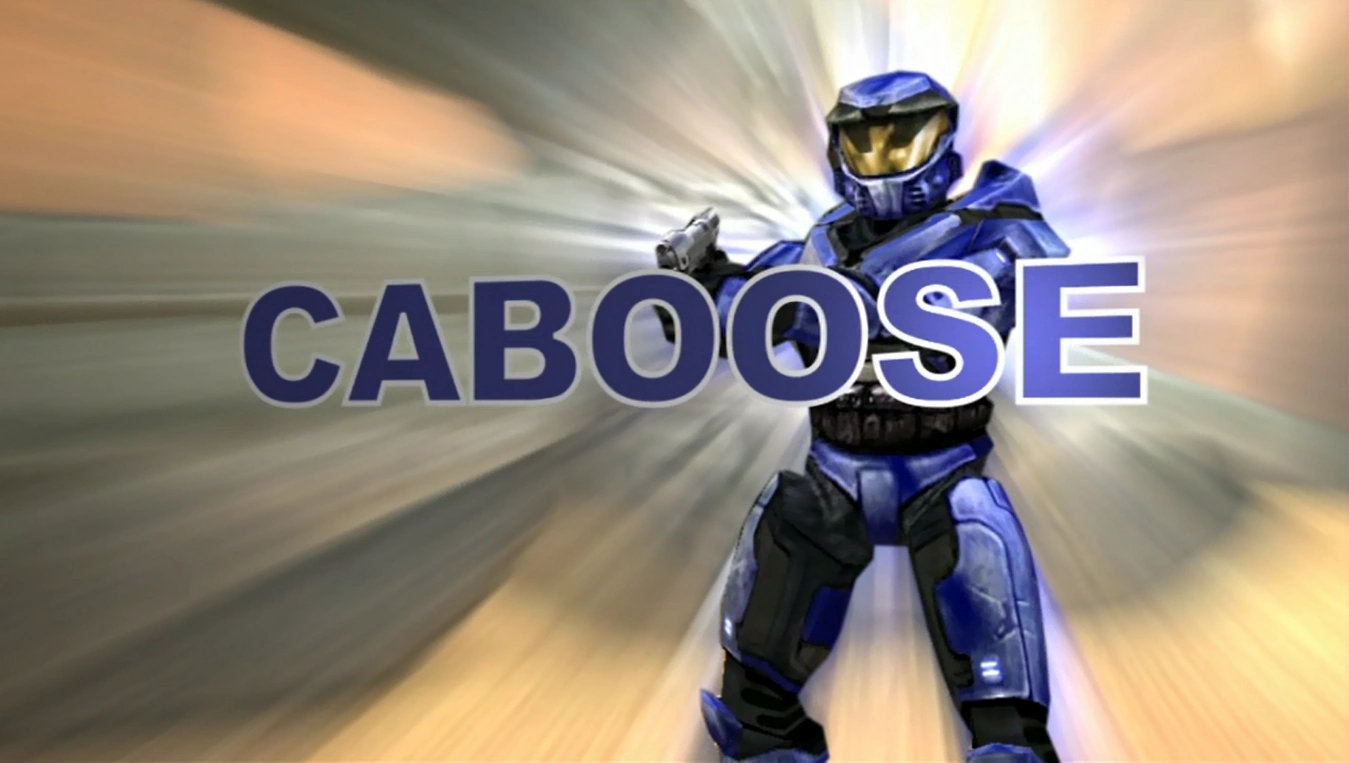
I've also been marathoning Red vs Blue, which I never saw start to finish back in the Before time, and is now on Netflix. Watching Caboose and Donut and Grif kind of makes me feel smart, butch, and industrious.


"That guy Tex is really a robot ... and you're his boyfriend! So that makes you ... a gay robot."

Life is glorious.

Anyway, if you'd pray for me, I'd be grateful. Maybe give a shout out to St Blaise, if you're into that.

+     +     +

II.

You may already have seen in the news that a sizable earthquake struck Nepal near Kathmandu this morning. An avalanche also occurred, and the death toll currently stands at something like 1400 people, I understand. Prayers for them are earnestly solicited; UNICEF and Oxfam are already setting up relief efforts, as are Catholic Charities and a number of other humanitarian organizations.

+     +     +

III.

There have been some fairly good articles on the gay marriage controversy of late. Two that stand out, because of their fair-minded and courteous approach from one side to the other, are Frederica Mathewes-Green's post on why she hasn't been culture-warring against gay marriage (though she is an Orthodox Christian), and Damon Linker's piece at The Week in defense of Ryan T. Anderson and of respect for differing convictions generally (though he supports gay marriage). Reading thoughtful, even-handed essays like these makes me miss Andrew Sullivan being at The Dish again.

+     +     +

IV.


Sufjan Stevens and Florence + the Machine both have new albums out -- Carrie & Lowell and How Big, How Blue, How Beautiful, respectively -- and I've fallen in love with them both all over again.

Florence Welch's sound is as magnificent as it was on Lungs and Ceremonials, and has a new, rock-like energy infused into it, notably on "What Kind of Man," whose music video incorporates her characteristically enchanting religious imagery and gripping violence. She's one of the few artists I've ever heard do justice to the ferocity that erotic love can have; many are content to write and sing merely of the joys and sorrows it imparts, and God knows there are enough of those. But romance would, in the end, be insipid if there were no sense of danger in the beloved, and Florence + the Machine's music is full of danger, and of the quasi-mystical exaltation that is so often connected with both danger and romance (the music video for "No Light, No Light" is a splendid example of this).


Carrie & Lowell, meanwhile, features a return to the indie folk of Sufjan Stevens' work before the experimental electronica of The Age of Adz, sounding almost like a throwback to Seven Swans, but with a buoyancy of its own, faintly reminiscent of Illinoise. The sheer volume of music he has put out in so short a span of time -- his first studio album came out in 2000, and since then he has released six more, plus two Christmas albums, a multimedia album, and a B-side album -- would suffice another musician for an entire career, and his craftsmanship is incomparable. His complicatedly Christian themes (which always remind me a little of Flannery O'Connor for their combination of devout faith with honest, gritty grappling with the anguish and mysteries of living) persist here, particularly in "No Shade In the Shadow of the Cross," "Drawn to the Blood," and "John My Beloved." I'm swimming in it.


+     +     +

V.

... Bleh. I can't think of a fifth thing. I just thought of four things. Isn't there any end to the things? It's like -- ehrmagehrd, there is a "Donut: The Musical" video!


I said stop judging me!

Wednesday, December 31, 2014

Ten Fascinating Artists of the Twenty-First Century

The approaching New Year has had me thinking about the artistic accomplishments of our century (and, indeed, millennium) to date, and I think we deserve due credit for having brought Jersey Shore and Rock of Love: Charm School into existence. Of course, for one of my tastes, "due credit" here would mean something along the lines of the reviews Sodom and Gomorrah got from Heaven, but perhaps the Lord is not so just as He once was.

Anyway, for those who care, here are my top ten most interesting artists of every sort from this century so far. This is most interesting, not necessarily best; I do in fact greatly like all the people I've listed here, but I've also left out a number of contemporary artists, such as Joss Whedon, whom I think talented and even brilliant, but who don't engage me as extensively or on as many levels as the following artists do. (For the musicians, I've tried to credit all the major band members I could find, but I couldn't find everyone, and even listing everyone I did find would be prohibitively long -- so, sorry to those who got shorted.) I've included a "See also" list for other artists that I find interesting for some of the same reasons, though they aren't necessarily that stylistically similar to the entry listed.


1. Sufjan Stevens


For I could not have shaken the touch of your breath on my arm
For it has stayed in me as an epithet
I am sorry the worst has arrived
For I'm on the floor in the room where we made it our last touch of the night
-- "I Walked," The Age of Adz

Art: Music
Style: Cryptic, genre-defying, romantic, mystical
Notable work: Seven Swans, Illinoise, Silver and Gold, The Age of Adz
Why he fascinates me: My first exposure to Sufjan Stevens was in the early years of college, via the album Illinoise, and it was a mind-altering experience. The range and inventiveness of Sufjan Stevens' work was like nothing I'd heard before. He shifts effortlessly between subdued folk stylings, baroque electronica, blendings of high orchestra with experimental rock, playing by no rules except the ones that dictate the interior logic of the work. Some musicians go through fewer musical ideas in a career than he can span in a single album -- and he's phenomenally prolific, having released eleven albums (some of them quite lengthy) since his 2000 debut A Sun Came. His lyrics are something else: I've rarely heard such poetry in popular music outside of Leonard Cohen. His religious pieces mix freely and naturally with the rest of his work, much of which is about the good and bad aspects of family, or found and lost love; and none of it is constricted by the saccharine, conventional tactics of much pop music and most Christian music. It's a crime he and his band haven't won a Grammy.
Recommended sample: "Casimir Pulaski Day" and "Get Real Get Right." The two songs, taken together, give you a fairly broad sampling of his style: the one is from Illinoise, one of the earlier albums, and is more or less pure folk; the other, from his recent album The Age of Adz, and exhibits his frequently weird and sci-fi-like lyrics, together with his willingness to combine classical and electronic elements.


2. David Wong


"I'm not crazy," I said, crazily, to my court-appointed therapist.
-- This Book Is Full of Spiders

Art: Literature
Style: Morbid, unreliable-narrator-ridden, full of pop- and net-culture riffs, intricately plotted
Notable work: John Dies At the End, This Book Is Full of Spiders
Why he fascinates me: David Wong (real name Jason Pargin) is a cunning author. The influence of movies and video games on his work is clear, but these are not cut-and-paste jobs like the meme-quilts one sometimes finds passed off as humor. His plots, and the philosophical problems (notably of identity, free will, epistemology, and social dynamics) that they explore or suggest, are powerfully constructed, while at the same time being veiled behind a layer of apparent shallow and irreverent douchebaggery. The dark, insane humor of the books and their easy prose make them extremely readable, and the universe Wong has constructed is mechanically fascinating, while sucking the reader by degrees into profound ethical analysis. Though by no means a manifestly religious writer, the books do turn upon some profoundly important questions and motifs characteristic of Christianity, Spiders particularly.
Recommended sample: John Dies At the End. There is a (grossly truncated, but still pretty good) film version, available on Netflix (or it was the last time I checked), summoned into existence by Don Coscarelli, creator of the cult classic Phantasm series and Bubba Ho-Tep, and featuring Paul Giamatti. The nice thing about the film is that it keeps the second-biggest twist of the book's plot, while leaving out the first, so that if you choose to whet your appetite for the book with the movie (as I did) you can still come to the book fresh.


3. Welcome to Night Vale (Joseph Fink and Jeffrey Cranor)


A friendly desert community where the sun is hot, the moon is beautiful,
and mysterious lights pass overhead while we all pretend to sleep.
-- "Pilot," Welcome to Night Vale (Episode 1)

Art: Radio (podcast)
Style: Lovecraftian, darkly humorous, absurd
Notable work: Every gorram episode; but, among the earlier episodes, 6, 10, and 19 are some favorites of mine
Why they fascinate me: This is the podcast that made me willing to be interested in podcasts, which I had hitherto ignored utterly. The show is basically NPR for a town where all of the X-Files are true, and in fact common knowledge -- at least, that's how it starts; as it proceeds, it gathers a plot and a collection of genuinely compelling, complex, sympathetic character arcs to itself, and makes a number of surprising moves. Like the previous entry, it is largely black comedy; like the next, and to some extent like Lewis Carroll, it plays a great number of delightful word games; but the feel of the place is all its own, and I've never met its equal. It makes a wonderful use of the limitations of its sound-only medium, creating characters and achieving imaginative effects that could only be depicted with great difficulty and expense via CGI, or in some cases (such as the character of the Faceless Old Woman Who Secretly Lives In Your Home) couldn't be produced at all. The podcast itself can be found at Commonplace Books, along with a number of other cool things that are really hot.
Recommended sample: This YouTube clip of the first half of "The Drawbridge," Episode 6. This contains some nice Night Vale fan art, of which there is a great deal, and also happens to have French subtitles.


4. Randall Munroe


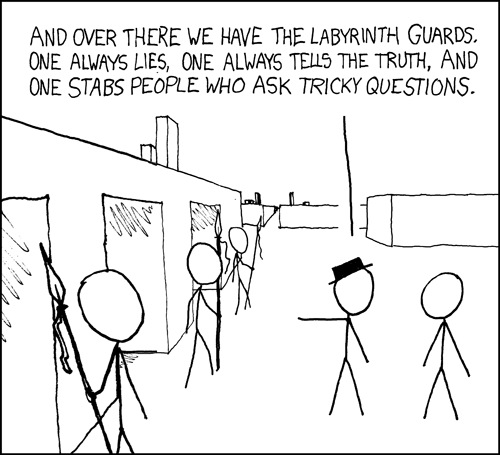
And the whole setup is just a trap to capture escaping logicians. None of the doors actually lead out.
-- Labyrinth Puzzle (xkcd 246)

Art: Webcomics (artist and writer)
Style: Visually sparing (for the most part) but remarkably expansive at times; verbally quick, ironical, and lighthearted
Notable work: xkcd, What If?
Why he fascinates me: There seems to be a curiously large number of physicists-turned-comics-artists (Bill Amend, the author of Foxtrot, is another), but Randall Munroe is far and away my favorite. The simple appearance of his art and even of many of his jokes belies a magnificent wit and creativity. Though a lot of his material is written for fellow math and science nerds, even most of that is comprehensible to a layman like myself, and a lot of his humor is pure, delightful silliness, word games, or appeals to universal human experience.
Recommended sample: Ah, don't make me choose! But this, this, this, and this are a very few of my favorite strips.
See also: Jeph Jacques (Questionable Content)


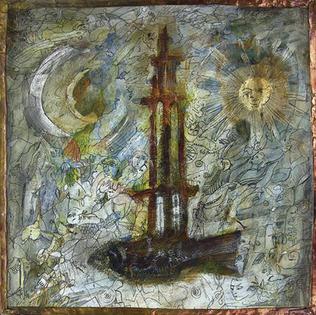
5. mewithoutYou (Aaron Weiss and others -- highly mutable membership)


Like an anchor-ever-dropped, seasick-yet-still docked
Captain spotted napping with his first mate at the wheel
Floating forgetfully along, there's no need to be strong
We keep our confessions long and when we pray we keep it short
-- "Messes of Men," Brother Sister

Art: Music
Style: Raw, dissonant, heavily textured, symbolic, God-haunted
Notable work: Ten Stories, Brother Sister
Why they fascinate me: I was raised, not exclusively, but very largely on Christian music, and an awful lot of it sucked. mewithoutYou don't consider themselves a Christian band per se (Weiss' parents, a Jew and a former Episcopalian, became Sufi Moslems when they married, it seems, so I have no idea what he or the other past and present bandmates consider themselves), but they deal with a lot of spiritual themes, most if not all of which are familiar and hospitable enough to a Christian; and, rarity of rarities, they do so with a deep, painful honesty and anguish that most professedly Christian artists are, to be blunt, too squeamish to employ. The fact that they're able to make their music, which is extremely avant-garde, sound good, is an accomplishment in itself -- it's one of those things that is easy to do at all but hard to do well, like free verse, and I find their mastery (particularly the diversity of the instruments they use) compelling. In addition to being profound, I find their lyrics unusually communicative despite their cryptic, allusive nature. I think and hope that mewithoutYou, along with Sufjan Stevens above, represent a new trend in Christian and Christian-influenced art, of simple artistic honesty and of viewing all human experience -- nice or not -- as proper material for the artist.
Recommended sample: "Fox's Dream of the Log Flume" from Ten Stories. The striking confluence of themes, the weird lyrics, and the unpolished, avant-garde sound are all highly characteristic.


6. Stephan Lacant


[After being punched by homophobic colleague] Is that the best you can do? Pussy!

Art: Film (director, writer)
Style: Meditative, with powerful moments of graphicness and/or brutality
Notable work: Freier Fall (English title "Free Fall")
Why he fascinates me: I ran across this film on Netflix, and was extremely impressed by it. So far as I can tell, this is Lacant's first professionally produced film; it's sort of a German response to Brokeback Mountain (response, not rip-off). The initiation of the story isn't quite as strong as it could be, but the rest is, in my judgment, perfect. The development of each of the central characters is perfect at every step, working out flaws to their logical conclusions in a manner reminiscent of Aristotle's advice in the Poetics. Lacant makes an excellent use of silence, something a lot of filmmakers, especially in America, seem to be rather afraid of (remember how Cast Away stood so alone in that way?); and, though there are rewarding moments and heartbreaking ones, the film never once slides into mere sentimental showmanship. I'm excited to see what else Lacant does, and I hope we don't have to wait too long.
Recommended sample: Freier Fall. Last time I checked, it was still available on Netflix instant, and is subtitled, not dubbed, thankfully. (Warning, it's a bit graphic -- there are a few, short scenes that pretty much amount to soft porn.)
See also: Weekend (film, dir. Andrew Haigh), In the Name Of (film, Polish title W Imie, dir. Malgorzata Szumowska)


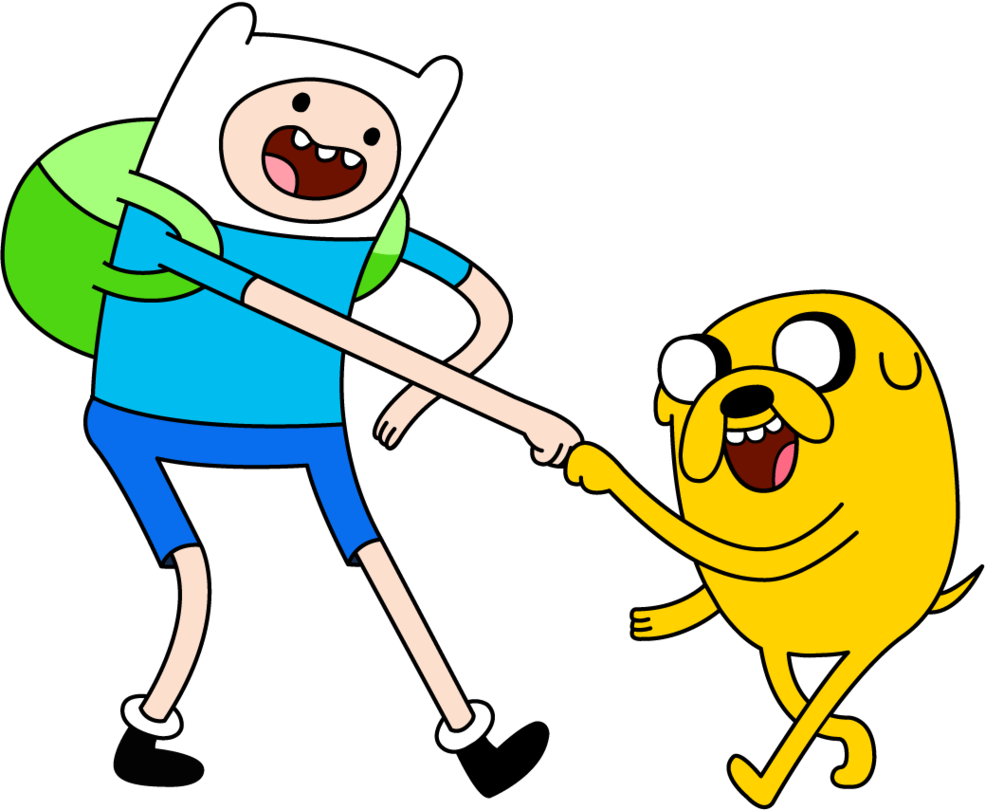
7. Pendleton Ward


"If you want the Hero's Enchiridion, slay this unaligned ant!"
"NEVEERRR!"
-- "The Enchiridion!," Adventure Time (Season One, Episode 5)

Art: Film (writer, animator)
Style: Innocent, mercurial, re-inventive
Notable work: Adventure Time
Why he fascinates me: Pendleton Ward is a good representative of a new trend in popular art, which was arguably started by the Homestar Runner website, of renewed innocence. Innocence is not generally spoken of as a good quality in art -- it tends to be equated with naivete, and relegated to children's books and cartoons, and it's certainly true that Adventure Time (and the other examples I've given below) are suitable for children. But the wit and creativity of these pieces far outstrips anything that most young children would notice or care about, and there are elements of each that are clearly designed for the pleasure of adults. This trend seems to me to represent a deeply healthy, and perhaps unconscious, assertion that innocence and maturity can be combined, as opposed to the cynical view that maturity and corruption tend to correlate. But, in addition to that, Adventure Time is just a great show: delightfully animated, funny, energetic, and imaginative.
Recommended sample: "Trouble In Lumpy Space," the second episode of the first season. This extensively features Lumpy Space Princess, one of my favorite supporting characters in this, or indeed any, series, who is voiced by Ward himself.
See also: Lauren Faust (My Little Pony reboot), Hayao Miyazaki, The Brothers Chaps (Homestar Runner)


8. Haint Blue (Mike Cohn, Dave Sheir, Mike Wolfe, Abby Becker, Nellie Sorenson, Ian Finch, Alex White)


As it was in the beginning, so shall we all turn to dust
But first I'm gonna kill you, son
-- "Father Abraham," Company of Ghosts

Art: Music
Style: Reinvented folk, with anticorportaist and sacrilegious themes
Notable work: Company of Ghosts
Why they fascinate me: I have written about Haint Blue before, quite recently in fact (and it so happens that they're playing here in Baltimore on the 2nd at the Ottobar). In addition to their great musical talent, Mike Cohn's lyrics are compelling in their explicit dealings with both the rejection of childhood religion and the inevitable familial consequences of that rejection, among other themes. There's something in it that reminds me of Flannery O'Connor, actually, though obviously not sharing her final conclusion: something of the same pungency and spiritual shock. In their own, very different, way, they're quite as profound as Sufjan Stevens or mewithoutYou on the other "side," and they're a talented bunch.
Recommended sample: "Father Abraham." The song "Untitled" at the beginning of the album is another stunner.


9. Lady Gaga


I'm just a holy fool, oh baby he's so cruel
But I'm still in love with Judas, baby
-- "Judas," Born This Way

Art: Music
Style: Over-the-top, highly sexed, ridden with Catholic symbolism
Notable work: The Fame Monster, Born This Way, ARTPOP
Why she fascinates me: Lady Gaga (nee Stefani Germanotta) was what I had kind of hoped Madonna would be: musically outstanding, incredibly lavish, and catchy as hell. I think she's underrated as a musician -- the rather cold reception of ARTPOP this year was, to my mind, an injustice to it, and particularly to the way she seamlessly blended dubstep influences into her earlier work. The thing that's really arresting for me, though, is her music videos, and especially their extensive use of Catholic imagery. To take one example, when "Judas" came out, the Catholic League complained about the music video (apparently without watching it, since the only people who could be said to be disrespectfully portrayed in it are Judas and the singer herself; not to mention the fact that the whole Judas motif is metaphorical anyway). I loved it, and found its allusions to Catholic artwork and religious iconography fascinating, and even, maybe, suggestive of a religious side to Lady Gaga that coexists with her extremely sexual stage persona -- it not being mine to say how true-to-life that stage persona is. I don't often feel I see musicians construct music videos that gel as finely with the songs they pair with as hers, which are more like genuinely multimedia affairs, instead of just "Here's a song. Oh, and here's a video." The complexity and ambiguity of her image, and its unclear relationship to her as a person offstage, seems to me to be itself an icon of much American pop culture and its relationship to the American people as we actually are. It'll be interesting to see whether that stays true.
Recommended sample: Again, hard to choose, and in any case most of you have heard a lot of her songs already. I think I'd go with "Aura" and "Monster," since those two (though in my opinion excellent specimens of her work) were never singles; I'd also recommend "Judas," partly for itself and partly for the visual splendor of the music video.


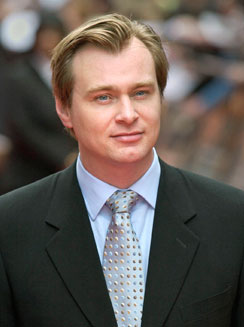
10. Christopher Nolan


I have to believe in a world outside my own mind. I have to believe
my actions still have meaning, even if I can't remember them.
-- Memento

Art: Film (director, writer)
Style: Dark, cerebral, philosophic, apt to jump around in time and space
Notable work: The Dark Knight, Memento, Inception
Why he fascinates me: I didn't really appreciate Nolan's work at first, in part because I always had a hard time remembering the names of directors. But, partly thanks to this article by Wayne Gladstone (whom we encountered in the notes to Wong's entry above), I suddenly began to piece together his cinematic career and its striking, individual quality. Stanley Kubrick could be as dark and brainy as Nolan, and a good deal weirder, but Kubrick seemed more interested in exploring the fringes of perception and thought, whereas Nolan seems almost to be translating central questions of epistemology into cinematic form -- though without being, for lack of a better word, preachy about it. The fact that he's able to film energetic, coherent narratives while darting from place to place and even time to time certainly establishes him as a consummate storyteller, Memento being the extreme example. Nothing against Martin Scorsese, but I kind of wish they'd handed the upcoming film version of Silence to him instead. I still haven't seen Interstellar, but I plan to.
Recommended sample: Inception, in addition to being an excellent movie, is probably the least grueling to watch -- grit being definitely one of Nolan's hallmarks.
See also: Quentin Tarantino, Kurt Sutter (creator of Sons of Anarchy), Baz Luhrman


Honorable and grossly-abbreviated mentions include After Hours (by Michael Swaim, Katie Willert, Soren Bowie, and Dan O'Brien), Rick Whitaker (Assuming the Position), the Wright-Pegg-Frost-Stevenson constellation (Spaced, Shaun of the Dead, Hot Fuzz) and The Wrong Mans (by James Corden and Matthew Baynton). But I'm honestly a little surprised I made it through ten, so I'll cut it off here.

And, Happy New Year, especially to my top ten countries of readers! Thus, to my readership here in the States, up in Canada, across the pond in the UK, and down under in Australia; Z Novym Rokom to my Ukrainian readers (sorry, the computer I'm using doesn't have settings for other alphabets, or none I know how to use); Bonne Annee to my French-speaking readers; Szczesliwego Nowego Roku to my Polish fans; Glukliches Neues Jar to my German readership; Tahun Baru Gembira, Malaysian readers; and S Novym Godom to my readers in Russia. I hope your 2015 is outstanding, everybody, whenever you are.