Collect

Collect for the Fourth Sunday after Trinity

O God, the protector of all that trust in thee, without whom nothing is strong, nothing is holy: increase and multiply upon us thy mercy; that, thou being our ruler and guide, we may so pass through things temporal, that we finally lose not the things eternal; grant this, O heavenly Father, for the sake of Jesus Christ thy Son our Lord, who liveth and reigneth with thee, in the unity of the Holy Spirit, ever one God, world without end. Amen.
Showing posts with label Edward Snowden. Show all posts

Wednesday, October 26, 2016

A Plague on Both Our Houses

MERCUTIO  I am hurt.
A plague o’ both your houses! I am sped.
Is he gone and hath nothing?
BENVOLIO             What, art thou hurt?
MERCUTIO  Ay, ay, a scratch, a scratch. Marry, ‘tis enough.
Where is my page?—Go, villain, fetch a surgeon.

—William Shakespeare, Romeo and Juliet, III.1.lv-ilx

✠     ✠     ✠

Nate Silver tells us there’s an eighty-odd percent chance that Mrs Clinton will be our next President, not that many of us really want her to be. What we don’t want even harder is for Mr Trump to be our next President. But at least nearly everyone is likely to be equally unhappy on 20th January 2017: Trump’s partisans will be unhappy because Clinton is being inaugurated, and those who voted for Clinton will be unhappy for the same reason.


I’ve said as much as I have to say about voting in this election before. This post is about why we’re fucked in a general way no matter who wins—although probably way more fucked if Trump were to take office, just because of his gross incompetence. Hillary may be a crook but she isn’t an idiot.

The problem is, The Issues on which this election, and most elections, officially take place have next to nothing to do with our actual power to function as a nation.1 What we’re threatened with are certain problems, many of which no one at all is talking about, and most of which aren’t treated as national problems even when they are. These include:

1. Eliminating surveillance of citizens.

This is what Snowden was protesting. It’s a fundamental breach of the Fourth Amendment, which addresses the right to privacy; ‘no Warrants shall issue, but upon probable cause, supported by Oath or affirmation, and particularly describing the place to be searched, and the persons or things to be seized.’2 It could be argued—and probably is, by the Department of Homeland Security—that this doesn’t address surveillance per se, but searching things manually was surveillance at that time. And in any case, the whole point is, quite obviously, that any intrusion on someone’s privacy must be justified by probable, not possible, cause (one backed up by a legally binding oath), and that such intrusions must have a defined object. So, for instance, searching for ‘a bomb’ or ‘an illegal handgun,’ not ‘weapons.’


Neither party is really interested in solving this problem—nor the problems with due process that our nation has entangled itself in over the course of the so-called War on Terror.3 Democrats like to pretend they are, because the Patriot Act was introduced under a Republican administration; but Obama signed the NDAA and nobody raised a stink,4 which shows that they’re just as cynically pragmatic as their opposite numbers in the GOP.

One of the necessary corollaries to this is that whistleblower protections have to be increased. (Snowden actually did attempt to go through official channels with his protest, and was shut down; and of course, since then, he has had his passport canceled while in Russia, rather a dickish move on the part of the government.) A society that punishes those who expose its faults can never be a free society. The mechanisms that sustain its freedom have already been destroyed.

2. Eliminating gerrymandering.

Gerrymandering—a.k.a., the practice of drawing congressional districts in totally asinine shapes so that whatever party is in charge during the time of drawing the districts can stay that way—is, in itself, totally hostile to any idea of real democracy. Either you have representative government, or you don’t, and gerrymandering interferes with representation, rendering it a don’t. Even the electoral college, as weird a system as it is, sort of tries to follow the actual population of the states. Neither party wants to confront this, because both of them want the option of using it to their advantage. (And sure, some of them likely feel there are more important things to do with their time, but honestly, I think they’re probably wrong—not because nothing’s more important than getting rid of gerrymandering, but because I find it highly unlikely that politicians care about those more important things, either.) Understand, I’m not saying that gerrymandering makes room for corruption; gerrymandering is corruption.

3. Deal with police corruption.


Corruption, excessive power, and lack of oversight plague our police force. These problems have been displayed most forcibly by the Black Lives Matter movement,5 but they’ve been exposed even in much smaller and stupider matters, like cyclists. I don’t know whether anything can be done on a federal level to confront police corruption, since police forces (if I’m rightly informed) are basically under the control of the fifty states. Nevertheless the scale of the problem is national—Florida, Missouri, New York, Ohio, Maryland, Louisiana, and Minnesota have all seen high-profile cases, and high-profile cases are always a small selection of reality. If we accept the authority of a national government at all, it is that government which is responsible to deal with this problem—as it will certainly be this government’s own problem if and when its failure to deal with it erupts into revolt and bloodshed.

My own opinion is that the British model of ‘policing by consent’ is the preferable alternative to … well, policing by guns, which honestly is kinda what American police seem to do. I think it should be implemented as swiftly and smoothly as possible, especially in cities, where the lack of a local, personal connection to police officers is so much likelier to impede their work.

4. Criminalize the practice of passing legislation without reading it.

It’s embarrassing that a rule like this would have to be stated in so many words, but you shouldn’t pass a law if you don’t even know what it fucking says. The irresponsibility is astonishing and disgusting.6 The law that springs to mind is the Affordable Care Act: not that I disapprove of health care being available to everyone—I’m strongly in favor of health care being universal, because come on, people shouldn’t have to cook meth or run a Kickstarter so they can not die—but that those fuckers passed that bill without reading it. I can barely words, in my attempt to describe how not okay that is. If our legislators can’t even be assed to read the damn things, why should we be required to obey them? If you want to jail us for disobeying a law, but you can’t even tell us what the law is, maybe that consequence should be turned around on you.

It could be argued, and with some justice, that no one on earth could face reading the Newspeak monstrosity that is [any bill here]. However, this seems to me to be better grounds for instituting a ‘Cut the crap and write comprehensible bills’ rule than for instituting laws that neither the populace nor their lawmakers understand. It isn’t often one gets to use the word Kafkaesque accurately, but here we are.


5. For fuck’s sake. Balance the budget.

The national debt of the US currently stands at about $19.4 trillion,7 or, to desanitize it just a little, 19,400,000,000,000 of dollars. In other words, if everyone in the country worked eight hours a day at a minimum wage job, for which their entire paycheck went to paying off the national debt, and taking no sick days, weekends, or holidays whatsoever—it’d still take twenty-two years to get the country out of debt.

This isn’t just an economic obscenity, though it is certainly that. It’s a warning. Countries that get in this kind of mess are at risk of becoming dictatorships, because a dictator, somebody with untrammeled and unaccountable power, is almost the only person who can actually put things in order once they get bad enough. A statesman who has to worry about reëlection, or even about being examined and perhaps disciplined by the rest of the government, has to please the electorate or the cabinet as much or more as he has to solve the actual problems he’s presented with. An unbalanced budget is, therefore, a great long-term plan for turning a democracy into a dictatorship—especially because the mechanism for putting a charismatic person in power and keeping him there is so readily available.8


If we, as a nation and as an electorate, don’t make a point of electing politicians who will do what it takes to balance the budget—and don’t accept what it will take—then we’re condemning ourselves to the consequences: a weak currency, an uncertain future for ourselves and our children, and the increased likelihood that the only person who’ll be able to restore order to a fractured society is a bona fide tyrant.

There are steps that could be taken: for example, reïntroducing the backing of currency (whether with gold or some other concrete thing), to help curb inflation and keep an actual relationship between the goods that are available and the money that ostensibly measures their worth. No such steps are likely under Mrs Clinton, and I think we can predict with total confidence that they will not happen under Mr Trump. But a clear grasp of the real problems facing us is the first necessity.

✠     ✠     ✠

1Ordinarily I’d make an exception here with regard to abortion: I don’t believe any nation can survive for long with any semblance of order and peace, as long as it dismisses certain human lives as beneath its consideration. The reason I don’t think abortion makes any difference in this specific election is that neither candidate is pro-life. Trump claims that he will appoint pro-life justices to the Supreme Court, but frankly, I wouldn’t trust him not to piss on my leg and tell me it’s raining. I mean, this is the man who said during the second debate, word for word, ‘I mean, I know about Russia, but I know nothing about Russia.’ To say nothing of the blatant lies he has been repeatedly caught in, not infrequently on video, about every subject under the sun.
2From the Fourth Amendment to the Constitution of the United States of America, emphasis mine.
3I say so-called because, even if we argue that every act that’s taken place under the ægis of the War on Terror was both just and necessary, it isn’t exactly a war; there’s no defined enemy and, therefore, no declaration of war—thus neatly circumventing both the provisions made concerning war in the Constitution, and also the guidelines carefully laid down by centuries of Just War Theory.
4If you have an innate impatience with reading linked articles (as I do), the short version of the NDAA is that any person suspected of involvement with, or substantial support for, Al Qaeda and Friends can be imprisoned indefinitely without so much as access to a lawyer. Yes, that includes American citizens, even on American soil; you’ll noticed they killed Anwar al-Awlaki (a citizen) with a drone strike, not in battle—still less did they arrest and try him. (Granted, al-Awlaki was apparently a monster, but the Bill of Rights contains no addendum reading ‘Unless they’re complete turdburglars, in which case you can just murder their asses.’)
5I don’t agree with everything the BLM movement’s proponents say. No one could, since many of them say different and incompatible things. But they have, in fact, spoken to the institutionalized racism that still influences much of our police force across the country, and for that, we owe them thanks.
6I would go as far as to say that passing (or repealing) a bill without reading it invalidates the law, ipso facto, because doing that violates literally the entire point of having laws: to govern the behavior of a community. If you don’t even know what behavior you’re prescribing or penalizing, then your pronouncements on the subject are worthless, and other people shouldn’t be bound by them.
7You’ll probably see lower estimates than this. These come from the (partly smoke-and-mirrors) technique of splitting up governmental debt into that which is officially held by the public, i.e. owed to non-government creditors (such as private individuals), and that which is intragovernmental, i.e. owed by one government department to another. Budget surpluses and deficits, meanwhile, have just about no reference to the national debt, only to the amount of money budgeted by Congress for the operations of government, which may or may not have anything to do with resolving our debt. Believe me when I say things only get stupider from here.
8Ironically, term limits may make this worse. The professed purpose of term limits was to keep anyone from tyrannically hanging on to power. The problem is, the shorter a term limit is, the less the person elected has any vested interest in actually doing the work they were elected to do, because they’re so beholden to popularity—a force that does little to preserve the healthy functioning of any state—that they can scarcely afford, politically, to think about anything else. A longer term limit allows the elected official breathing room in which they can (relatively) disregard the popularity of their policies; but of course, if they’re novices, that may not matter—especially when it comes to affairs as subtle as the budget—while if they’re experienced, limits on the number of terms they can have pose the same problem; and if limits on the number of terms an official can serve are abolished, then, for all practical purposes, so are term limits—as we’ve noticed in the case of congressional incumbents.

Friday, January 29, 2016

Catholic Anarchy, Part III: Sedition

In this same time … our good Lord shewed a ghostlie sight of his homelie loving: I saw that he is to us all thing that is good and comfortable to our help. … And in this he shewed a litle thing, the quantitie of a hasel-nutt, lying in the palme of my hand, as me seemed; and it was as round as a ball. I looked theron with the eie of my understanding, and thought, ‘What may this be?’ and it was answered generallie thus: ‘It is all that is made.’ I marvelled how it might last: for me thought it might sodenlie have fallen to naught for litleness. And I was answered in my understanding, ‘It lasteth, and ever shall: for God loveth it. And so hath all thing being by the love of God.’
—Lady Julian of Norwich, Revelations of Divine Love, ch. 5

✠     ✠     ✠

How, then, is a state to be overthrown? There are two ways of doing so, direct action and indirect action; indirect action (in an ostensibly democratic culture such as ours) tries to elect people who will work to dismantle the structures of power, while direct action simply tries to get on with the dismantling and never mind electing anybody. Of these, only direct action is likely to be any good, because not one man in a thousand is going to dismantle the system that put him in power; he is far likelier to work, as far as in him lies, to render that system hostile to his rivals for power.1


Direct action can again be divided into two kinds: the coercive and the persuasive. Coercive direct action includes all techniques that rest on either violence or the threat of violence, from armed revolt to sabotaging property to holding Cold Stone Creamery executives at gunpoint with demands for socialized ice cream distribution. By contrast, persuasive direct action encompasses the range of tactics that appeal to the opponent’s conscience and intellect, from pamphleteering to strikes to non-coöperation with the law.

As a professed pacifist, I naturally look to persuasive rather than coercive action. But, given that I view my pacifism as a matter of personal calling, not universal obligation, the question remains of whether I prefer persuasion as a matter of liking, or think that it’s simply better strategy than coercion; and I think the latter.

The chief argument in favor of coercive direct action is that it accomplishes radical change in a short period, which persuasion can’t, because some people just won’t be persuaded. The trouble about this argument is that it’s wrong from start to finish.

First of all, let’s talk about radical change. It shouldn’t be confused with merely drastic change. The word radical comes from the Latin radix,2 which means ‘root’; it is change at a root level, a change of heart, that is at stake here. And coercive means can’t effect that. Thinking it could was the error of the Middle Ages at their worst, attempting by force of arms to protect and expand the dominion of the Prince of Peace. Trying to force profound change on a population breeds only hypocrisy; it’s a law of human nature. Radical change has to come from within, and be permitted to flower through patient tending—pulling a plant will not make it grow taller, and the harder you pull, the likelier you are to tear it up.

Persuasion is not the best way of effecting a change of heart: it’s the only way. For many people it may not do its work alone: it may require experiment or experience for them to change their minds. And, yes, there will always be people who can’t be reached. ‘That we should wish to cast [Sauron] down and have no one in his place is not a thought that occurs to his mind.’3 That’s life, and there’s no getting round it.

But the fact is, coercive direct action does accomplish something. It can right certain material injustices, even if it can’t effect radical change as such. Surely that’s better than nothing?


Maybe. Maybe not. It depends on what the coercion brings with it. But we can say this about all coercion, before we know anything else about it: it is, whether implicitly or practically, violent. And if violence is the problem, adding in more violence is doomed to failure. Not all anarchists are pacifists, either personally or philosophically, but the state’s power to compel is something we all object to, and compelling them to cut it out is pure hypocrisy.

The only way it could be justified is to classify the agents of the state as the enemy, an other, not a human neighbor. Both Christianity and democracy forbid such a thing. And anyway, if the problem with the state is the separateness of the state and the people, siding with the people just makes it worse. It doesn’t solve anything. Dehumanizing one’s opponents is always wrong; which is why I describe myself, in the words of Dorothy Day, as a pacifist in the class war.

So what does persuasive direct action actually consist in? It has three primary forms: advocacy; striking; and civil disobedience. Advocacy includes every kind of argument for anarchy, spoken and written, from pamphlets to full-length books. It also encompasses techniques chiefly meant to draw public attention to the cause of anarchism, like protests or artistic displays. The aim here is persuasion in its purest form: gaining a hearing from people, explaining what we mean by anarchy, and trying to convince them to adopt it.

Striking is normally a refusal of work in some way or other.4 A walkout at a company (especially in fields of work with ‘hard’ products, like farming or construction, as opposed to ‘soft’ products like entertainment or research) is the commonest form, and its aim is to bring about negotiation, or to bolster the cause of the strikers in an ongoing dispute; the same is true of rent strikes, culture strikes, and student strikes. I know only little about this, as I’ve never been in a position to participate in one (partly because I’ve been fairly well treated by my employers to date). Abstaining from voting can be considered a form of striking as well; though, given there's no quorum for electing public officials—i.e., no matter how low voter turnout is, the person who gets the most votes out of that turnout will win the election—it’s largely symbolic, and blends a little into the third category.

Lastly, there is civil disobedience: this is peaceful but direct defiance of the law. This may be a symbolic action, like Gandhi’s Salt March, or it may be simply a result of conscience clashing with legislation. There are times when anybody should do this, anarchist or not, as when the resistance movements in Europe in the 1940s concealed Jews. That isn’t so much anarchism as basic human decency. When it comes to specifically anarchist civil disobedience, though, the technique has a more determinate character. Civil disobedience doesn’t require attention-grabbing defiance of every individual law; after all, many laws do codify right behavior no matter who did the codifying, and many more are just less trouble (and no affront to your dignity as a person) to obey than to make a fuss over.

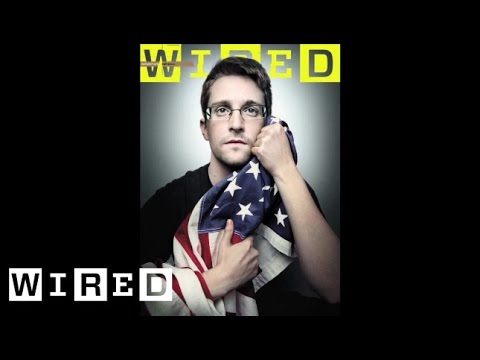
But some laws aren’t like that. Some laws are simply wrong, and should not be obeyed, or should even be specifically disobeyed: for example, not only should you not turn Jews over to the Nazis (not obeying), you should help them get away, however much you can (disobeying). Rosa Parks’ famous refusal to coöperate with the segregationism of the Montgomery bus system, though not a defiance of a law exactly, is of a kind with civil disobedience. A more exact and contemporary example would be Edward Snowden’s disclosure of surveillance information; that the spying was going on in the first place was wrong, and it was also wrong that it was being kept secret; his publication was, therefore, an act of conscience, a symbolic protest, and a kind of advocacy all in one.


Okay, the pic may be a little melodramatic, but the article's good and hefty.

Other laws, while they may not be violations of justice per se, may still be unwarranted, offensive intrusions into the general human right of liberty. Quiet refusal to fall in line with laws that have no right to be instituted are not usually effective as protests, but, from an anarchist point of view, they’re perfectly legitimate choices ethically (for example, in places where selling alcohol is banned on Sundays, an anarchist would see nothing immoral about selling and buying it anyway).

But what does any of this matter? There are never many Parkses, Snowdens, or Gandhis in any generation. What effect can something as small as one person have on an entire political system? What can one woman or man do?

First, break the spell of size. The state may be huge, but it is made of human beings; there’s nothing else in it. If there are many of them, there are many of everybody else, too. And second, it is our submission to coercion that gives it its power. Sedition doesn’t have to mean conspiracy and rebellion, when it is conducted not against the powerful but against their power; sedition can be as simple and clear as the word No. Realize for a moment that every state would crumble to dust in a day if everyone in its simultaneously refused to coöperate with its directives. Only one thing is needed to bring down principalities and powers: namely, the will to do it. From the moment we choose it, we have liberty. All the rest is the flower; the will is the seed.


How can this sort of sedition have victory? That’s what persuasive direct action is for: annoying your friends into agreeing with you. Because with every person you convince, the number of free people expands. Maybe, one day, the state will crumble; in the meantime, anarchy has already begun.

✠     ✠     ✠

1There have been exceptions: Cincinnatus, the first dictator of republican Rome, was famous for being a dictator that actually followed Roman law and retired when the emergency was over; similarly, King Juan Carlos of Spain, who quietly blended in with the totalitarian regime of Francisco Franco, emerged after the tyrant’s death as a democratic reformer, transforming his own office into a constitutional monarchy. But these men are precisely exceptional. Rulers like Julius Cæsar, William of Orange, Napoleon Bonaparte, Vladimir Lenin, and Augusto Pinochet are the rule. Being trapped in the spider’s web of power politics is a far commoner fate even among would-be reformers, men being what we are.
2From which we also get the word radish, which is why radishes have long been a symbol of political unrest [citation needed].
3Said by Gandalf in The Lord of the Rings: The Two Towers, Book III.
4Hunger strikes are the only exception to this that I’m aware of, but, like the other forms of strike, they are often used as a negotiating tactic, or sometimes for publicity.

Monday, February 16, 2015

Five Quick Takes

I.

Lent starts the day after tomorrow, and I'm still not sure what I'm going to do. I am stocking myself up with delicious food against the fast on Wednesday -- and I took the precaution of taking that day off work, because for whatever reason I get frightfully short-tempered when I fast -- but I haven't picked a discipline to adopt, or even a book to go through. (Last year I read Theology of the Body, which I recommend; you can get through it over one Lent if you read three or four sections a day, which is a tall order when what you're reading is St John Paul II, but doable.)


Though we made little use of it at my parish this year, our calendar does retain the pre-Lenten season as an option, in which the vestments are switched from green to purple (commemorating the purple robe of the Passion) and the Alleluia is removed from the liturgy, but the Gloria is retained until Lent proper. I like the way each season of the liturgical year interlocks with the next in the Anglican Use and Tridentine calendars. The conclusion of the Epiphany season in Candlemas, February 2nd, the celebration of Christ being presented in the Temple, is emblematic of this: it is a joyful feast, and part of the Christmas cycle, but in its memory of the prophecy of Simeon, it also looks forward to Jesus' Crucifixion and the anguish of the Mother of God. The movement of the Christian year -- from our Lord's descent into time in Advent and Christmas, His earthly life from then through Holy Week to the Ascension, and then returning into eternity with His humanity in Pentecost and Trinity -- is a beautiful thing, and I'm glad to have found a tradition that observes it in its richness.

+     +     +

II.

Snow is falling outside at the moment. (I specify because, in the ancient house I live in, snow falling inside is not altogether out of the question.) Baltimore is, I'll be frank, a ratty, run-down city; I've said before that it grows on you, like a fungus. But almost anywhere is beautiful when it's covered with snow, and not only because the grime is hidden. There's some magic quality that snow has -- one that grown-ups, sadly, tend to lose touch with in grumbling about the traffic and the shoveling. I feel as though, if it felt the way it looks, it would be warm instead of cold. The silence it lays over things is like an enchantment. And the way fresh-fallen snow glitters always gets me, like something out of a fairy tale. I'll take even nasty traffic for this.


+     +     +

III.

I've been thinking about ISIS lately. I feel weirdly dumb, having a sense like I ought to do something about it, and having no idea what I possibly could do. Pray, certainly; it's amazing how easy it is to dismiss that -- both in theory ("Yeah, sure, I'll pray, but I want to do something too," as if prayer, entered into in faith, isn't doing something) and in practice ("Sure, I'll pray for you," and then you never do). It's easy to feel powerless, with or without prayer, when contemplating the brain-numbing savagery of these men. And it's easy to feel oneself torn between the desire to protect the defenseless, the desire to adhere to nonviolent love even to the point of martyrdom, and mere naked fear at the thought of actually going to Syria or Iraq and doing either one there.

Easy, too, to go for the blame game: "Sure, Islam is a 'religion of peace' -- look at ISIS!" As though Christendom didn't have equally nasty skeletons in its own closet. I'm sure the dead of the Salem Witch Trials, the Inquisition, the Thirty Years' War, and the St Bartholomew's Day Massacre would have something to say about the claims of Christianity to be a religion of peace.

I wish I had any idea what to do. Good thing I'm not in charge of anything. Admittedly it isn't clear to me that the people who are in charge of anything have any idea what to do, but, in a universe this size, almost anything is possible.

+     +     +

IV.

I've run across a number of extremely good Catholic pieces on matters gay and trans lately, such as this bizarre, lovely, haunting essay on, of all things, Reddit. There are also these two essays on Melinda Selmys' blog, one by Mrs Selmys herself, and one by a trans woman, Edie Fetch, both interacting with a recent essay on Public Discourse (the online magazine of the Witherspoon Institute) that also sparked my recent post on the subject. And there is this piece by Aaron Taylor at Spiritual Friendship, advancing a really fascinating theory about the genesis of the conservative Christian mindset about sexual orientation and identity, and its effects on church unity.

+     +     +

V.


It kind of alarms me that so few people I know seem to be really, thoroughly suspicious of the government. Even our house-trained media, who get many facts wrong, interpret most of them still worse, and report everything out of context, lay enough scary information about the government in front of us to sponsor five or six anarchist insurrections among a robustly independent people, and our response as a nation is a reverberating "Meh."

Of course, even as an anarchist, I think an insurrection would be even worse. (Though I give full weight to the phrase I think, as opposed to the alternative I'm sure.) Violence is generally a bad answer to violence for much the same reasons that fire is a generally bad answer to fire.

All the same, it bothers and baffles me sometimes the way the spirit seems to have gone out of this nation. I love my country, and to see her respond to things like the Snowden affair by watching the news, having a meandering conversation in a coffee shop, and then forgetting about it, is deeply disheartening.


Never mind the fact that surveillance has reached a pitch of invasiveness and universality hardly seen since the advent of the Soviet state. (Wasn't the whole point of resisting Communism to not have this happen? I feel like that got away from us, somewhere in there.) Never mind the fact that the executive branch, through the despicable use of that little phrase "police action" and a hundred other forms of cowardice, has been getting around making an honest declaration of war (which would require the assent of Congress) for the last thirty-five years. Never mind that both the current President and his predecessor are war criminals, implicated in some of the most barbaric campaigns of torture, in some cases of complete innocents and in all cases uselessly, that the civilized world has yet seen. And never mind that the financial and coercive powers granted to the state in what is a period of war and paranoia in the face of terrorism are not likely to be done away with when that period comes to a close.

What am I saying? Do mind all of that.