Collect

Collect for the Fourth Sunday after Trinity

O God, the protector of all that trust in thee, without whom nothing is strong, nothing is holy: increase and multiply upon us thy mercy; that, thou being our ruler and guide, we may so pass through things temporal, that we finally lose not the things eternal; grant this, O heavenly Father, for the sake of Jesus Christ thy Son our Lord, who liveth and reigneth with thee, in the unity of the Holy Spirit, ever one God, world without end. Amen.

Sunday, June 11, 2017

Dona Eis Requiem, Part II

Help him as far as possible, not by tears, but by prayers and supplications and alms and offerings. For not unmeaningly have these things been devised, nor do we in vain make mention of the departed in the course of the divine mysteries, and approach God in their behalf, beseeching the Lamb who is before us, who taketh away the sin of the world; not in vain, but that some refreshment may thereby ensue to them. … Therefore with boldness do we then intreat for the whole world, and name their names with those of martyrs, of confessors, of priests. For in truth one body are we all, though some members are more glorious than others; and it is possible from every source to gather pardon for them, from our prayers, from our gifts in their behalf, from those whose names are named with theirs. Why therefore dost thou grieve? Why mourn, when it is in thy power to gather so much pardon for the departed?

—St John Chrysostom, Homily XLI on I Corinthians

The Church is Catholike, universall, so are all her Actions; All that she does, belongs to all. … All mankinde is of one Author, and is one volume; when one Man dies, one Chapter is not torne out of the booke, but translated into a better language; and every Chapter must be so translated … but Gods hand is in every translation; and his hand shall binde up all our scattered leaves againe, for that Librarie where every booke shall lie open one to another … Any mans death diminishes me, because I am involved in Mankinde; And therefore never send to know for whom the bell tolls; It tolls for thee.

—John Donne, Devotions upon Emergent Occasions XVII

✠     ✠     ✠

I said I’d make some suggestions about what Catholics can do to reach out to the LGBT community, in commemoration of Orlando, and I will start with the most and least practical thing, which is to pray for the dead. Most practical, because you can do it without even getting up, and for the dead themselves it is the only thing you can do; also, because I have a hunch that you won’t in fact do anything else for them, or for us the living LGBT community, if you don’t start here. Least practical, because you have responsibilities to the living that are not discharged by praying for somebody else. But these prayers are the subject of this post.

A brief reminder, which should be unnecessary: we do not know the eternal fate of any departed soul except those whom the Church has declared to be saints. We know1 that those who have been canonized are in heaven with God. No other soul’s destination has been revealed to us; for all we know, hell could be entirely empty of human souls (and it may be noteworthy that in the terrifying parable of the sheep and the goats, hell is described by Jesus as a place that was never designed for humanity at all). No one, for a Catholic, can be adjudged beyond the hope of final reconciliation and entry into the glory of God.2


A Divine Mercy Chaplet or a Rosary would be peculiarly suitable, fifty beads for fifty dead. If you are a priest, I appeal to you to make the dead of the Pulse shooting one of the intentions of your next Mass.

These are the names of the victims:3

Stanley Almodovar III, age 23
Amanda Alvear, 25
Oscar Aracena-Montero, 26
Rodolfo Ayala-Ayala, 33
Alejandro Barrios Martinez, 21
Martin Benitez Torres, 33
Antonio Davon Brown, 30
Darryl Roman Burt II, 29
Jonathan Camuy Vega, 24
Angel Candelario-Padro, 28
Simón Adrian Carrillo Fernández, 31
Juan Chavez Martinez, 25
Luis Daniel Conde, 39
Cory James Connell, 21
Tevin Eugene Crosby, 25
Franky Jimmy Dejesus Velázquez, 50
Deonka Deirdre Drayton, 32
Mercedez Marisol Flores, 26
Peter Ommy Gonzalez Cruz, 22
Juan Ramon Guerrero, 22
Paul Terrell Henry, 41
Frank Hernandez, 27
Miguel Angel Honorato, 30
Javier Jorge Reyes, 40
Jason Benjamin Josaphat, 19
Eddie Jamoldroy Justice, 30
Anthony Luis Laureano Disla, 25
Brenda Marquez McCool, 49
Jean Mendez Perez, 35
Kimberly Jean Morris, 37
Akyra Monet Murray, 18
Jean Carlos Nieves Rodriguez, 27
Luis Omar Ocasio Capo, 20
Geraldo Ortiz Jimenez, 25
Eric Ivan Ortiz-Rivera, 36
Joel Rayon Paniagua, 32
Enrique Rios Jr., 25
Juan Pablo Rivera Velázquez, 37
Yilmary Rodríguez Solivan, 24
Christopher Joseph Sanfeliz, 24
Xavier Emmanuel Serrano-Rosado, 35
Gilberto Silva Menendez, 25
Edward Sotomayor Jr., 34
Shane Evan Tomlinson, 33
Leroy Valentin Fernandez, 25
Luis Sergio Vielma, 22
Luis Daniel Wilson-Leon, 37
Jerald Arthur Wright, 31

As well as the perpetrator and final casualty:

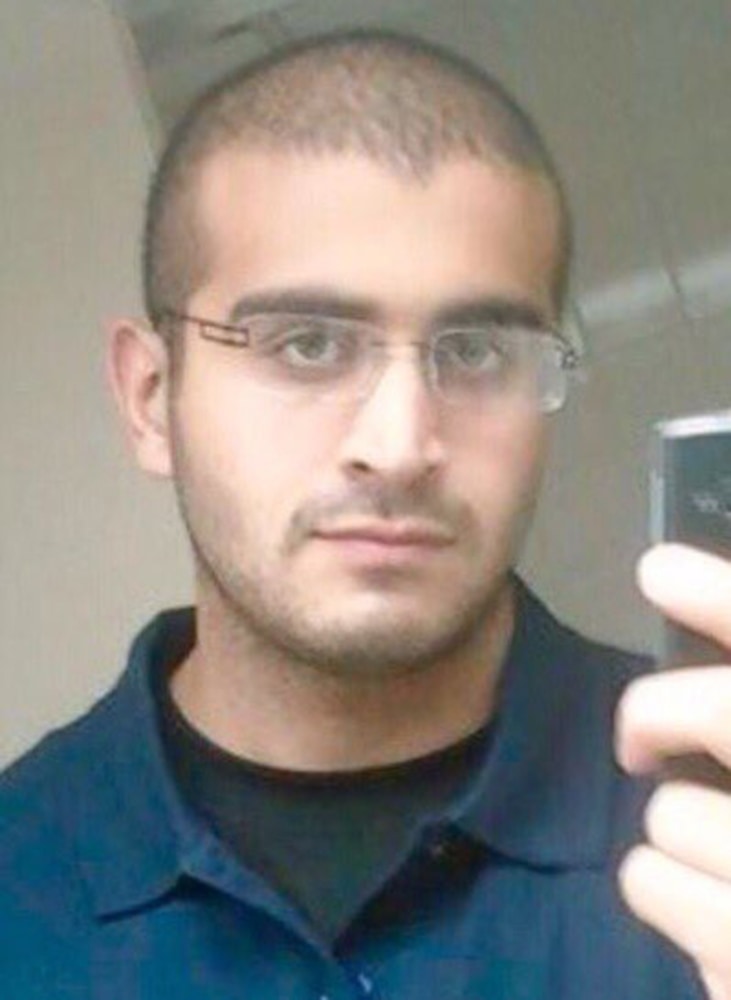
Omar Mateen, 29

Do not omit to pray for him, Christian. Our faith moves us to forgive—or at least begin to forgive—or, failing that to, to beg the grace to begin; or, it is worthless. Prayer, for others or oneself, is an act of compassion: it isn’t given because it’s deserved, it’s given because it’s needed.

✠     ✠     ✠

1Or more exactly, if we accept the Catholic religion we believe this to be the case.
2Not until the Last Judgment, anyway; but that can take care of itself.
3The names are listed alphabetically by surname. Given the extremely high proportion of Latino victims, some of the names may not appear where an English speaker would expect, as Spanish surnames are taken from both the father and the mother, with the mother’s second but the father’s treated as primary: e.g., someone named Juan Martinez Reyes would be listed under M, not R.

Wednesday, June 7, 2017

Dona Eis Requiem, Part I

It is, no doubt, impossible to prevent his praying for his mother, but we have means of rendering the prayers innocuous. Make sure that they are always very ‘spiritual,’ that he is always concerned with the state of her soul and never with her rheumatism. Two advantages will follow. In the first place, his attention will be kept on what he regards as her sins, by which, with a little guidance from you, he can be induced to mean any of her actions which are inconvenient or irritating to himself. Thus you can keep rubbing the wounds of the day a little sorer even while he is on his knees; the operation is not at all difficult and you will find it very entertaining. In the second place, since his ideas about her soul will be very crude and often erroneous, he will, in some degree, be praying for an imaginary person, and it will be your task to make that imaginary person daily less and less like the real mother—the sharp-tongued old lady at the breakfast table. In time, you may get the cleavage so wide that no thought or feeling from his prayers for the imagined mother will ever flow over into his treatment of the real one.

—C. S. Lewis, The Screwtape Letters III

✠     ✠     ✠


It’s hard to write about the massacre in Orlando a year ago. One fucked up guy and a couple guns and fifty1 dead people. Anti-gay violence is nothing new, and neither are terrorist attacks. But I’d really been lulled into a false sense of security by the political victories of the LGBT movement2 over the last several years. It didn’t seem possible. It’s weird to think that there are people out there who literally want us dead.

Debate over Mateen’s exact motive continues; conflicting reports about his behavior and attitudes vis-à-vis homosexuality, even from those who were close to him, makes it difficult to draw any conclusion—although the inconsistencies may reflect a man who was conflicted with himself. And whether he was straight or gay or bi, it is true that religious fanaticism, on his own showing, played a role as well: in his first 911 call that ugly night, he professed loyalty to ISIS and called his own actions a form of vengeance for US airstrikes in the Middle East.3 But: when he wanted revenge on America, he didn’t pick a mall or a stadium or an office building. He picked a gay bar.

I was and remain bitterly disappointed with the massive silence of Catholics.4 Our bishops, our fathers, were not there for us. Maybe it was cowardice, maybe it was callousness, whatever—the brute fact is that the biggest mass shooting in American history was also the biggest act of violence against LGBT people in American history, and yet, Your Excellencies, for all your talk of its being deplorable that homosexual persons have been and are the object of violent malice and that such treatment deserves condemnation from the Church’s pastors wherever it occurs,5 we needed you and you abandoned us. Forty-nine of us died in those rooms, and your requiem for us was fifty-eight words of vague rhetoric that didn’t even acknowledge the cause.

Why do I ask that cause to be acknowledged? Because my God, put your money where your mouths are.


Homophobia—i.e., fear of or hatred for homosexuals—is real. The catalogue of killings that were probably or even explicitly motivated by it does not, in my opinion, allow room for any serious dispute on the subject.6

Homophobia is unjust. This is so obvious on Catholic principles that I am ashamed to write it. And even if the obviousness were not enough, it is stated in black and white in every Church document that addresses homosexuality.

Therefore, Catholics should do their part to oppose homophobia. That is part of what holiness to the Lord means.


I’m devoting this series to some practical instances of what Catholics, laymen and clergy alike, can do to support LGBT people, especially Christian ones but all in general. Not that I flatter myself that Mudblood Catholic is nationally influential, but I wouldn’t like to storm about inaction from fellow Catholics and then go mum about what action might look like.

Nor can I really be as judgmental as I’d like to be; chastity is also part of what holiness to the Lord means. But please, Excellencies, fathers, at least admit the principle in so many words. Two of you did, Cardinal Cupich of Chicago and Bishop Lynch of St Petersburg. But we need more than that. Because what we keep hearing from Catholics is—love, of a sort, but a love that has a compelling need to correct, and doesn’t seem to have any need to issue effectual, clear rebuke to those who insult, reject, brutalize, even murder us. Why does your love need so much explaining?

✠     ✠     ✠

1Omar Mateen shot one hundred and two patrons of Pulse, of whom forty-nine died; Mateen himself was killed by police.
2That I’m a little ambivalent about some of these victories is neither here nor there. The point is, when society seems to be increasingly friendly to gays, you don’t expect a mass murder to happen at a gay bar.
3Interestingly, while LGBT people and leftists generally preferred to accent the homophobic hypothesis of the crimes, and Christians and conservatives were all about how it was an act of terrorism, nobody seemed very eager to mention what Mateen explicitly attributed the attack to: US killings of civilians, particularly women and children, in airstrikes. Considering how horrified and angry we are about ISIS’s executions in Iraq and Syria, we might consider being more careful not to follow their example or give them an impression of justification.
4I am grateful to say that my own parish was not typical in this way; my pastor added a supplication for the victims of the attack to the Prayers of the Faithful, before I’d heard about it myself.
5These quotations come originally from the Catechism. The USCCB incorporates them in its own document addressing the principles of pastoring LGBT people.
6No, this isn’t the same as asserting that everything that’s called homophobia really is. Censuring a behavior isn’t always motivated by fear or wrath, though it can be, or there can be a mixture of motives.

Tuesday, May 30, 2017

Five Quick Takes

✠     ✠     ✠

I.

I haven’t forgotten my series on natural law theory and Dr Feser’s essay on the perverted faculty argument. To my surprise, I’ve found still more to disagree with in his last few pages—the range of possible thoughts is huge, isn’t it—and so I’ll be writing one last post to address that.

Chesterton probably didn’t have my sort of (ugh) lifestyle in mind when he said that the walls of Catholic dogma were the walls of a playground, but I very much find it to be true. I feel so much more at ease in a definite world, even one with aspects I definitely dislike, than I ever did as a Protestant; in nine years that delight has never gone away. Some of my optimism, not to say naïveté, about the Church has indeed gone away—heaven and earth shall pass away, but my word shall never pass away.

II.

Four months into Trump’s presidency, and and impeachment has already become something much more than the wishful thinking of the die-hard left. Time flies, doesn’t it.

III.


In my incessant quest to waste as much time as possible on Netflix, I’ve finally branched out a little from ‘Archer’ and started watching a couple of more controversial programs: ‘The Keepers’ and ‘13 Reasons Why.’ I’m only one episode into the former, so I won’t offer a detailed opinion on it except to say that so far it’s pretty good. I still haven’t finished the latter, so I will opine cautiously about it, but I will say a few things.

One is that I’m not totally seeing where the controversy over it is coming from.1 I thought about suicide every six months, at least, when I was in high school—actually pretty much through all my teen years. And so far the depiction of Hannah Baker’s life is pretty convincing. (And it must be said, the acting, script, and directing are all outstanding. The show should get an Emmy.) Both teens and grown-ups do act like that sometimes, up to and including the huge project that forms the framing device of the series. If people are concerned that watching a series about suicide might influence a teenager toward suicide or self-harm of their own, that’s a valid concern; but most works of art are ill-suited to some audience or other. It’s a reason to recommend the work judiciously, not a reason to criticize the art or the artist.

Of course, there is a far less creditable possibility: namely, that the people who feel themselves represented in the show resent the implied criticisms it makes of them. Teachers, counselors, and administrators aren’t portrayed in an altogether flattering light, including failure to respond adequately to allegations of sexual assault or notice signs of suicidal thoughts; but that isn’t exactly unknown. I don’t know if anybody at my school or among my friends or even in my family knew I thought about it. And the brute fact is that authority figures aren’t always appealing as confidantes, not because they can be intimidating but because they can be annoying.


See, saying cutesy stuff like this to someone whose reason was 'I was too scared to do it before 
and now I'm not' or 'Because last time my mom was still alive' is actually a fairly shitty idea.

I know that when I was young, depressed, and contemplating self-slaughter, the ‘suicide prevention’ lectures were certainly no help. From them, I learned the correct way of slitting my wrists, and that my only hope was to traipse off to the guidance office, bare the recesses of my soul to a flaky, middle-aged woman like the one hosting the series, and put myself on happy pills. I recall sitting in the back of the auditorium, with my black skirts swirling around me like a pool, ruminating on the cluelessness of the people who had arranged the lecture series. Their understanding of my psychology, I concluded, was utterly puerile.2

And leaving school personnel aside, not every person is eager to deal with the effects their actions, even the smallest ones, can have upon others. Judging from what I’ve watched thus far, Hannah’s character kills herself over an overwhelming heap of things that crushed her, not over one thing she couldn’t endure—and not over depression or mental illness, which are often but not always linked to suicidal ideation, because people are not machines where everything will go smoothly as long as you get all the default settings right.

IV.

Most of my earliest memories were made on Fort Ord, which was cheek-by-jowl against Monterey, California, and you were never too far from the sound and scent of the ocean there. Ever since, I’ve never felt totally right when I’m too far inland—I’ve got to be near a coast, at least able to drive out and see it if I have a day off. It isn’t the same as watching the sun set, red and gold, in the Pacific, sitting on one of those big, ragged rocks on the coast of Monterey Bay, while the salt wind whips against your face; but I’ll take what I can get.


I kept telling myself last summer that I was going to make a trip to Rehoboth. Or some beach, anyway, and Rehoboth happens to be one of my favorites that’s within a day’s drive: it doesn’t have the trashiness and commercial hugeness of Ocean City, or the face-dissolving pollution of the Chesapeake (and the less said about the putrescent smell of Baltimore’s Inner Harbor the better, though I’m not above going there when I really want a fix of seaside). It’s a cozily built town, and you can find parking before you gnaw your own leg off from ennui. Fingers crossed to get out there some time this summer.

V.

Bacardi white rum sucks. I said it. I’m not sorry. Tastes like margarine. What doesn’t suck is Jameson and Grand Marnier over ice with a few dashes of Angostura bitters (kind of a poor man’s Manhattan, but without the vermouth because I didn’t feel like buying any, and without the twist of lemon because I was too lazy to cut a lemon).

✠     ✠     ✠

1Probably the silliest critique I’ve yet encountered was by a reviewer from the New York Times, who found it unbelievable that somebody would listen to the recordings made by the suicide victim slowly instead of all in one go, saying that ‘It makes no sense as anything but a plot device,’ because people only behave in one way, ever, and would never be reluctant or intimidated to hear a close friend’s explanation of why she killed herself.
2Melinda Selmys, Sexual Authenticity, p. 30.

Thursday, May 25, 2017

Absolved

It is a largesse of spirit—courtesy, generosity, humility, charity—which is seen in the corporal vehicles—say, the carnal vehicles, of the women. They define the doctrine in their gestures; the mind apprehends it. It is the same doctrine which is defined intellectually … by the Christian philosophers. What is Christianity but a doctrine of largesse? The doctrine of the Trinity is a doctrine of largesse; the doctrine of the Incarnation and the creation is a doctrine of largesse; the doctrine of the Redemption is a doctrine of largesse; the doctrine of heaven is in every way a doctrine of largesse.

—Charles Williams, The Figure of Beatrice

✠     ✠     ✠

Had a really great session with my counselor yesterday. So, I’ve done some shit that is just horrifyingly awful. I confessed (as part of my general confession when I first became a Catholic), so I have long known, rationally, that those sins forgiven by God; but letting go of the urge to punish yourself is weirdly hard.


I’ve always been annoyed by the language of forgiving yourself—I mean, forgiveness is a relational act, right? so it sounds dumb to talk about doing that to yourself, except in a sort of allegorical sense, maybe? Then again, we do relate to ourselves, don’t we. Anyway, whether forgive yourself is a silly phrase or not, it certainly expresses a truth, that it’s hard to accept God’s forgiveness. It’s easy to believe that there’s nothing you can do to wipe away what you’ve done, but curiously hard to believe there’s nothing you have to do to try. Maybe it’s our chronic fear of being taken in by something too good to be true … They have chosen cunning instead of belief. Their only prison is in their minds, yet they are in that prison; and so afraid of being taken in that they cannot be taken out.1

Point is, my counselor helped me be taken out. It was scary while it was happening, because I don’t know that I had ever been quite that vulnerable with Christ, and some of the memories I was dealing with are still sore to the touch. Surgery is scary. But I jumped in, because it isn’t like I could avoid it forever, except in hell. Better to get it over with, like vegetables at the dinner table as a child.2

It felt almost exactly like looking Christ in the face. No, in the eyes. And looking someone in the eyes and telling them about some horrible things you’ve done, in plain English, is terrifying.


He forgave. He already had, of course. But I had to tell him specifically instead of generally, because I had to see the forgiveness happening, had to have it re-presented, to credit it for myself. I don’t know if it’s my Calvinist upbringing or my ego or just run-of-the-mill neurosis, but, while it’s easy enough to repress and ignore my faults, it’s very hard indeed to believe that they’re forgiven, pardoned, by the Person whose opinion of me matters the most.

I have a hunch that this clinging to guilt has something to do with why chastity is so frightfully difficult for me. I suspect it’s not quite as simple as using sex as a direct anodyne for guilt or shame; I mean, I think I do that too, but there’s something else going on in here. (Isn’t it funny that we live with ourselves literally all our lives, and yet find our minds and feelings so mysterious? It’s so Lost In the Cosmos.) My impulse toward self-destructiveness does seem almost that simple, an attempt to restore psychic balance through self-punishment.3 Chastity per se, though … there’s an anguish in it that I don’t think can be explained merely by the frustration of a self-destructive impulse. All the same, I think my interior universe got a little more harmonious, which I hope will make things a little easier—at least to understand, and maybe to do as well; though in writing that I can’t help but think of Jesus’ strange saying, If any man do his will, he shall know of the doctrine. Who knows—maybe that comes next.


✠     ✠     ✠

1C. S. Lewis, The Last Battle, cap. XIII: How the Dwarfs Refused To Be Taken In.
2My unofficial motto for the last twenty-five years has been This is gonna hurt. I’m not a super healthy person, if you hadn’t already gathered that from the everything about me.
3That doesn’t work, it turns out.