Collect

Collect for the Fourth Sunday after Trinity

O God, the protector of all that trust in thee, without whom nothing is strong, nothing is holy: increase and multiply upon us thy mercy; that, thou being our ruler and guide, we may so pass through things temporal, that we finally lose not the things eternal; grant this, O heavenly Father, for the sake of Jesus Christ thy Son our Lord, who liveth and reigneth with thee, in the unity of the Holy Spirit, ever one God, world without end. Amen.
Showing posts with label Islam. Show all posts

Saturday, November 28, 2015

The Facts About Islam

There's a lot of misinformation about Islam available, and a lot of it has gotten mixed into the controversy over Syrian refugees in the wake of the terrible attacks in Paris earlier this month. These attacks themselves, and the debate surrounding them, are part of the larger uncertainty and disputation over Islam and its relations with the West since September 11th, and arguably longer still, reaching back to the First Gulf War or even the Iranian hostage crisis.

It is, as always, much easier to find partisan arrangements of facts, factoids, and unfacts than it is to get at the truth -- whether we're talking about the truth about Islam generally, or about specific things that hit the news. I'd like to share some of what I've picked up in my studies (partly academic, mostly idle and incidental) of history, religion, and food.

1. Is Islam is a Religion of Peace or a Religion of Violence?

No; or, if you prefer, yes.

The first difficulty -- which Christians, especially Catholics, ought to appreciate (but often don't) -- is in establishing what we mean by Islam: are we talking about the creed or about its followers? For once the question is raised at all, it's obvious that these need not be the same at all.

There is no denying that Islam was spread by the sword from its earliest days. This is awful. That said, it must also be pointed out that these were wars of conquest, not extermination, and did not involve eliminating Jews and Christians -- which is more than can be said of the wars of Christendom, which regularly strove to eliminate not only Moslems, but also Jews and whatever Christians were believed (however correctly) to be the wrong kind. The Reconquista and unification of Spain, followed by the Inquisition and the forcible conversion or expulsion of the Jewish and Moorish populace, are an extreme example, but they are an extreme example of a phenomenon that was commonplace enough.

So am I saying that Christian sins legitimize Moslem sins? Not in the least. I'm not even saying that Christian sins revoke our right to rebuke Moslems for sinning, whether we speak as Christians ourselves or as the Western heirs of Christendom -- though there's plenty to be said for that. My only point here is that, if Christianity can make any valid claim to be a religion of peace in the face of our own history, then it is at least possible that Islam can make the same claim.

No one could claim that peace is central to Islam as many claim that peace is central to Christianity. I would point out, though, that telling other people what their religion does and doesn't consist in is a little rude, a little pompous, and a little ridiculous. If anybody is going to tell us what sort of religion Islam is, it ought to be Moslems, for much the same reasons that our source for what Catholicism is ought to be Ronald Knox or Peter Kreeft as opposed to, say, Lorraine Boettner or Norman Geisler.

2. Was Muhammad a Saintly Hero or a Cruel Lunatic?

Well, was Martin Luther King Jr. a pioneer of minority rights and pacifism, or a serial adulterer?

Muhammad is a difficult figure to evaluate, and not just because the sources about him are confusing and sometimes incompatible. He's a difficult figure to evaluate because he was complicated. This is natural; religious founders, who do such exceptional things, tend likewise to be very exceptional people, whatever our opinion of the religious traditions they found. Joseph Smith, Confucius, Martin Luther, Aleister Crowley, Pythagoras, St Paul -- it's tricky to get to the bottom of any one of them.

Muhammad was certainly not perfect, even by the standards of his own time, to say nothing of the criticisms of his behavior we would launch today (with regards to his marital rape of Aisha, for instance).* Neither, of course, was St Peter, as St Paul so tactlessly pointed out. But on Christian premises this point, when you get right down to it, really only matters to Muhammad at this point -- and, on materialist premises, can't really matter to anybody, since he is both wrong and dead. Meanwhile, if we accept the view that we are judged by God after death, he's passed that gate, and what we have to decide about his legacy is not whether he was a sinner -- he was -- but whether he was also right, and how far. Bringing in "But he was a total jerk!" isn't relevant to that inquiry even if it's true.

And, for what it's worth, it isn't true, or it isn't the whole truth. He could be cruel, utilitarian, and lascivious at times; probably no more so than the European leaders of Christendom in the Renaissance and the Reformation (on both sides), men and women whom we readily and rightly admire. Admission of flaws does not cheapen greatness; but we can cheat ourselves out of admiring and imitating the great by admitting only their flaws. As for Muhammad's greatness, he elevated the status of women and slaves from where it had been; he was generous and kind to the poor; he opposed racism; and -- this is something that Christians often fail to appreciate -- he converted an entire people from one of the cruder varieties of paganism to complete monotheism. That alone is a massive religious advance, and the Catechism goes out of its way to affirm that it is the true God whom he worshiped and proclaimed, with whatever imperfections of understanding.


3. Are Most Moslems Supportive of Terrorism or Opposed to It?

Here, there is for once a simple answer: most Moslems are opposed to terrorism, whether as a means of spreading Islam or for any other reason. This is in part because most Moslems are not crazy people. It is, also, because most victims of Moslem terrorism are fellow Moslems.

One of the chief inspirations of terrorists in general is a puritan or fundamentalist approach to religion, and one of the characteristic targets of all fundamentalists is, not those outside, but those whom they regard as fifth columnists -- traitors in the house. It's noteworthy that the Inquisition was primarily concerned with heretics, not with Jews, witches, or Orthodox Christians in Catholic territories. Likewise, the main victims of al Qaeda, the Taliban, ISIS, and the rest have been Moslems whom they consider lax or heretical, not Christians, Jews, or Westerners.** Indeed, this is one of the many reasons that so many people are fleeing the Levant -- being Moslem doesn't protect them.

It's also worth pointing out that a lot of radicalization happens, not in the Middle East or other places where Islam is a dominant cultural presence, but right here in the West. The terrorists in Paris, for instance, were French and Belgian nationals, and it's been suggested -- not implausibly -- that the attacks were aimed at terrifying the West, not into submitting to Islam, but into turning refugees away and forcing them to stay under the hand of ISIS. Or Dzhokhar and Tamerlan Tsarnaev, who came to this country as the children of asylum seekers and were radicalized under the influence of Anwar al-Awlaki, an American native who graduated from Colorado State. Which makes them rather like Scott Roeder, who shot abortionist Dr. George Tiller through the eye while the latter was serving as an usher at his church; or Timothy McVeigh, who, scarred by his experiences in the Gulf War, murdered 168 people in the Oklahoma City bombing in an effort to make a point about American hypocrisy about Dresden, Hiroshima, Baghdad, and countless other devastated cities and populations. America is a great place to breed terrorists, apparently -- though I wonder whether bringing in a few thousand refugees who are specifically trying to get away from terrorism might not dilute that quality.
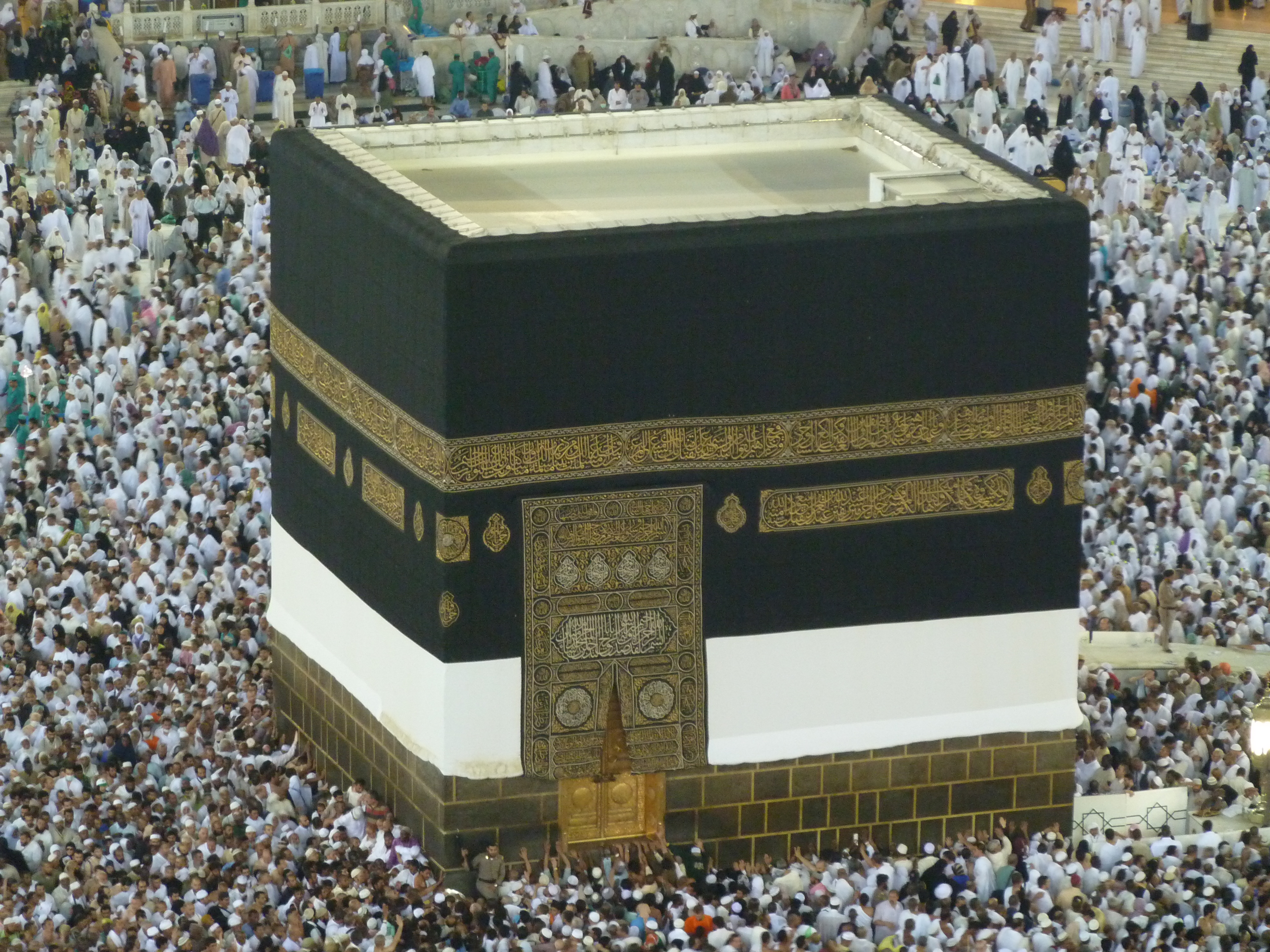

4. Are Moslems Refugees Dangerous?

No. The hypothesis that they're dangerous doesn't make sense, and the statistics about them don't back up the idea, either.

Now, to begin with, plenty of refugees from predominantly Moslem countries, such as the Syrians fleeing ISIS, aren't Moslems in the first place. Christians, Jews, Zoroastrians, Yezidis, and atheists have as much reason to get out of the Middle East as Moslems do. But equally, many Moslems have as much reason to get out as these other believers and non-believers do, for the reasons cited above. Most of them aren't crazy, and the ones that are would presumably prefer to stay in a place where crazy is the order of the day.

Turning to the statistics proper, the U.S. has admitted well over 750,00 refugees since September 11th. Of those, a whopping three have been connected to terrorist campaigns and conspiracies, which I think can be safely classified as an insignificant percentage if we're grading on a curve. For contrast, over sixty times that many American nationals have left this country to join ISIS. Or hey, just compare it to something as exotic and suspicious as cars; something like 1.3 million people are killed in car accidents every year, whether chauffered by terrorists or otherwise.

Hail, Queen of Heaven, the Ocean Star,
Guide of the wanderer here below,
Thrown on life's surge, we claim thy care,
Save us from peril and from woe.
Mother of Christ, Star of the sea,
Pray for the wanderer, pray for me.

In fine, there are few simple answers to be had, few facts about Islam that can be categorically asserted. That's life. That doesn't mean there's no truth to be had, or no way of making decisions; what it does mean is that in this situation, like all the other ones, we have to be guided by patient thought and gathering as many facts we can, not by violent political rhetoric that panders to our fear and pride.


*I'm well aware that Muhammad's marriage to Aisha, and indeed the consummation of that marriage, would not have been considered wrong or even odd at the time. I think this lessens his responsibility -- recognizing right and wrong in the particular ways one's own culture has obscured them really is hard. I don't think that it changes the nature of the act; and I also don't think that Muhammad's virtue or lack thereof says anything, one way or the other, about the legitimacy of his prophecies.

**Fun fact: al Qaeda and the Taliban have both denounced ISIS for being too crazy. (Think of your send-'em-back-to-Africa uncle ranting about how awful Hitler was.) This has also apparently prompted some in our own government to propose using al Qaeda to fight ISIS, because Americans never learn anything, ever, whether from history or from the past five minutes.

Monday, February 16, 2015

Five Quick Takes

I.

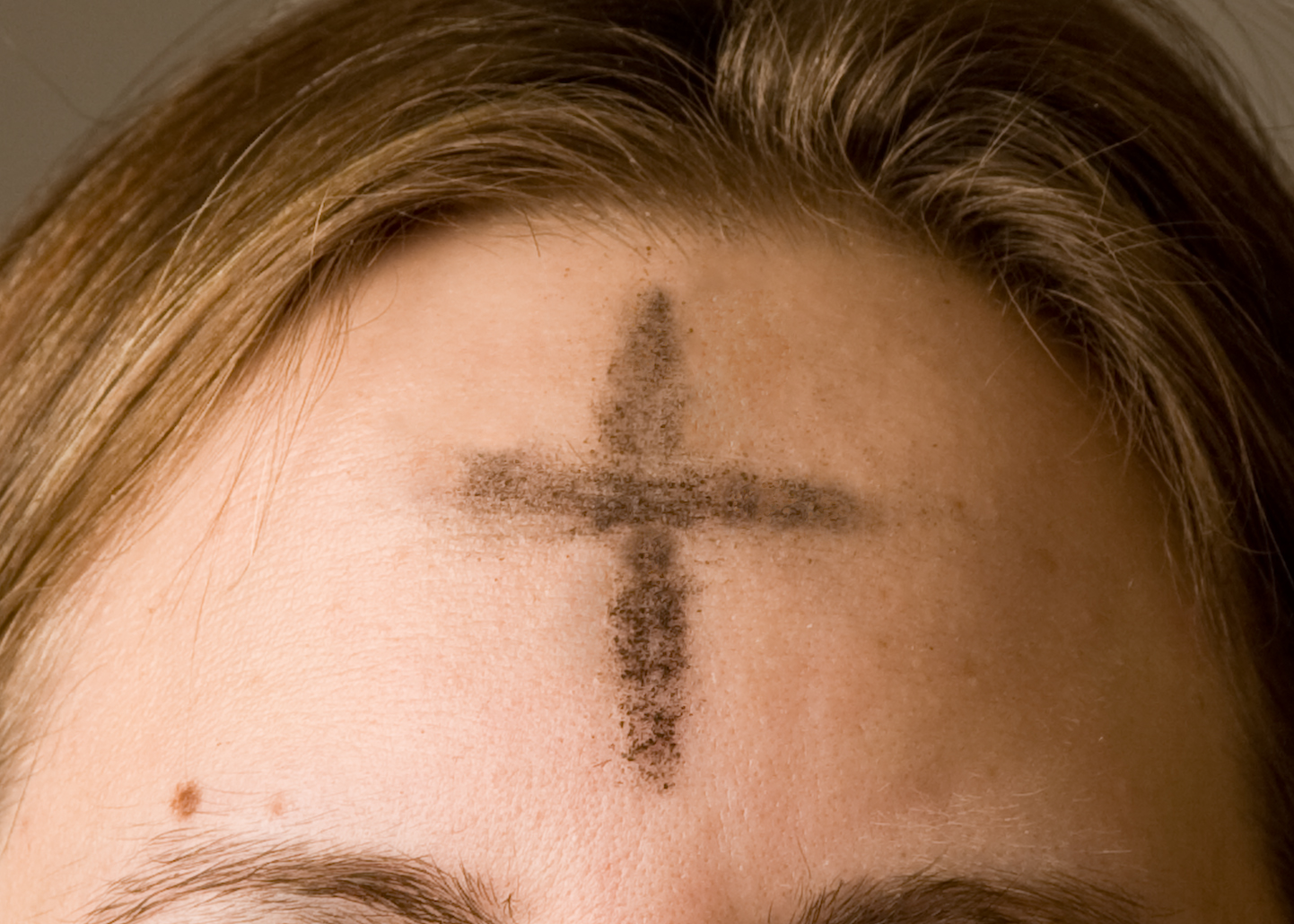
Lent starts the day after tomorrow, and I'm still not sure what I'm going to do. I am stocking myself up with delicious food against the fast on Wednesday -- and I took the precaution of taking that day off work, because for whatever reason I get frightfully short-tempered when I fast -- but I haven't picked a discipline to adopt, or even a book to go through. (Last year I read Theology of the Body, which I recommend; you can get through it over one Lent if you read three or four sections a day, which is a tall order when what you're reading is St John Paul II, but doable.)


Though we made little use of it at my parish this year, our calendar does retain the pre-Lenten season as an option, in which the vestments are switched from green to purple (commemorating the purple robe of the Passion) and the Alleluia is removed from the liturgy, but the Gloria is retained until Lent proper. I like the way each season of the liturgical year interlocks with the next in the Anglican Use and Tridentine calendars. The conclusion of the Epiphany season in Candlemas, February 2nd, the celebration of Christ being presented in the Temple, is emblematic of this: it is a joyful feast, and part of the Christmas cycle, but in its memory of the prophecy of Simeon, it also looks forward to Jesus' Crucifixion and the anguish of the Mother of God. The movement of the Christian year -- from our Lord's descent into time in Advent and Christmas, His earthly life from then through Holy Week to the Ascension, and then returning into eternity with His humanity in Pentecost and Trinity -- is a beautiful thing, and I'm glad to have found a tradition that observes it in its richness.

+     +     +

II.

Snow is falling outside at the moment. (I specify because, in the ancient house I live in, snow falling inside is not altogether out of the question.) Baltimore is, I'll be frank, a ratty, run-down city; I've said before that it grows on you, like a fungus. But almost anywhere is beautiful when it's covered with snow, and not only because the grime is hidden. There's some magic quality that snow has -- one that grown-ups, sadly, tend to lose touch with in grumbling about the traffic and the shoveling. I feel as though, if it felt the way it looks, it would be warm instead of cold. The silence it lays over things is like an enchantment. And the way fresh-fallen snow glitters always gets me, like something out of a fairy tale. I'll take even nasty traffic for this.


+     +     +

III.

I've been thinking about ISIS lately. I feel weirdly dumb, having a sense like I ought to do something about it, and having no idea what I possibly could do. Pray, certainly; it's amazing how easy it is to dismiss that -- both in theory ("Yeah, sure, I'll pray, but I want to do something too," as if prayer, entered into in faith, isn't doing something) and in practice ("Sure, I'll pray for you," and then you never do). It's easy to feel powerless, with or without prayer, when contemplating the brain-numbing savagery of these men. And it's easy to feel oneself torn between the desire to protect the defenseless, the desire to adhere to nonviolent love even to the point of martyrdom, and mere naked fear at the thought of actually going to Syria or Iraq and doing either one there.

Easy, too, to go for the blame game: "Sure, Islam is a 'religion of peace' -- look at ISIS!" As though Christendom didn't have equally nasty skeletons in its own closet. I'm sure the dead of the Salem Witch Trials, the Inquisition, the Thirty Years' War, and the St Bartholomew's Day Massacre would have something to say about the claims of Christianity to be a religion of peace.

I wish I had any idea what to do. Good thing I'm not in charge of anything. Admittedly it isn't clear to me that the people who are in charge of anything have any idea what to do, but, in a universe this size, almost anything is possible.

+     +     +

IV.

I've run across a number of extremely good Catholic pieces on matters gay and trans lately, such as this bizarre, lovely, haunting essay on, of all things, Reddit. There are also these two essays on Melinda Selmys' blog, one by Mrs Selmys herself, and one by a trans woman, Edie Fetch, both interacting with a recent essay on Public Discourse (the online magazine of the Witherspoon Institute) that also sparked my recent post on the subject. And there is this piece by Aaron Taylor at Spiritual Friendship, advancing a really fascinating theory about the genesis of the conservative Christian mindset about sexual orientation and identity, and its effects on church unity.

+     +     +

V.


It kind of alarms me that so few people I know seem to be really, thoroughly suspicious of the government. Even our house-trained media, who get many facts wrong, interpret most of them still worse, and report everything out of context, lay enough scary information about the government in front of us to sponsor five or six anarchist insurrections among a robustly independent people, and our response as a nation is a reverberating "Meh."

Of course, even as an anarchist, I think an insurrection would be even worse. (Though I give full weight to the phrase I think, as opposed to the alternative I'm sure.) Violence is generally a bad answer to violence for much the same reasons that fire is a generally bad answer to fire.

All the same, it bothers and baffles me sometimes the way the spirit seems to have gone out of this nation. I love my country, and to see her respond to things like the Snowden affair by watching the news, having a meandering conversation in a coffee shop, and then forgetting about it, is deeply disheartening.


Never mind the fact that surveillance has reached a pitch of invasiveness and universality hardly seen since the advent of the Soviet state. (Wasn't the whole point of resisting Communism to not have this happen? I feel like that got away from us, somewhere in there.) Never mind the fact that the executive branch, through the despicable use of that little phrase "police action" and a hundred other forms of cowardice, has been getting around making an honest declaration of war (which would require the assent of Congress) for the last thirty-five years. Never mind that both the current President and his predecessor are war criminals, implicated in some of the most barbaric campaigns of torture, in some cases of complete innocents and in all cases uselessly, that the civilized world has yet seen. And never mind that the financial and coercive powers granted to the state in what is a period of war and paranoia in the face of terrorism are not likely to be done away with when that period comes to a close.

What am I saying? Do mind all of that.

Saturday, August 30, 2014

Three English Martyrs

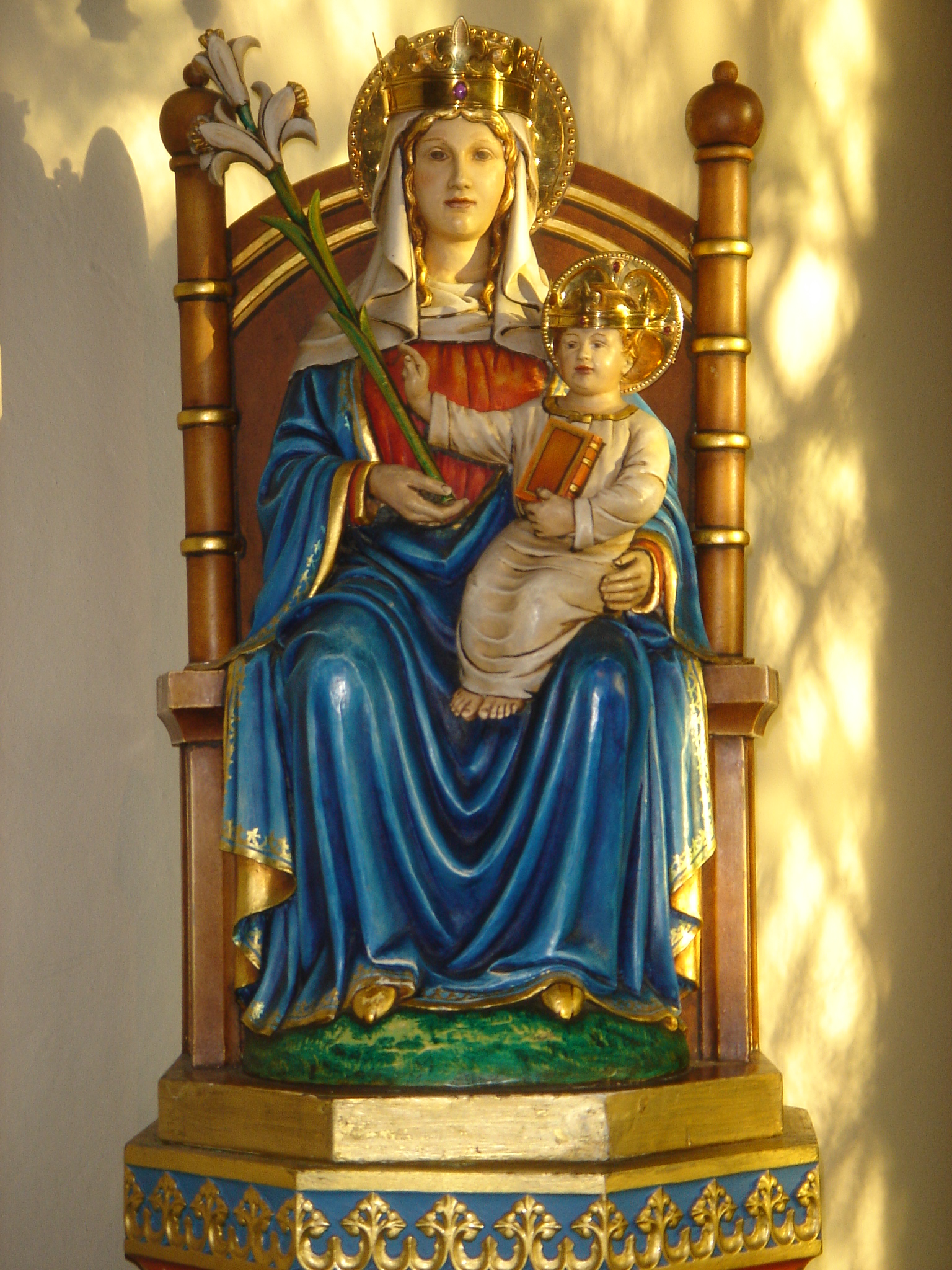
I'm a member of the Ordinariate of the Chair of Peter, which is the American group for Episcopal/Anglican Christians who want to be reconciled with the Catholic Church, while retaining their distinctive heritage. You may have heard of (or noticed in my Warning Labels on the right) the Anglican Use; basically the same thing.* It was founded by Pope Benedict a few years ago, and includes Ordinariates in Great Britain, North America, and Australia: Our Lady of Walsingham, the Chair of Peter, and Our Lady of the Southern Cross, respectively. An Ordinariate is a little bit like a diocese, in that our Ordinary is our chief authority, and also a little like a rite, in that our liturgical, historical, and spiritual distinctives are, uh, distinctive -- we have our own character. (In terms of jurisdiction, we're part of the Roman Rite, which makes up the majority of the Catholic Church in this country, though our Mass is significantly different from the norm of the Roman Rite.)


Our Lady of Walsingham, one of most important shrines to the Virgin in England
from 1061 until 1538, when it was looted and burned under Henry VIII.

Today is a memorial in the Ordinariate (though not on the standard Roman calendar) dedicated to three sainted martyrs under Queen Elizabeth I: Margaret Clitherow, Margaret Ward, and Anne Line.

Saint Margaret Clitherow was a convert to Catholicism at the age of eighteen in 1574. She concealed priests in her house (a practice which her husband permitted despite his remaining a Protestant; one of his brothers was a Catholic cleric). 


However, in 1586, the hiding places were found out, and Margaret was taken to be tried. She refused to plead, and the practice at the time in these situations was to force the defendant to plea by crushing them with stones until they did so. She remained steadfast in her refusal to plead -- innocent would mean she had not hidden the priests, and guilty would mean she admitted herself in the wrong for doing it -- and was ultimately crushed to death (rather like Giles Corey, who was impressive enough to make a Cracked list by so doing). The day of her death was both the Solemnity of the Annunciation (March 25th) and, it so happened that year, Good Friday. The Queen, on hearing of the matter, wrote a letter to York, the home of the Clitherows, expressing her horror at their actions.

Saint Margaret Ward (whose family may have been recusants**) was a servant to an aristocratic family living in London around the same time. She heard of the maltreatment of an imprisoned Catholic priest, Fr. Richard Watson, and obtained permission to visit him; eventually, in 1588, she was able to smuggle some rope to him, and he escaped.


As his only visitor, she was arrested, and tortured by being kept in iron, hung by her hands, and flogged, but Margaret persistently refused to say anything about Fr. Watson's whereabouts. At her trial, she frankly admitted what she had done and rejoiced in it. She was offered a pardon if she would attend a Protestant service, but refused to do so, and was hanged on this day in that year.

Saint Anne Line was another convert to the Catholic faith: the daughter of a Puritan, she was disinherited for her decision. Her husband, Roger Line, was first imprisoned and then exiled for his own conversion. Anne was put in charge of a house for priests by its founder, an imprisoned Jesuit, and people gathered there to hear Mass.


In 1601, on Candlemas***, her operation was discovered due to the large crowd that came to celebrate the feast. Despite the fact that her health was so bad she had to be carried into the courtroom, she boldly defended her actions at her trial; before she was hanged, she declared to the crowd, "I am sentenced to die for harboring a Catholic priest, and so far I am from repenting for having done so, that I wish, with all my soul, that where I have entertained one, I could have entertained a thousand."

All three were canonized by Pope Paul VI, and are the only women among the Forty Martyrs of England and Wales (commemorated as a group on May 4th). Their memorial is, to my mind, particularly poignant now, while the Islamic State is exiling and murdering Christians in northern Iraq for no offense except their faith. That is exactly what happened to these three. Not one of them was accused of anything that could rightly be called criminal: they had done no harm to their neighbors, nor encouraged others to do so; indeed, because of their assistance in protecting priests and giving them means to escape imprisonment, it may be justly said that they were injured for objecting to injury rather than for inflicting it.

I have no idea what to do as far as opposing the IS goes, except to pray. Even as a pacifist I am inclined to despise the useless waffling of the government on the subject -- not because I want the state to resort to violence in defending the Christians there (I don't), but because I want them to do something rather than nothing. And who knows, perhaps some even among our officials are praying. But -- and although it is certainly not an answer to unjust suffering -- I take some small encouragement from the bravery of these women, who helped keep the Catholic faith alive during a time of senseless brutality, and recollect Tertullian's dictum: Sanguis martyrum semen Ecclesiae, "The blood of the martyrs is the seed of the Church." When two thousand years of persecutions, here and there, there and here, have not managed to exterminate Christianity, the tactics of the IS do begin to look a bit pigheaded.****

Saints Margaret Clitherow, Anne Line, and Margaret Ward, pray for us.


*Basically. However, the Anglican Use is actually older than the Ordinariates -- it originated under St. John Paul II in 1980, as a pastoral accommodation for Episcopal communities that were joining the Catholic Church but wished to keep their clergy, some of whom, being married, would not normally have been eligible for Holy Orders in the Roman Rite. These communities, though they kept their own way of doing a lot of things, were received into full communion with Rome and incorporated into the local diocese (or so I understand). When the Ordinariates, which are relatively independent structures, came into being, some of the pre-existing Anglican Use parishes joined, while others remained attached to their local dioceses.

**Recusancy was a legal term, referring to refusal to attend Anglican services, which were mandated by law, beginning during the reign of Elizabeth I and lasting until their repeal in 1650 under Oliver Cromwell. Penalties for recusancy could include fines, confiscation of property, and even imprisonment; nonetheless, there were many Catholic recusants in England and Wales during this time, including a great number of families of the nobility -- notably the Howards, whose scion Catherine became the fifth wife (or at any rate consort) of Henry VIII, and the Mores, the family of the martyred Thomas. Yorkshire, from which St. Margaret Clitherow came, was one major center of underground Catholicism during the Tudor and Stuart eras.

***Candlemas is the Anglican name for the Feast of the Presentation, so called because it was on this feast that candles were traditionally blessed for church use. It has been preserved in the Anglican Use.

****To say nothing of being inconsistent with the Quran. The IS, or ISIS (the Islamic State in Iraq and Syria), has drawn fire from fellow Moslems of various traditions and ethnicities for precisely this reason. It is true that historical Moslem practice has accorded a second-class status, called dhimma, to non-Moslems living in Moslem countries -- which is perhaps not so very unlike the effects of anti-Semitism in Mediaeval Christendom, but that need not detain us for now -- but the Quran explicitly states that there is to be "no compulsion in religion" (Sura 2), and a hadith of the Prophet himself states that "Whoever killed a Mu'ahid [i.e., one granted a pledge of protection by Moslems, such as the tradition of dhimma grants] shall not smell the fragrance of Paradise though its fragrance can be smelt at a distance of forty years of traveling."