Collect

Collect for the Fourth Sunday after Trinity

O God, the protector of all that trust in thee, without whom nothing is strong, nothing is holy: increase and multiply upon us thy mercy; that, thou being our ruler and guide, we may so pass through things temporal, that we finally lose not the things eternal; grant this, O heavenly Father, for the sake of Jesus Christ thy Son our Lord, who liveth and reigneth with thee, in the unity of the Holy Spirit, ever one God, world without end. Amen.
Showing posts with label poverty. Show all posts

Thursday, November 10, 2016

Aftermathematics

The Lord, even the most mighty God, hath spoken: and called the world, from the rising up of the sun unto the going down thereof.
Out of Sion hath God appeared: in perfect beauty.
Our God shall come, and shall not keep silence: there shall go before him a consuming fire, and a mighty tempest shall be stirred up round about him.
He shall call the heaven from above: and the earth, that he may judge his people.
… But to the ungodly said God: Why dost thou preach my laws, and takest my covenant in thy mouth;
Whereas thou hatest to be reformed: and hast cast my words behind thee?
When thou sawest a thief, thou consentedst unto him: and hast been partaker with the adulterers.
Thou hast let thy mouth speak wickedness: and with thy tongue thou hast set forth deceit.
Thou satest, and spakest against thy brother: yea, and hast slandered thine own mother’s son.
These things hast thou done, and I held my tongue, and thou thoughtest wickedly, that I am even such a one as thyself: but I will reprove thee, and set before thee the things that thou hast done.
O consider this, ye that forget God: lest I pluck you away, and there be none to deliver you.

—Psalm 50.1-4, 16-22 (said as part of Mattins on the tenth of a month in the Book of Common prayer)

✠     ✠     ✠

Well, I wasn’t expecting that.


Anyway. I’d like to say a few words to my left-wing friends and readers, and a few to my right-wing friends and readers.

First, to those of you on the left, especially Christians. Like you probably are, I’m horrified at the idea of four years, or four days, under Trump’s presidency. Like you probably are, I’m floored that he won at all. But I think that we should take this breathing space, between now and 20th January, to take a good, hard look in the mirror; because personally, I think we on the left had a hand in Trump’s ascendancy.

How can I say such a thing? Mostly because of the contemptuous, caustic, belligerent hatred I’ve been seeing on my Facebook feed over the last year. I don’t know that I’m guiltless of it. Now, if all of that had been directed at Trump and not at his supporters, it’d be a little, a very little, different—but what I’m talking about is the venom and the scorn directed at his supporters, accusing them of everything from allying themselves with the Ku Klux Klan to garden-variety stupidity. Yet this is only a specifically political expression of a cultural dynamic that’s been going on for decades: that of the progressive, enlightened, cosmopolitan elite looking down their noses at the conservative hicks clutching their guns and flags and Bibles, and lecturing them about their backwardness and bigotry. Express that kind of arrogance for any group of people long enough, and they’ll become exactly what you say, if only because they know it’ll annoy you: and you’ve made yourself insufferable. Hell, we’ve seen Portlandia (and if you haven’t, please, enrich yourself).

Note, this is a divide between city and countryside; not between white and black, or any other minority. Racism plays a real and ugly role in American politics, certainly, but it isn’t the only factor, as the smotheringly self-righteous urban white liberal and the Dixie-flag-toting rural black conservative could tell you. At least, the rural black conservative could, since he is probably less ruled by fashion.


Does this make liberals' view of the Dixie flag wrong? Not necessarily.
Does it make the question more complicated than liberals like to admit? Kinda, yeah.

I’m not saying leftist values1 are wrong—there are some I disagree with, sure, but that isn’t the point. The point is, how you say things is almost important as what you say; and, for a group of people whose core values ostensibly include respect for those who are different from yourself, I think the left has made a pretty poor showing in both style and substance for some time now. David Wong (of John Dies at the End fame), who grew up in the countryside and has since become a citified priss like the rest of us, puts it pretty well in this column:

Hey, remember when Hurricane Katrina hit New Orleans? Kind of weird that a big hurricane hundreds of miles across managed to snipe one specific city and avoid everything else. To watch the news … you’d barely hear about how the storm utterly steamrolled rural Mississippi, killing 238 people and doing an astounding $125 billion in damage. But who cares about those people, right? What’s newsworthy about a bunch of toothless hillbillies crying over a flattened trailer? … To those ignored, suffering people, Donald Trump is a brick chucked through the window of the elites. ‘Are you assholes listening now?’

‘But isn’t this really about race? Aren’t Trump supporters just a bunch of racists? Don’t they hate cities because that’s where the brown people live?’ … I never saw a family member, friend, or classmate be mean to the actual black people we had in town. We worked with them, played video games with them, waved to them when they passed. What I did hear was several million comments about how if you ever ventured into the city, winding up in the ‘wrong neighborhood’ meant you’d get dragged from your car, raped, and burned alive. … If you’d asked me at the time, I’d have said the fear and hatred wasn’t of people with brown skin, but of that specific tribe they have in Chicago … It was all part of the bizarro nature of cities, as perceived from afar—a combination of hyper-aggressive savages and frivolous white elites. Their ways are strange. And it wasn’t like pop culture was trying to talk me out of it …

[Rural populations] are getting the shit kicked out of them. I know, I was there. Step outside of the city, and the suicide rate among young people fucking doubles. The recession pounded rural communities, but all the recovery went to the cities. … The vast majority of possible careers involve moving to the city, and around every city is now a hundred-foot wall called ‘Cost of Living.’ … And if you dare complain, some liberal elite will pull out their iPad and type up a rant about your racist white privilege. Already, someone has responded to this with a comment saying, ‘You should try living in a ghetto as a minority!’ Exactly. To them, it seems like the plight of poor minorities is only used as a club to bat away white cries for help.

Personally, I believe this is because the left has lost touch with its roots: namely, the desire to be a voice for the dispossessed and the disenfranchised. The modern left, its genesis lying in the French Revolution and the various kinds of socialism that were born in the nineteenth century, was originally a workers’ rights movement more than anything; it later became a movement against oppression and destitution in general. Does that mean addressing the racism, sexism, &c., that have been and continue to be forces in American society? Absolutely! But it means caring for all the dispossessed and disenfranchised, and that will always include the poor—even the rural, white, conservative, uneducated poor. And to be blunt, for the last fifty years, the American left has been so caught up in (real) ideological forms of oppression that it’s forgotten the cold, simple, silent oppression of the dollar—which has no loyalties and is no respecter of persons.


The Haymarket Martyrs' Monument in Forest Park, Illinois.

Nor, to stay blunt, is the left in this country above using the power of the state to force things on the populace against their will. The contraceptive mandate of the HHS in the wake of the Affordable Care Act is an excellent example: not only because it totally disregarded and scorned the conservative conscience as nothing more than sexism (because, if someone doesn’t want to pay for someone else’s contraceptives, it can only be because they’re anti-woman—there couldn’t be anything more to understand from the likes of them, right?), but because it invoked governmental authority as a compulsive and even a morally superior force against that conscience. Is it so shocking if the right wing does the same? You invoked force in the name of righteousness; you have it.

If we, the left, want to appeal to the minds and hearts of the American people, we have some self-examining and some repenting to do. We have to look hard at our snobbery, our dogmatism, and our sense of entitlement, and disentangle those things from the authentic values of equality and compassion for the disadvantaged that we profess to hold dear. And we have to be prepared to listen to, and believe, rural conservatives.

To my friends and readers on the right, I must confess, I have little to say; not out of hostility, but because I can’t think of much. I hope you’ll be as willing to defy the status quo under Trump as you were under Obama, if it becomes necessary, and I hope you’ll accept that my fears for myself and my family (my brother-in-law is an immigrant from Ecuador; my nephew has Down Syndrome; I’m gay and an anarchist) are sincere, and respect those fears rather than belittling them. And if—God forbid—those fears should turn out to be justified, I hope you’ll have my back.


✠     ✠     ✠

1A hopelessly generic phrase, especially since the American left is atypical of leftist movements. But the details need not detain us.

Wednesday, September 7, 2016

The Other Slavery

Toward the close of the nineteenth century, the new kind of economic life that had arisen and the new developments of industry had gone to the point … that human society was clearly becoming divided more and more into two classes. One class, very small in number, was enjoying almost all the advantages which modern inventions so abundantly provided; the other, embracing the huge multitude of working people, oppressed by wretched poverty, was vainly seeking escape from the straits wherein it stood. Quite agreeable, of course, was this state of things to those who thought it in their abundant riches the result of inevitable economic laws and accordingly, as if it were for charity to veil the violation of justice which lawmakers not only tolerated but at times sanctioned, wanted the whole care of supporting the poor committed to charity alone. The workers, on the other hand, crushed by their hard lot, were barely enduring it … and some of them, carried away by the heat of evil counsel, were seeking the overturn of everything …

—Pope Pius XI, Quadragesimo Anno §§3-4

✠     ✠     ✠


I’ve been thinking about slavery lately. Maybe it’s because of the Black Lives Matter movement and the racial questions that have been flying around; maybe it’s because a lot of arguments for the progressivist view of homosexuality use slavery as an example of a moral stand the Church took a very long time to formulate. Regardless, I’ve been thinking about it.

We all accept that slavery is both wrong and a thing of the past. In America, anyway; I mean, we had a war about it and everything. I doubt we really examine those ideas, though—and not only because slavery is not just a thing of the past, even in this country. Sex slavery is probably the most horrible example; but I dare say there are much less dramatic, salacious instances of human trafficking going on more or less under our noses, too. But, though we’ve been taught from childhood (quite rightly) that slavery is wrong, I don’t know how well we understand that belief.

To begin with, what do we mean by the term slavery? Owning another human being, of course; but what do we mean even by that definition? After all, part of the idea that slavery is wrong is, usually, that you can’t actually own another person, because people aren’t things. Yet we still mean something by the word, if only legally, and it’s worth figuring out what. When we say that one person is, or was, a master and this other person their slave—what are we in fact saying?

Let’s start with a textbook sort of definition: slavery is a state where one person (the slave) is considered by law to be the property of another (the master), and to owe the master his work with or without wages, and without the possibility of leaving this state by choice.


A portrait of the Spanish slave ship La Amistad, where a slave revolt in 1839 culminated in 
an internationally acclaimed US court case that judged the enslaved Africans to be rightly free.

So what is it we find awful about that? The possibility of mistreatment from the master? But slavery would hardly be okay if we just instituted laws regulating how slaves can be treated; it wouldn’t even be okay if all masters treated all their slaves kindly. So is it the idea that person can be property? Well, yes, but we have to unpack what we mean by that. What we’re talking about is not just a legal title, but one person controlling another, in a way the latter has no say in and can’t escape from.1 I think we see intuitively that that, even when it’s occasionally necessary (as with those too debilitated by illness to make their own informed decisions), can never justly be more than a temporary ‘patch’ on a bad situation, and for someone who is capable of governing their own affairs, it’s horrific arrogance and injustice. And that is something we definitely have not eliminated from modern, cosmopolitan America.

What I’m talking about is wage slavery. Once upon a time, opposition to wage slavery was one of the rallying causes of the Left; but with the red scare of the ‘50s and the cultural revolution of the ‘60s, class conflict was largely swept out of the arenas of public discussion, and such a Left as we still have (within the American mainstream) does little more than push for socialized healthcare and unemployment benefits—programs which, however worthy in themselves, address only symptoms of social inequality and do nothing to relieve the causes.

The idea of wage slavery is actually an ancient one: sages as far back as Aristotle and Cicero considered working for a wage, even as a legally free person, to be closely akin to slavery, and the comparison has been discussed often since then, both before the post-Revolutionary Left was formed and since its inception.2 Frederick Douglass, who knew something about being a slave, remarked that ‘experience demonstrates that there may be a slavery of wages only a little less galling and crushing in its effects than chattel slavery, and that this slavery of wages must go down with the other.’ And while the condition of the wage worker, at any rate in our own time and place, is a reasonably comfortable one, not to be compared with the historical slave or the Third World sweatshop laborer, and while that does matter, two facts still hold: first, the outstanding conditions we enjoy (I don’t know how securely) were won for us primarily by the Old Left3; and second, if slavery is objectionable in itself and not because of its attendant conditions, then wage slavery is still wrong no matter how comfortable we are as wage slaves.


There is no more glaring example of the analogy between chattel and wage slavery than that of illegal immigrants (particularly but not only from Latin America) in the contemporary US, especially those who take work harvesting crops. They come here because they have nothing in their own countries—because it was taken from them, by the tax collector or the cartel or whatever you please; I mean, people don’t make the difficult, dangerous, exhausting, and illegal journey up here for fun. They often take agricultural work, not because they’re unfit for anything else, but because the masters of the fields will let just about anybody do it, it doesn’t matter if they haven’t mastered English, and it does technically pay. The masters, for their part, know very well that they can pay these men, women, and children less than minimum wage with no benefits and work them an illegal number of hours; because, since their presence is technically unlawful, everything is happening under the table, and if the workers complain—fine, report them to INS and get a new batch of wets. It’s not like there won’t be more.

But none of this is slavery because … we don’t call it that. I mean, they could stay in their own countries (and rot). Or they could get another under-the-table job (that will not be substantively different in any way). Or they could become citizens (which generally takes a bare minimum of a year in paperwork and several thousand dollars they don’t have in processing fees).


It’s a small thing (given that the Church’s clergy have done things that in my view are far worse than permitting her children to own slaves), but I suspect that one reason the Church did take such a long time to say, in so many words, that slavery is wrong4 is that she expected it to be impossible to eliminate. I mean, can you imagine a world without wage slavery—that is, a world where everyone works coöperatively and shares what they have, without needing wages (or even perhaps money) to keep things equitable? A world where things like applying for a job or getting fired or getting a performance review just … didn’t exist?

The alternative to chattel slavery is universal freedom; the alternative to wage slavery is universal autarky,5 i.e., individual ownership of the means of one’s livelihood. The smallest of small businesses are modern examples of this kind of autarky, as are most freelancers in whatever field, from journalism to landscaping. The corporate masters who set and pay the wages are cut out, and the people who actually do the work make an agreement with the people who actually need the work done. It’s quite deliciously simple; and if it seems pie-in-the-sky, well, so did Abolitionism.

So, what now? Take up the banner against wage slavery? Absolutely, yes. But also, before doing that, take a few moments to reflect. The existence of wage slavery is more than just another example of society needing reform. I think it’s a symptom of the fact that, whatever we do, ye have the poor always with you, and—this part of the verse generally gets forgotten—whensoever ye will ye may do them good. The opportunity to do good is open to the individual, and it’s continuous; waiting for an institution to do it is a waste of time; there is no program, no theory, and no age that will bring about utopia on earth. The only power that can do that is God’s; which also means that any sincerely pursued utopia will become a god to its pursuer. That is why attempts to summon utopia are generally founded on infallible dogma—and human sacrifice.


Hieronymus Bosch, The Last Judgment triptych, 1505.

✠     ✠     ✠

1I.e., legally and/or socially can’t escape from. Runaway slaves have doubtless existed as long as slavery has, or as near as makes no difference.
2Though American politics has had its own enclave within Western politics more generally, nearly all modern political ideas and trends can be regarded as descending from the Enlightenment as it expressed itself in the French Revolution. Both those who supported it (in their varying ways) and those who opposed it (also in varying ways) were all but defined by it: Edmund Burke, Karl Marx, Pope Leo XIII, Emma Goldman, Mary Harris Jones, Charles Maurras, Ludwig von Mises, George Bernard Shaw, G. K. Chesterton, Vladimir Lenin, Benito Mussolini, and Dorothy Day all swim in its current, in whatever direction. American uniqueness has lain largely in how narrow our own range of normal political parties is. European political parties, by contrast, are far more numerous and differ more meaningfully.
3The Old Left, primarily a workers’ movement, roughly equates with the socialist and anarchist strains of thought; taking a further step from the classically Liberal tradition of thinkers like Locke, sought to effect—rather than merely make room for—liberty and equality among men, in the political and economic spheres. This is in contrast to the New Left, which tends to be more of a students’ movement, whose emphasis in liberty and equality tends to be on cultural matters (e.g. racism, sexism, homophobia). The two strands of thought are not mutually exclusive, though historically, each group has often ignored or sneered at the other.
4I say the Catholic Church took a long time over this, and she did. But it’s worth noting that some of her prominent members said so far earlier on. St Patrick practically abolished the slave trade in Ireland in the fifth century, and St Gregory of Nyssa in the fourth was openly opposed to any form of slavery, right in the heart of the Byzantine Empire.
5From the Greek αὐτάρκεια, meaning self-sufficiency, self-rule. The term is used in a few different senses, and my use isn’t philosophically rigorous.

Wednesday, September 2, 2015

The Stranger Within Thy Gates


And if a stranger sojourn with thee in your land, ye shall not vex him. But the stranger that dwelleth with you shall be as one born among you, and thou shalt love him as thyself; for ye were strangers in the land of Egypt: I am the LORD your God.

—Leviticus XIX.xxxiii-xxxiv

But the seventh day is the sabbath of the LORD thy God: in it thou shalt not do any work, thou, nor thy son, nor thy daughter, thy manservant, nor thy maidservant, nor thy cattle, nor the stranger that is within thy gates.

—Exodus XX.xx

✠     ✠     ✠

Watching the charismatic train-wreck that is Trump's campaign for the presidency was funny at first, though its persistence has begun to make it edge into the nauseating. His remarks, both off-the-cuff and considered, about immigration have been peculiarly sickening; and coming from a Caucasian, one cannot help feeling that it is in questionable taste to complain of the ill-effects of foreigners coming into our land and taking our shit.

The ongoing debate over immigration—by which (let us be frank) we mean immigration from Latin America into the United States—seems to me to be both muddled and a little pathetic. I'd like to lay out a few things that seem to me to be essential principles for the Christian to have in mind, in order to arrive at a just, intelligent, and charitable opinion on the subject. Some are perennial ideas; others are based in the facts of American life as it now is.

1. Nations exist to serve people, not people to serve nations. As C. S. Lewis pointed out in The Weight of Glory, on the Christian view, every human person will outlive every nation, culture, class, and ethnicity; and we, unlike the societies we form, are each individually made in the image and likeness of God. Any political policy, of whatever kind, must be grounded in this fact if it is to have any claim to consistency with Christianity. That isn't to say that practical compromises can't ever be made; but they must be compromises starting from this defined point, not a dismissal of the principle as false or unimportant. No law can be justly made that promotes the state's rights at the expense of human rights; and, as St Augustine said, an unjust law has no force -- not even if it is enforced.


2. More specifically, nations exist to serve their own people. No nation has ever been given a charge from God to take care of all other nations and peoples—unless we adopt Dante's view, that the Roman people were divinely chosen to provide for all humanity temporally, as the Jews were chosen to provide the eternal Savior; however, this view is (outside its Mediæval context) not an obvious one, and not one that has successfully recommended itself to the conscience of Christendom.1 That aside, every community, nations included, is only responsible to its own people and their well-being, not to the general welfare of the whole earth. No authority could take on such a task, unless it were an authority that were drawn from the whole earth and had competence to address all its problems. And individual nations, in serving their own people, do also have the right to protect their borders.

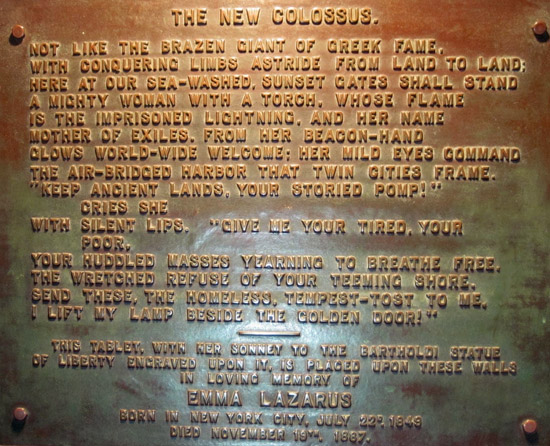
3. Every person has the right to life, and accordingly the right to pursue the means of life. The deranged assertions of Donald Trump's page on immigration reform notwithstanding, the truth is that most of the people who come into this country on any kind of permanent basis are doing it to find work. Central and South America have never been as comfortable or prosperous as the United States or Canada (partly perhaps because of their longer history of colonialism). There are criminals who dart back and forth across the border, certainly, but the notion of Latinos creeping over the Rio Grande en masse for rapine and pillage is farcical, and the claim that the Mexican government has been ‘export[ing] the crime and poverty in their own country’ into the US, as if crime and poverty could be shipped north like bananas, is worthy of a bad stand-up comedy routine. The reason that long-term immigrants come north is to find work, resources, safety—in short, a future—that they can't get in their home countries. And historically, America has always been the place for that; most if not all of us are descended, at least partly, from downtrodden Europeans who decided that an unknown future across the Atlantic was better than starving for food and dignity alike at home.


4. Middle- and upper-class American life depends on the abundant and underpaid work of illegal immigrants. It was right and necessary to abolish slavery legally, and we did that a century and a half ago. What we have thus far failed to do is abolish the thing. People can caterwaul about illegal immigrants taking our jobs if they like, but most immigrants are taking jobs that Americans mostly don't want, or consider ourselves too good for; harvesting vegetables and fruit, for example. Like agricultural workers throughout American history—indentured servants in the first century of European settlement, slaves from Africa and the Caribbean in the eighteenth and nineteenth, and migrants legal and illegal since the Civil War—they are a disenfranchised population. They can't vote, becoming a citizen (or even a permanent resident) is stupidly hard, they're paid less than minimum wage2 to do their jobs, the work isn't reliable (varying by season and location), and if they stand up for themselves in any way, they risk being reported to INS3 and kicked out of the country; and all of this is just the ones who work in agriculture. But all of this isn't slavery because we don't call it that.


Don't believe me? Imagine that six, or seven, or eight out of every ten agricultural workers went on strike. That's how many are here without the documentation and interview processes for getting here legally, on account of those processes taking a couple of years and thousands of dollars that they don't have, and can be rejected over utterly Byzantine details. Try putting food on the table—try buying food—when there are only a quarter as many available in the grocery store of everything not Cheez Whiz (which, with a certain generosity of spirit, may be regarded as food).

5. The Scriptures are full of the injunction to love the alien within our gates and treat him as our equal. It may be said, reasonably enough, that this injunction was addressed specially to Israel as God's elect. However, if we propose either to regard America as a Christian nation or to let our politics be formed by our faith, it's an injunction we have to take to heart, because it lays out how God wanted an earthly society to work when it was based directly on His revelation. We cannot dismiss that and then proceed to claim Christian authority for any other political idea we espouse.


Does any of this mean that a believer must approve of breaking the law? Well, I think we have first to inquire whether the law is just and wise. If it is both, then no, we shouldn't approve of lawbreaking; if the law in question fails in either way, or both, pay no further attention to it. What is right ought to be the pattern of life for the Christian, and the pattern of law for the statesman; if, and to the extent that, laws interfere with what is right, it is the laws that are at fault, not rightness.


It's hardly a secret that I think our policies on immigration are both unjust and stupid. Biting the hands that feed us is neither good tactics nor good morals, and will eventually lead to judgment. But I certainly admit that a person of sense and good will, considering the facts, could come to a different conclusion about what the fairest, most practical solution is to the problem. What we must cure ourselves of, however, is the perennial temptation in politics to surrender to mere cynical pragmatism. Doing what's practical is good, if by practical we mean beneficial to the greatest number of people; all too often, we mean only beneficial to our own group's advantage. It would be better that America should be smashed to pieces than that, serving it, a man should damn himself.


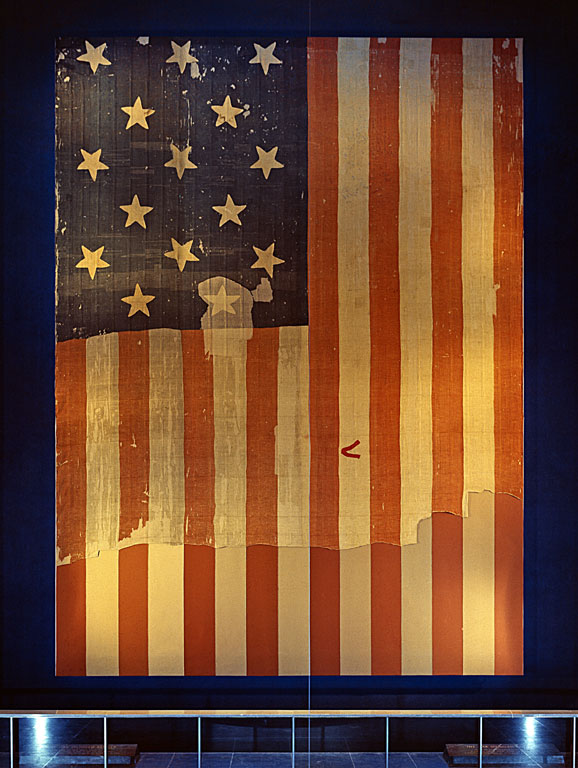
O beautiful for pilgrim feet
Whose stern, impassion’d stress
A thoroughfare for freedom beat
Across the wilderness!
America! America!
God mend thine ev’ry flaw,
Confirm thy soul in self-control,
Thy liberty in law!


✠     ✠     ✠


1This is not to say that there is nothing to be said for Dante's view, especially if we add that his conception of Roman election was one of the supremacy of the Roman idea of the rule of law, not a nationalistic (still less a racial) notion. It might be pointed out that one of Dante's own arguments in the De Monarchia—namely, that God Himself chose to be born under the dominion of the Roman Empire, submitting His human nature to its authority, and even offering answers to Pilate as much as to the Sanhedrin while entirely ignoring Herod—may seem frivolous to a modern reader, but is curiously hard to get round when you start thinking about it.
2Minimum wage, remember, not necessarily being even a living wage itself.
3Immigration and Naturalization Services, whose primary occupation is of course to prevent naturalization by deporting immigrants.