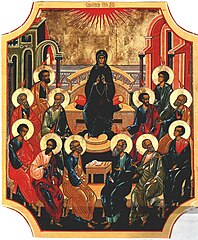
Collect

Collect for the Fourth Sunday after Trinity

O God, the protector of all that trust in thee, without whom nothing is strong, nothing is holy: increase and multiply upon us thy mercy; that, thou being our ruler and guide, we may so pass through things temporal, that we finally lose not the things eternal; grant this, O heavenly Father, for the sake of Jesus Christ thy Son our Lord, who liveth and reigneth with thee, in the unity of the Holy Spirit, ever one God, world without end. Amen.
Showing posts with label not getting it. Show all posts

Thursday, May 23, 2019

Beauty and the Horde of Ruiners

Does Belle have Stockholm Syndrome?

No.

Thank you for watching. Like, share, and subscribe to my channel. Thank you of course to all my lovely patrons, I couldn’t do this without y- … oh. You want me to actually, like, talk about the thing.

—Lindsay Ellis,
Is ‘Beauty and the Beast’ About Stockholm Syndrome?


✠     ✠ ✠

So listen. I am here for weird, creepy readings of films. The Brazil reading of Sleeping Beauty, for example: it makes more sense to think that after Prince Philip’s capture by Maleficent, the rest of the film is an illusion crafted by her to keep him quiescent. After all, she knew about Flora, Fauna, and Merriweather (fairies so incompetent they can’t bake a single cake in secret), and Maleficent is the mistress of all evil—how plausible is it that she would leave the one person with the ability to break her revenge spell, unguarded no less [1], in a dungeon that her principal rivals can enter and leave at will? It makes much more sense to suppose that the vision of Aurora in the castle is only the beginning, and that the rest, fairies, dragon, and triumph, is still part of the vision. Prince Philip never gets out.


Or, this woman lost. Which is plausible. Sure. Sarcastic? Why would you ever think I'm being sarcastic?

Or the interpretation of 101 Dalmatians that it’s secretly a coded anti-nuclear satire, in which the dogs are the ordinary people who will be both metaphorically and literally skinned by the H-bombs crafted by the wealthy and insane elite, and—wait, this was the actual premise of a bizarre sequel to the novel? Really? Huh.

Or the incredibly uncomfortable reading of I, Robot, which, well, was just not a very good movie in the first place; but it becomes rather nauseatingly lucid if you read it as a race allegory, with the humans as white people and the robots as their black slaves. Detective Spooner is an abolitionist, not although but because he’s a racist: basically he doesn’t trust the robots to be slaves, which is an unkind but not wholly false interpretation of the original Republican Party (look up how Oregon handled the slavery controversy); meanwhile Sonny, the good robot, is a race traitor, raised to the level of human free will by a kindly, white-man’s-burden-minded scientist. Through the race lens it is a super fucked up movie, though to be fair I doubt this was intentional on the part of the filmmakers.

But there is a steaming cold take that I am not here for: partly because it ruins the single best Disney film ever made, yes I will fight you, but chiefly because it isn’t actually justified by the story. And that is the obnoxious ‘Beauty and the Beast is about Stockholm Syndrome and/or falls into the toxic I-can-fix-him trope’ take. [2] These takes typically rely on the fact that the Beast is savage at first, but later Belle falls in love with him. Which, yes, that’s the plot of the movie. What it isn’t is an adequate analysis of Stockholm Syndrome or the I-can-fix-him trope.

Now, there is dispute in the psychiatric and law enforcement professions about whether Stockholm Syndrome is even real; it has not been thoroughly researched and does not appear in the DSM-V. So rather than beg that question, and since the trope of abuse victim who is loyal to their abuser due to affection-based denial does have a basis in reality, independently of the events the putative disorder is named for, I’m going to refer to this trope as Frollery. Frollery, thus defined, would include all varieties of loving and trusting an abuser or believing that one can ‘fix’ an abusive partner with enough longsuffering sweetness and obedience. The question, thus re-termed, is this: is Belle a victim of Frollery?


The answer is still no: Belle maintains her freedom, her own judgment, and (most importantly) complete clarity of mind throughout.

Let’s start with Belle’s captivity in the Beast’s castle. She agrees to this under some duress—well, she suggests it under duress; the Beast either isn’t mean enough (not likely, he’s still in jerk mode at this point of the story) or isn’t cunning enough (more plausible) to suggest this; but it is still under duress, insofar as it’s to save her father from imprisonment and possible death. [3] So I’m prepared to agree that she’s being held against her will. Captivity, check.

… Except that it’s quickly made clear that she has no intention of respecting the promise she made if the Beast gets intolerable, as he does over the enchanted rose. He acts violently, maybe not toward her per se but in a way that could certainly have injured her; she leaves immediately, and to all appearances for good. Whatever implicit threat there may have been in living with the Beast, there is evidently no threat involved in leaving the Beast, implicit or explicit.

And even after he saves her from wolves, there is a clear moment of hesitation in Belle’s face over whether to take him back to the castle and patch him up, or to just leave. She chooses to take him back out of compassion—which is demonstrated even further by her repeated, point-blank refusal to accept his blame-shifting or excuses in the scene where she tends his wounds. She gives absolutely no weight to anything he says, and isn’t even intimidated by his roars of anger, insisting that no, both this situation and this narrative are going to go down her way. This is not only uncharacteristic, it’s the exact opposite of how a victim of Frollery behaves. Placating and agreeing with an abuser are the traits of Frollery, not telling him in no uncertain terms that this mess is entirely his fault.


Moreover (though this is a less important note), it’s worth pointing out—as Lindsay Ellis does in the excellent video that I’m more or less ripping off—that the animation of the Beast and the backing score after his rose-rage episode, showing a sudden devastating realization that he’s made a horrible mistake, reveals a genuine example of something that abusers like to pretend to have: genuine regret. An abuser exhibits their regret to the victim as a manipulation tactic. The Beast, though he has this beat of regret, never brings it up to Belle at all; it is shown exclusively to the audience: the Beast, in a moment where he can gain nothing by it, experiencing and exhibiting remorse. Taken together with his trying to save face with Belle in the wound-tending scene, as opposed to trying to manipulate her by saying how sorry he was that she drove him to his bad behavior, that is one of several reasons we have to credit his change of character as the film proceeds.

And speaking of that change of character, while it’s occasioned by Belle, she doesn’t prompt it. That is, she doesn’t take it upon herself to be his therapist, or threaten to leave again if the Beast doesn’t clean up his act. He feels for her, wants to be better because of her, and she responds to him actually doing that. At no point does she set out to fix him. He fixes himself. The literary parallel is Darcy's change of character in Pride and Prejudice after being called out by Elizabeth, not the dubious penitence of Christian Grey.


Grey is a Gaston type when you think about it; he only gets away with it because 
Jamie Dornan's smouldering gaze and sharp jawline and perfectly sculptured torso, 
which is set off so perfectly by the lines of suit, and, uhh, what was I talking about?

The famous library scene has been criticized on the grounds that the Beast was really just informing Belle of an additional room in the house that she hadn’t known about, which is stupid on two different levels. To begin with, him giving her the library as a gift is not just telling her about a room. It’s a transfer of ownership (i.e., what a gift is, guys). That library is now hers. She could ban the Beast from it, like he banned her from the West Wing, if the mood struck her. She could demand to take the books with her if she ever decides to leave again.

Which leads us to the second point. Belle, as she has demonstrated, is prepared to leave; she’s staying because she made an agreement, but she doesn’t think that agreement outweighs her safety. There’s no indication that the Beast could leave even if he wanted to, but even supposing he could, where is he going to go? He’s not only a monster, he’s one who has a curse to break that’s intimately connected with his castle. Other than (i) the castle itself or (ii) some of its contents (like, say, a library), what the hell was the Beast supposed to give Belle? And the choice to give her a library, i.e. something that’s transportable at least in principle, suggests that this is not an attempt to bribe her to stay. He’s doing this because he likes her and wants to do something for her that she will enjoy. Remember your fairy-tale rules: something other than genuine love wouldn’t have broken the curse.

And speaking of the agreement and of fairy-tale rules, here, as so often, the fairy-tale tellers show a very sound instinct for orthodoxy and even for canon law. Westley in The Princess Bride is a similar exemplar, quite correctly pointing out that Buttercup’s putative marriage to Humperdinck was invalidated by both defect of form and lack of consent on her part. Belle being held in the Beast’s castle is cited by some critics of the story as a diriment impediment to their possible marriage, a diriment impediment being one that voids a marriage (as distinct from a prohibitory impediment, which simply makes it an act of disobedience to the Church but still a valid marriage).

But what the crucial Canon 1089 of the Code actually states is this: No marriage can exist between a man and a woman who has been abducted or at least detained with a view of contracting marriage with her unless the woman chooses marriage of her own accord after she has been separated from the captor and established in a safe and free place. Well, the captivity itself was suggested by Belle in the first place and had nothing to do with marriage, even on the Beast’s end (since it is mutual true love that he needs, not marriage); but even if we fudged those facts, Belle was separated from the Beast and established in a safe and free place when she went to rescue her father from dying of exposure. True, her village rapidly became unsafe for her—thanks to Gaston, who had been stalking her and ignoring her No for months at least, and who is the only character in the film who does imprison her against her will, in the cellar, while he leads the townsfolk off to murder the Beast. And speaking of Gaston, his increasing violence throughout the film and especially his threat to commit Maurice does arguably bar him from ever validly marrying Belle: Canon 1103 says, A marriage is invalid if entered into because of force or grave fear from without, even if unintentionally inflicted (an ameliorating clause, but Gaston clearly can’t plead even that), so that a person is compelled to choose marriage in order to be free from it.


A last-ditch effort I’ve seen to make Beauty and the Beast problematic is the argument that Belle is self-isolating, even that she has Schizoid Personality Disorder—which is characterized by a lack of interest in relationships, detachment, apathy, and emotional coldness—on the grounds that she has no real friends in the village. This, it is argued, is why she doesn’t respond to Gaston’s advances either, and it also explains why she is more at home with a castle full of animated objects than she is in the town.

But here again, the actual facts of the film refuse to fit that narrative. For one thing, Belle does have relationships she cherishes, not only with her father Maurice but with the bookseller; she’s even shown trying to be friendly with the baker, telling him about the book she’s reading, but he shuts her down with a dismissive ‘That’s nice’ and immediate pivot to his business concerns. And the notion that Belle is emotionally self-isolating and cold is ludicrous. She’s introverted, certainly, and it doesn’t help that the villagers harp ceaselessly on her oddness, that being the only thing other than her beauty they’ve bothered to notice—of course it’s going to be hard to make friends in that environment. But she’s capable of everything from casual kindness to animals and strangers (as shown in “Bonjour!”) to finding compassion for a hideous monster. Cold, she ain’t.


So yeah. If you want a bona fide example of Frollery romanticized and justified, try the Fifty Shades of Grey franchise, or Overboard (which is a fun romp and was also Problematic Romance: The Movie before E. L. James ever set pen to royalty check). Or hell, look to something like Interview With the Vampire for a toxic romance acknowledged and deconstructed within the narrative itself. But get your grubby illiterate paws off Beauty and the Beast’s innocence, ruiners.

✠     ✠ ✠


[1] And don’t give me any ‘But there’d be no point in guarding him because her minions are incompetent’ stuff. She’s well aware of that after their failure with Aurora, and if Maleficent can transmogrify herself into a dragon, I decline to believe that she can’t magick up a simple home security system with fairy-oriented facial recognition software.
[2] Note that I am not saying the film couldn’t be used as a manipulative pretext by an abuser; it absolutely could. But I don’t consider ‘An abuser could lie about it’ to be a particularly damning critique of anything.
[3] Not that the Beast was planning to kill Maurice or anything. But it was a freezing, drafty cell, and Maurice was an old man.

Monday, March 4, 2019

"Stop Crying."

His feet among the tulips, his hands brush the roses and the lilies.
‘This is love,’ he says, laying his fingers on my throat,
Forcing me down to bow.
‘I know it hurts, I know it’s harsh,
I know it feels nothing like any loves you know,
But you have to trust me,’
As I writhe and gasp and my eyes blur:
‘This is what real love is.’
The thorns scrape on my skin
And I cannot feel my knees or my wrists.
‘This is love. Stop crying.’


✠     ✠ ✠

The New York Times ran a profile of gay priests recently, with the tagline: ‘It is not a closet. It is a cage.’ The response to it from a number of spokesmen for Catholicism, via blogs and social media has been, shall we say, cool. Jennifer Fitz (of whom I had not heard before, but I gather that she is a generally and justly respected blogger in conservative Catholic circles) wrote a reply that has been shared a good deal.
I’ve been reading about your plight in the New York Times. So let’s go ahead and clear something up right now: Most Catholics don’t give a rip who it is you’re not having sex with. We know that abstinence is hard. Those of us practicing NFP probably don’t have a ton of sympathy for you, because at least you aren’t obliged to spend all night lying in bed next to the person you’re not having sex with, but when we can get over ourselves, sure, we get it. … Also, when you took your vows, the whole ‘celibacy’ thing wasn’t exactly foisted on you by surprise. … Those of us doing the Catholic thing know very well what it’s like to wrestle with temptation. Honestly we don’t give a crap about your tormented coming-out story, because we know it’s a distraction. Satan wants to keep you constantly looking inward, gazing at your story of shame and pity … You don’t have to be part of the angst-obsessed intelligentsia who show off how erudite they are by daring say in the NYT words that make 6th grade boys snicker. You could just be a Catholic. … I know it’s a struggle. I know this because everyone struggles with their vocations. That’s how life is. Come struggle with us.
In a similar vein, Fr Thomas Petri OP of the Dominican House of Studies down in DC, which I’ve had the pleasure of visiting more than once, had the following to say on Twitter:
I have no patience for priests who ‘come out’ as gay and insist that the priesthood is some sort of cage. Nobody forced you to become a priest. The faithful don’t need to deal with your issues, pal. They don’t deserve to deal with any of our issues. We serve them. Period. … The last thing the faithful need are priests who make their sexuality their primary identity. ‘Being gay’ and ‘coming out’ may seem to you, Father, as being true to your authentic self, but that’s contrary to your ordination, which makes your authentic self a person in persona Christi in the service of the people of God. If you can’t live that way, if you can’t give yourself freely, without making your sexuality ‘a thing’ in this equation, then be a man, be noble, and as our Holy Father Pope Francis says: leave the priesthood. … A Father cannot help his children if he’s a broken distracted mess of a man requiring them to pick him up and set him aright.
Let’s take a second look at those responses, in the context of the aforementioned New York Times piece. The NYT:
Gregory Greiten was 17 years old when the priests organized the game. … Leaders asked each boy what he would rather be: burned over 90 percent of his body, paraplgeic, or gay. Each chose to be scorched or paralyzed. Not one uttered the word ‘gay.’ They called the game the Game of Life. The lesson stuck. Seven years later, he climbed up into his seminary dorm window and dangled one leg over the edge. ‘I really am gay,’ Father Greiten, now a priest near Milwaukee, remembered telling himself for the first time. ‘It was like a death sentence.’ … Many priests have held the most painful stories among themselves for decades: The seminarian who died by suicide, and the matches from a gay bar found afterward in his room. The priest friends who died of AIDS. The feeling of coming home to an empty rectory every night.
… Father Greiten decided it was time to end his silence. At Sunday Mass, during Advent, he told his suburban parish he was gay, and celibate. They leapt to their feet in applause. … His archbishop, Jerome E. Listecki of Milwaukee, issued a statement saying that he wished Father Greiten had not gone public. Letters poured in calling him ‘satanic,’ ‘gay filth,’ and a ‘monster’ who sodomized children.
And Mrs Fitz:
Most Catholics don’t give a rip … We know that abstinence is hard. Those of us practicing NFP probably don’t have a ton of sympathy for you, because at least you aren’t obliged to spend all night lying in bed next to the person you’re not having sex with … But same-sex attraction? Yawn. … We don’t give a crap about your tormented coming-out story …
Concluding with the valediction:
Your Real Catholic Friends

Returning to half a dozen selections from the NYT:
Father Bob Bussen … was outed about 12 years ago after he held Mass for the LGBTQ community. ‘Life in the closet is worse than scapegoating,’ he said. ‘It is not a closet. It is a cage.’
Today, training for the priesthood in the United States usually starts in or after college. But until about 1980, the Church often recruited boys to start in ninth grade—teenagers still in the throes of puberty.
‘My family does not know that I struggle with this. I’ve never told them. I believe the Church’s teaching on marriage, sexuality—just trying to understand what it means for me. It may sound kind of strange. I feel like, what I struggle with, I hope I can help other Catholics not lose their faith.’ [From a gay priest who asked not to be identified]
‘This is not the whole story of who I am. But if you don’t want to know this about me, do you really want to know me? It’s a question I’d invite the people of God to ponder.’ — Father Steve Wolf
All priests must wrestle with their vows of celibacy, and the few priests who are publicly out make clear they are chaste.
‘Why stay? It is an amazing life. I am fascinated with the depth and sincerity of parishioners, the immense generosity. The negativity out there doesn’t match what is in my daily life, when I see the goodness of people. I tune into that, because it sustains me.’ — Father Michael Shanahan
And returning to Fr Petri:
I have no patience for priests who … insist that the priesthood is some sort of cage. Nobody forced you to become a priest. The faithful don’t need to deal with your issues, pal. They don’t deserve to deal with any of our issues. … ‘Being gay’ and ‘coming out’ may seem to you, Father, as being true to your authentic self, but that’s contrary to your ordination … If you can’t give yourself freely, without making your sexuality ‘a thing’ in this equation, then be a man … : leave the priesthood.
I would have hoped no thoughtful Catholic could write anything so callous. My cold comfort is that maybe people like Mrs Fitz and Fr Petri who are making these unfeeling remarks didn’t actually read the article with any serious attention; their scorn, ignorance, and cruelty may be far less deliberately malicious than they appear. And it does afford some small encouragement to think that there may be less deliberate malice in the world than a glance would suggest.

But let’s analyze the outlook these reactions represent.

First, Mrs Fitz and Fr Petri both display a startling inattention to what this New York Times article was actually about. It wasn’t about gay sex. Yes, the article does deal frankly with the fact that not all priests observe the vow of celibacy that they made; but—as intrinsically important and wrong as that infidelity is—it isn’t the point. Nor does any one of the priests in question, named or anonymous, make any complaint whatever about celibacy. That isn’t what they’re focusing on, still less what they’re objecting to. They say in so many words that it is being forced to keep silent about their orientation that is painful, isolating, and (in some cases at least) deeply damaging. The cultural demand of secrecy, not the canonical demand of celibacy, is what they are talking about.

Second, the confident assurances Mrs Fitz gives that married lay Catholics like herself entirely understand the difficulties of celibate gay priests. These assurances are so astonishingly off-base that, for me (and I dare say for many other gay people), they completely wreck her credibility. Comparing the temporary difficulty of being unable to have sex with your spouse, with a hopeless dread of one’s own sexuality that’s so severe it leads some men to consider suicide, is worse than insensitive; it is revolting. Speaking for my own adolescence—and I was spared more than many gay teens—there were mornings when I woke up, and the first thing I felt was bitter disappointment that God hadn’t killed me in my sleep. Because then I wouldn’t have to face another day of being gay, and dealing with the ceaseless torment of being caught between my deepest desires and my deepest convictions. And Mrs Fitz has the gall to answer that, not only with a yawn, but with the statement that she and those like her, who say in so many words that they care nothing about these years of agony, are our real friends.

[I'd usually put a picture here for spacing, but suicide pictures are creepy as fuck, so no.]

More exactly, it probably never occurred to her that these years of agony exist. How should it? Straight people don’t usually have to deal with the doubt, self-hatred, and anxiety that gay people do. And she’s already said she neither intends nor wants to listen to us about those things: she’s already decided what is and isn’t important in our lives. What we feel, think, or say doesn’t matter.

I take this to be the fruit of a deeper and equally misguided idea: that, because we each have a cross to bear, therefore everyone’s cross is equally heavy, or at least that my neighbor’s cross is as heavy for him as mine is for me. What this would amount to in practice, would be that nobody really suffers more than anybody else, at least not proportionately. And somehow, a theoretical equality of suffering always seems to open the sluice-gates for those who want to tell others to stop complaining: if I’m enduring my suffering, and yours can’t really be worse than mine, then I don’t have to be any more compassionate to you than I feel like the world in general is to me. That's not the truth. Our crosses are tailor-made and, therefore, undemocratic in the highest degree; so that pity, courtesy, humility, generosity, solidarity, and gratitude would have a place to flourish.

Nor do Mrs Fitz or Fr Petri once touch on the fact that so much of the pain of being gay in the Catholic Church comes not from inside us, but from outside. Christian culture in America frequently treats us as legitimate targets for everything from tasteless jokes to scapegoating for terrorist attacks. And Catholic subculture is not an exception. No matter how emphatically or how often Catholics talk about intrinsic human dignity and the importance of avoiding bigotry and being mindful of the difference between a person and their actions, we’ve seen you talk on Facebook about how agents of the gay agenda are trying to corrupt schoolchildren. We’ve heard your chuckling remarks about faggots when you thought no outsiders were listening. Look at the example the NYT article opened with. What do you think it does to a person, to be told that everyone you know would rather be paralyzed than simply happen to be gay? To be told that just feeling attraction to other boys instead of girls is as bad as, worse than, being tortured with fire over your entire body?


Maybe they think that rehearsing the point that ‘You are more than your sexuality’ is what’s called for here. I would like to assure them that LGBTQ people are in fact very well aware of this. We did not need well-meaning heterosexuals to obtain this information. Like Fr Wolf said in the article, of course this doesn’t exhaust who we are; but when fellow believers can’t stand to hear about it at all, when the mere mention prompts lectures and even rebukes, that sends a message too.

Think for a moment, straight reader. Maybe you don’t think of yourself as bringing up your sexuality all that often. Maybe you aren’t dating anybody currently; maybe you prefer to be private about your personal life. But if you did want to talk about an ex, would you hesitate to do so because of how others might react? Would you try to think of neutral language you could use to disguise your former partner’s gender? Would you be ashamed or scared to comment, just conversationally, that a member of the opposite sex is attractive? Would you feel the need to disguise your natural, spontaneous sympathy with art or entertainment that depicts heterosexual relationships? Would you be frightened to tell your coworkers, your friends, your own family that you had a crush on somebody?

It’s this that starts to reveal why so many of us find the closet suffocating. ‘Coming out’ and ‘not coming out’ aren’t the options presented to LGBTQ people, priests or otherwise: the options we’re presented with are ‘coming out’ and ‘staying in.’ And staying in is quite a different thing: it is actively concealing, avoiding, minimizing, and distorting all discussion of our thoughts, feelings, and experiences. How can anyone be expected to develop a healthy sense of self or normal, mature relationships while at the same time gagging one whole side of their character? Some people do manage to thrive even under those conditions, thank God; but I do not believe that we should be imposing those conditions, even as cultural standards. And maybe sexual orientation shouldn’t be that important, considered in a vacuum. But human beings don’t live in a vacuum. We can’t.

If Catholics truly want to support us in our lives of faith, they need to be prepared to hear about the actual content of those lives. The solidarity that Mrs Fitz and Catholics like her seem prepared to offer, will have nothing to do with that uncomfortable, unattractive, alien content; it will not be challenged to consider the privileges it enjoys which some do not, nor be called upon to make a deliberate effort to imaginatively empathize. That kind of ‘real friendship’ is worthless.

Fr Petri’s categorical objection to priests sharing their trials with parishioners was disquieting as well. Priests devote themselves to the service of God and the laity, yes; but priests are not supermen, and every Christian needs the support of other Christians, including those whose state in life is unlike his own. Would any Catholic seriously propose that a priest cannot learn from the holiness of the stay-at-home mother of six, the teenage girl with untreatable leukemia, the grandfather who just hit his seventeenth anniversary of sobriety? This desire to segregate the clergy from the laity is, precisely, clericalism: a snobbishness that sees in the laity only children to tend, and not brothers and sisters who may far outstrip their fathers, and who, in any case, have their own gifts from the Holy Ghost which were given to them for the good of the Body—including the good of priests. (St Catherine of Siena, a Dominican sister, remonstrated with the Apostolic See until it returned to the apostolic city.) Holiness does not only move ‘downward’ through the ecclesiastical hierarchy. Nor should priests who serve a God conceived in the womb of an unwedded peasant girl, living in a backwater of an unimportant province of a long-dead empire, expect it to.

Not that any of the priests in the NYT article actually said that the laity needed to be available as a support network for priests. Unless the mere mention that a priest is gay places such a colossal emotional burden on the laity, that it implicitly constitutes a priest abdicating his pastoral responsibility. Personally, I don’t think gay people are quite that defined by our sexuality; I think many laymen get it, and are willing to struggle alongside us, like real Catholic friends.


But this caste-like idea of superiority aside, such hostility to priests sharing their struggles (or their peace) is still misguided. Priests who seem unapproachable will not be approached; priests who seem inimitable will not be imitated. Catholics can rattle on all we like about needing people to model chastity, but without concrete examples of, for instance, gay chastity, the idea won’t land. Without the context that makes the model inspiring, it won’t inspire. How are young Catholics who begin to recognize their own attraction to the same sex supposed to recognize also that they could have a future, if the only people that they know have that same desire are people who have abandoned the Catholic faith?

I venture to add that, for some people, a veneer of perfection can be repellent rather than attractive: in the naïve it can provoke despair (‘How could I ever be like that?’), while in the cynical, it prompts suspicion (‘What’s he hiding?’). An authentic person is far more attractive, allowing the former to overcome his shyness and the latter to give trust a chance.

Chris Damian confronted another problem with this approach, one that is equal parts moral and practical.
Any priest who asserts that we both need greater transparency in the Church and also condemns those opening up about their particular experiences of sexual integration, is speaking out of both sides of his mouth. … This creates the present situation of hierarchical schizophrenia in responding to the Church’s crises. How can we expect the clergy to be honest about what is happening in their parishes when we expect them to dance carefully around what is happening within themselves?
This doesn’t mean that every gay priest must come out, which Damian acknowledges. It is certainly a personal decision. But it does mean that automatic rebuke for coming out is nonsensical. He goes on:
The laity want more honesty and transparency from priests. But over the last several decades, many in Church leadership have actively worked against this. … Father Petri is participating in the very practices that have perpetuated our crises: he is a priest in authority ridiculing other priests for being honest. Rather than resolving the problem, he is perpetuating it. I suspect that Father Petri means no ill will, but malice is not required to create harm. … The fact that Father Petri misses that the article is directed toward those like him and, instead, claims that the article makes demands on the laity demonstrates the manipulative blindness of a bureaucrat.
One thing the Church needs as a prerequisite to the reform she so badly requires today is unflinching honesty. And you cannot simultaneously encourage and punish the same quality. If you reward dissimulation, secrecy, and bald-faced lies about same-sex attraction, which isn't even a sin, how on earth is anyone supposed to find the courage to be sincere, forthcoming, and accurate about sins and crimes?

The toxicity of the closet, and of the priestly culture of hush that it’s interwoven with, is something I don’t believe most Catholics have faced, not because they’re completely heartless, but because they don’t want to; and I suspect they don’t want to because they are afraid that if they think about the closet simply in terms of what LGBTQ people want and need, it will threaten their faith. And not many Catholics are ever in the mood to have their faith threatened, especially right now, when threats to the credibility of the whole hierarchy are daily features of the news. But that’s not good enough. Not facing problems doesn’t make them go away. And castigating gay people—even when we go out of our way to affirm our orthodoxy and our chastity—for asking to be known and loved as we are, does less than nothing to confront the sins, or heal the wounds, of deceitfulness and corruption that the Church is in the throes of.


Do you want to show us genuine friendship, Catholic? Genuine love, support, and affection, of the kind that every person (gay or straight) needs to thrive as a Christian, as a human?

Then listen to us. Talk with us. Pray with us. Laugh with us, eat with us, weep with us. Go to art galleries with us, invite us to your eight-year-old’s birthday party, watch cheesy fifties sci-fi movies with us, have us over for poker night. Do the normal stuff that life consists in, and include us in it; and let us tell you what’s on our hearts when that’s what we need. Because, now and again, every one of us needs that.

✠     ✠ ✠

Saturday, January 26, 2019

Five Quick Takes

✠     ✠ ✠

It has been a bear of a week: five shifts at one job, two at another, plus ordinary housekeeping. In a way, though, the exhaustion was kind of a gift, because I also received some bitterly saddening news, and being tired helped keep my emotions from going totally haywire. (The physical medium of emotion is, mercifully, limited; bless the body.)

A dear friend of mine, who left the Catholic Church last year, has left the Side B community as well. I treasured (and treasure) her writing, which is brilliant and engaging and vulnerable, and I’m grieved that we’ve lost two of the things that brought us together as friends in the beginning. Of course, we wouldn’t have become friends if we had nothing else in common—vitally, we are the same type of weird. But it always hurts when somebody that you’ve been journeying with leaves the path you were sharing, whatever the reason.

✠     ✠ ✠

Work continues on my second novel, The Book of Salt, a sequel to Death’s Dream Kingdom. No spoilers, but I will share with fans that this second novel features Catholic vampire hunters, Francis Thompson, Enochian angelic magic, and just possibly Jack the Ripper.


FOR MINE IS AN EVIL LAUGH

✠     ✠ ✠

The Epiphany season is unusually long this year, since Easter is so late (21st April, which is nearly as late as it gets in the Gregorian computus). Candlemas, or the Feast of the Presentation, rounds out the Christmas cycle as oriented to the Nativity. The earliest part of the Paschal cycle begins on Septuagesima Sunday, about seventy days before Easter, which ushers in Shrovetide—a period of a bit less than three weeks during which people prepare for Lent, culminating in Mardi Gras, also known as Shrove Tuesday. (Shrove comes from the archaic word shrive meaning ‘to hear confession, absolve,’ or by extension ‘to receive absolution’; hence the expression short shrift, which originally referred to a rushed administering of sacramental forgiveness before a condemned man was executed). But, about as often as not, there is a gap between Candlemas and Shrovetide, during which the Epiphany season continues.

I’ve long been inclined to think that there are no accidents in the Church’s liturgical cycle. Especially in its older and more complicated forms, since they were crafted when there was less to do, and making something with many layers of meaning would have been the more appealing as a way to stave off boredom while waiting for YouTube to be invented. The fact that Shrovetide sometimes begins before Candlemas and sometimes after, leading to an overlap between the Nativity and Paschal cycles or a breach between them, seems to me to harmonize with a truth about the Incarnation itself—a truth that, appropriately, is expressed in Candlemas itself, which serves as a sort of hinge between the two seasons.

Christ is sometimes referred to as ‘the man born to die.’ This is, in one sense, perfectly true, and not just in the ordinary sense that everybody is born with the known fate of death ahead of them, but in the sense that he was born with a purpose that was wound up with death, as cords are wound up with each other to make rope. The overlap between Christmastide and Shrovetide thus makes sense, and we see it in Christmas imagery: the Baby laid in a trough like a lamb, the myrrh brought by the Magi, the tragedy of the Holy Innocents, the use of red in decorations both sacred and profane. Candlemas has this in spades in St Simeon’s prophecy to the Virgin: Behold, this child is set for the fall and rising again of many in Israel; and for a sign which shall be spoken against; (yea, a sword shall pierce through thy own soul also).


Yet there is reason to believe (pace St Anselm and his variegated successors, from St Thomas Aquinas to Jack Chick) that the Incarnation was, so to speak, Plan A for humanity. On this view, redeeming man by means of the Incarnation was God’s response to sin, but, even if man had never sinned, God would still have chosen to glorify humanity by personally taking on a human nature born of a woman. The image of God in man was not accidental, nor final in itself, but a foreshadowing of what man was made for: to be the point at which deity united Itself with creation and with matter.

Whatever God’s original purposes, it is certainly the case that the Incarnation has done more than save us from sin; it deifies us. Epiphany, the disclosure of the glory, is thus a Christian mystery almost independently of the Passion, and so the separation makes as much æsthetic sense as the overlap.
✠     ✠ ✠

I recently read that the Archbishop of Denver, one Samuel Aquila, is supporting not only Courage (which after all is a pontifically sanctioned organization), but Desert Stream Ministries, an ex-gay group. Andy Comiskey, a self-professed ex-homosexual and a convert to Catholicism, founded Desert Stream in 1980 and still runs it; Archbishop Aquila has, I gather, begun sending the priests of his archdiocese to be trained by Desert Stream.

I’m livid. Or I would be if I weren't exhausted. I do not know what it is going to take to get Catholics to quit falling for this bullshit. There is no revealed teaching that we have any obligation to become straight if we aren’t. There is no scientific evidence and no theological support for the idea that sexual orientation can be changed by psychotherapeutic means. There is plenty of scientific and anecdotal evidence that ex-gay groups and therapies do substantial harm, and that alone is an adequate theological reason to be deeply suspicious of them.

Maybe I’ll write more about this later, but not right now. I am so sick of this needless, stupid pattern of homophobic abuse.
✠     ✠ ✠


On a lighter note, while I already knew about Lindsay Ellis thanks to her magical ‘Thanks, I Hate It!’ video about 2017’s live action Beauty and the Beast (yuck), I more recently discovered a whole world of clever, engaging literary criticism on YouTube. Ellis herself has done more than one series (‘Loose Canon,’ a series discussing different versions of characters through history, may be my favorite); in addition, there’s The Dom, Overly Sarcastic Productions (which does summaries on historical as well as artistic subjects), Earthling Cinema, and Hello Future Me. I’ve linked some fun, exemplary videos here. Enjoy!

✠     ✠ ✠

Friday, February 23, 2018

"Christ's Body, Christ's Wounds"

Now every time that I look at myself 
“I thought I told you, this world is not for you”
The room is on fire as she’s fixing her hair
“You sound so angry, just calm down, you found me”
I said please don’t slow me down if I’m going too fast
—Julian Casablancas
, “Reptilia,” Room on Fire

Fathers, provoke not your children to anger, lest they be discouraged.
—St Paul the Apostle
, Letter to the Colossians
✠ ✠ ✠

About a year and a half ago, Fr Mike Schmitz, who’s pretty much a bundle of boyish energy in a Roman collar, gave a talk at Steubenville about same-sex attraction. I’m going to critique it in certain ways, but I want first to say that it is head and shoulders above the majority of orthodox Catholic sources I’ve ever encountered on the subject. For instance, he opens by boldly rejecting the idea that Catholics should tolerate gay people, because tolerance is something you do at others, and gay people belong in the Church just like straight people; he says repeatedly that “It’s not about Them, it’s about Us.” He (occasionally) uses the word gay, without going into hysterics about possible cultural implications. He even goes as far as to distinguish within same-sex relationships between the illicit sexual element, if there is one, and the love that is not only permissible but beautiful, without immediately emptying it by wittering about scandal.

One of the shortcomings of the talk—if a natural one, as he’s primarily a Catholic explaining Catholic doctrine to Catholics, rather than a Catholic defending Catholic doctrine to non-Catholics—is that, though drawing an important connection between the nature of a thing, its purpose, and how it is used, Fr Schmitz fails to give a satisfying template for how to determine the natures and purposes of things and for determining which uses are legitimate. [1] He addresses the fear of loneliness with his characteristic goofiness, which unfortunately suggests an absence of empathy rather than its presence: his style here clashes with his substance. More seriously, Fr Schmitz also presents a much sunnier picture of the Church than most people actually experience; he fails to address the fact that pious Catholics and clergy (which is what most people mean by the Church, consciously or not) hurt an awful lot of people by their sins, by bad advice, even by well-meaning deeds and words insensitively offered. A little ironically, the only kind of homophobia he speaks about is internalized homophobia.


These are symptomatic of a broader and more serious flaw, typical of devout young Catholics: naïvety. [2] A natural fault, an excusable one, but one that’s still capable of doing immense damage when people are naïve and don’t realize it. (Incidentally, the only people I can think of who are naturally naïve and do realize it are children, which may give a new layer of meaning to the command to enter the Kingdom of Heaven as little children.) It nearly killed me and my ex-boyfriend. There may be a way to get past being naïve without having your heart broken and bleeding; but I don’t know what it is. The only thing I know is that naïvety has to be broken, in each person.

I recently had a poem published in a collection assembled by Eve Tushnet, titled Christ’s Body, Christ’s Wounds: Staying Catholic When You’ve Been Hurt in the Church. This collection is precisely about the destruction of naïvety, via the nastier side of actual Catholic practice that Fr Schmitz fails to speak to: refused vocations, contempt for disabilities, molestation, homophobia, heresy, backbiting, financial corruption, cold-shouldering large families. All things that Catholic doctrine rightly disclaims, and that Catholic people most certainly do anyway—even if they call it “concerns about your Marian devotion” or “such a small percentage of the congregation,” “a matter we’re pursuing with the utmost attention” or “I don’t think you’re considering the possible scandal of your behavior,” “an outdated approach to penance” or “sharing an urgent prayer request,” “We prefer not to discuss why Father So-and-so was removed” or “It just isn’t respectful to the liturgy when they make so much noise.” Pretending that this stuff doesn’t happen is coöperating in spiritual abuse.


And no, that doesn’t mean that you have to believe every accusation and complaint, in advance of all evidence; but it does mean that you can’t reflexively dismiss such things without investigating them. Certainly not if you work in a pastoral capacity. It is a shepherd’s job to protect the sheep from wolves, and when the lambs start bleating for help, the shepherd’s instinct should not be to tell them to shut up. Nor should it be to assume that he already knows what they need. It should be to go find out.

I can’t really speak to the experiences of others (hence the importance of a book like Christ’s Body, Christ’s Wounds with its variety of testimony), but the Church’s pastoral failure in this regard is blatant in the case of the LGBT community. The scandalously milk-and-water profession of sympathy from our national bishops’ conference after the Pulse massacre, which happened just two months before Fr Schmitz gave this talk (and which he also failed to mention), is just one example of the mass refusal of Catholic clergy to deal seriously with homophobic behavior, whether among her members or in the world at large. Rehearsals of her teaching that gay people should be treated with “respect, compassion, and sensitivity” are appropriate, but without effective action they ring completely hollow. Even if the argument that they don’t want to give scandal by seeming to approve of homosexuality weren’t despicable—which it is—it would still be flat-out wrong, because if you embrace Catholic teaching then you need to embrace respect and sensitivity towards LGBT people just as much as we need to embrace chastity; and if you’re worried about credibility, proving by your actions that you care about gay people is a lot more convincing than vociferously avoiding any appearance of sympathy.

I know I write about this topic a lot. Some of my readers are probably bored of hearing about it. I’m not totally thrilled myself. But I write about it because we, the gay community, don’t get days off. We don’t get to not think about it. And while I’m still a Catholic because I’m stubborn as a mule, I know Catholics who’ve abandoned churchgoing, or even their faith as such, because they couldn’t face going back to a mother that keeps hitting them and then lying about it.

✠ ✠ ✠

[1] This doesn’t necessarily mean he’s wrong, nor that such a template couldn’t be constructed; it just means that his analysis isn’t complete for every purpose.
[2] I specifically say naïvety and not innocence—a lovely word which we have spoilt. Innocence means, primarily, an absence (or more positive refusal) of corruption. Naïvety, on the other hand, connotes an immature simplicity of mind, a failure to draw fine distinctions between and within good and evil, or to recognize the importance of doing so. Either can exist without the other, though cynical people (who are usually naïve, however negative) habitually identify them.

Thursday, June 15, 2017

Dona Eis Requiem, Part III

I did a long, fascinating interview, in which the interviewer is a secular progressive. He found aspects of my book intriguing, but at one point he said, ‘Look, I need to push back on you a bit here. … You want to reduce stigma against not only gay people, but same-sex affection—men holding hands, for example, signs of affection which majority American culture reads as sexual. But can you really reconcile reduction of stigma with upholding Catholic morality?’ … What I pointed out to this guy—after rambling a bit—was that Jesus attempted this same trick. He made the prohibitions on lust more strict, and yet welcomed and succored prostitutes and adulteresses.

Part of how He squared this circle was by prohibiting judgment. Spending your time imagining what those hand-holding guys might be doing is itself immoral. Acting to stigmatize and humiliate them is itself immoral. This obviously makes building a nice Christian society really hard. The tools of shame and social pressure which all societies use to maintain their boundaries suddenly become moral problems, not solutions. … So much Christian discourse around gay people focuses on what is being rejected. There’s a kind of terror of any hint of acceptance: If you give them an inch they’ll take an ell! Everything gay people do is viewed as sexual and therefore everything churches do to welcome gay people is treated as suspect. This isn’t how Jesus operated.


✠     ✠     ✠

Now that you have prayed for the dead of the shooting at Pulse—you haven’t yet? Okay, go do that first. I’ll wait.

Good. Thank you. Now then, the next thing I’ll address is terminology. I am not going to critique the language of the Catechism, as for instance Fr James Martin SJ does, expressing reservations about phrases like objectively disordered: on the one hand, I don’t think a theological textbook should be our normal evangelistic resource in the first place; while on the other, when read in the Thomistic register its authors wrote in, the offending phrases mean something totally different from what laypeople think they mean anyway.1 No, the terminology I want to start with is the Deplorable Word itself: g—


Ahem. Gay. And, by extension, lesbian, bisexual (though for some reason nobody seems keen to attack this one), queer, and all the rest of the alphabet soup. I mean, we joke about it and they were all our idea.

In popular speech, the words lesbian, gay, and bisexual mean ‘a woman who’s attracted to women,’ ‘a man who’s attracted to men,’ and ‘someone attracted to both sexes,’ respectively. They do not signify the moral, religious, or political affiliations of the persons so described,2 and for most people outside the Church and many within her, they are the preferred terms.

I belabor the point because the moment the subject comes up, Catholics are falling all over themselves to discourage the word gay. I’ve been told ‘You’re not “gay”,’ in person and in print, more times than I can count. ‘There’s more to you than your sexuality’—yes, I know that, and so do most of us; that we have a word for it doesn’t mean we reduce ourselves to it, any more than heterosexuals all reduce themselves to their heterosexuality. ‘It normalizes it.’ Yeah, well, homosexuality’s pretty normal. It’s existed for all of recorded history, in every society, and while Scripture teaches that gay sex is wrong, it doesn’t bother about whether it’s weird. ‘Why is it anyone else’s business?’ Is your marriage any of my business? More importantly, if you want credible witnesses to the Church’s teaching about chastity, is it really in your interest to keep those witnesses from saying anything? While on the other hand, if there is injustice against gay people—and unless you think we should be tortured to death for being gay, you have to admit that it’s possible to treat us unjustly—who would know of it better than we would?


This leeriness of public acknowledgment of our sexuality, regardless of our orthodoxy,3 is part of a larger scandal. LGBT people are overwhelmingly distrusted by Catholics. I don’t know all the reasons: maybe it’s a sense of political vulnerability, maybe it’s feeling like our values are too alien for détente,4 maybe it really is homophobia (i.e., a belief that gay people, as such, aren’t trustworthy). But wherever it comes from, it’s both unfair and damaging—unfair to LGBT people, and damaging to both them and the Catholic Church.

I hope the unfairness is obvious, at least in principle. We are no less likely to be honest and intelligent than anybody else. The damage to us comes in two ways: first, if Christian parents of gay or trans children absorb this notion that their children can’t be trusted, that frequently issues in abuse; sometimes, horribly, abuse with the very best of intentions. And second, if the Church looks like a deeply homophobic institution—and I’m afraid she does—then her power to evangelize a culture that is generally gay-friendly is hamstrung. Yes, there will always be people who regard any traditional view of sexual ethics as homophobic, but that’s not the point. The point is that when you can’t stand to talk or hear from or about gay people, or can’t do us the courtesy of using the words we explicitly prefer,5 the accusation of homophobia becomes credible to the fair-minded person too. With that, the good will and trustworthiness of the whole Catholic edifice becomes suspect. And that is precisely a scandal:

Scandal is an attitude or behavior which leads another to do evil. The person who gives scandal becomes his neighbor’s tempter. They are guilty of scandal who establish laws or social structures leading to the decline of morals and the corruption of religious practice, or to ‘social conditions that, intentionally or unintentionally, make Christian conduct and obedience to the Commandments difficult and practically impossible.’ This is also true of teachers who provoke their children to anger.6

The constant ‘hermeneutic of suspicion’ used on LGBT people in general, and LGBT Catholics in particular, is wounding and exhausting. And if you are a Catholic that should matter to you. We are supposed to love one another at least as much as we are supposed to be chaste and truthful, and if you don’t care that you’re hurting us, then your love isn’t worth the javascript that expresses it.


Please stay with me, and keep listening. We need so much more, but we need you to start with prayer and we need the next step to be you listening to us. Those two things are part of what authentic love looks like. If you’ve got it, let’s see it.

Wherefore, my beloved brethren, let every man be swift to hear, slow to speak, slow to wrath: for the wrath of man worketh not the righteousness of God. Wherefore lay apart all filthiness and superfluity of wickedness, and receive with meekness the engrafted word, which is able to save your souls. But be ye doers of the word, and not hearers only, deceiving your own selves. For if any be a hearer of the word, and not a doer, he is like unto a man beholding his natural face in a glass: for he beholdeth himself, and goeth his way, and straightway forgetteth what manner of man he was. But whoso looketh into the perfect law of liberty, and continueth therein, he being not a forgetful hearer, but a doer of the work, this man shall be blessed in his deed. If any man among seem to be religious, and bridleth not his tongue, but deceiveth his own heart, this man’s religion is vain. Pure religion and undefiled before God and the Father is this: to visit the fatherless and widows in their affliction, and to keep himself unspotted from the world.
—James 1.xix-xxvii

✠     ✠     ✠

1Indeed, though I would trust the Church to do so intelligently, I’d be reluctant to see her fiddle with this terminology. In Thomist philosophical parlance, objectively disordered is an exact equivalent of misdirected, which is a fairly harmless and completely unavoidable view of same-sex sexual desire if Catholic sexual mores are accepted in the first place. The problem arises in vernacular English, which uses phrases like objectively disordered (if it uses them at all) to mean ‘mentally sick, as anyone can see.’ This is not what the Church teaches and is, cough cough, not very helpful.
2They used to, say, forty years ago. However, just as the term Negro has changed its significance from being a preferred term to being an archaism or a term of mild abuse, so these words have shifted too.
3Up to and including written attacks and firings, not only of LGBT Catholics who espouse heterodox views, not only of those who don’t espouse heterodox views, but of those who make their celibate fidelity to the Church’s doctrine public.
4We don’t all have the same values, obviously. But the Catholic subconscious is as prepared as any other to play tricks on its ostensible master.
5I realize not all of us prefer the same words; I am generalizing for convenience. The principle of courtesy stands.
6The Catechism of the Catholic Church, §§2284, 2286.