Collect

Collect for the Fourth Sunday after Trinity

O God, the protector of all that trust in thee, without whom nothing is strong, nothing is holy: increase and multiply upon us thy mercy; that, thou being our ruler and guide, we may so pass through things temporal, that we finally lose not the things eternal; grant this, O heavenly Father, for the sake of Jesus Christ thy Son our Lord, who liveth and reigneth with thee, in the unity of the Holy Spirit, ever one God, world without end. Amen.

Thursday, August 4, 2016

Five Quick Takes

I.

I will be spending the weekend with some friends of mine who graciously invited me to stay with them in Portland. I’ve wanted to visit the city for ages, it being more or less the capital of hipsterdom, and, let’s face it …


I’m particularly interested in seeing Powell’s City of Books, reputed to be the largest bookstore in the world, which sells new, used, and out-of-print books. If I’m very lucky I may be able to lay my hands on some Dunstan Thompson—I’ve been fascinated by him since I first learned of him through William Doino Jr. and Dana Gioia championing his work, but his books are extremely difficult to find. So far I have only Lament for the Sleepwalker, his second and perhaps best-known volume of poems, and I’d be interested in acquiring his first as well; but I’d really love to lay my hands on Poems 1950-1974, which I understand has some of his most elegant religious poetry. Fingers crossed.

✠     ✠     ✠

II.

I wonder whether there have actually been more shootings of persons of color over the last couple years, or if we’re just finally starting to hear about it. I could honestly see either one being true: I haven’t experienced race-based prejudice in my life, but based on my experience of being gay, I know that sometimes bigotry merely becomes more visible and sometimes it actually increases, and those two phenomena don’t seem to be correlated.

It has been upsetting and frustrating, though, to see many of the reactions to the Black Lives Matter movement. On the one hand, I have run into one or two people being pretty horrifically racist about it. But the liberal outrage that dismisses all questions and uncertainties has been frustrating too, not because I consider the BLM movement dubious, but because scorning people who don’t agree with you is so terribly counterproductive—something else I’ve learnt in the LGBT community.

One of the greatest difficulties is something that I discovered only two or three years ago: that the right and the left mean quite different things by the word racism. Conservatives tend to mean prejudice against people of a certain race; liberals tend to mean actual advantages for a given race embedded in the social system. And the cross-purposes here are really important, because when you’re using the first definition, most conservatives I know genuinely aren’t racist, but when you use the second, the problem lies not with people but with entrenched systems. And those are essentially different problems that require different solutions. Sinful attitudes demand repentance; flawed systems demand systemic reform. But when leftists, as so often, allow their zeal for racial and systemic justice to trump the patience, clarity, and readiness to listen that are prerequisites of successful dialogue, they just come off as self-righteous jerks. Nobody wins.
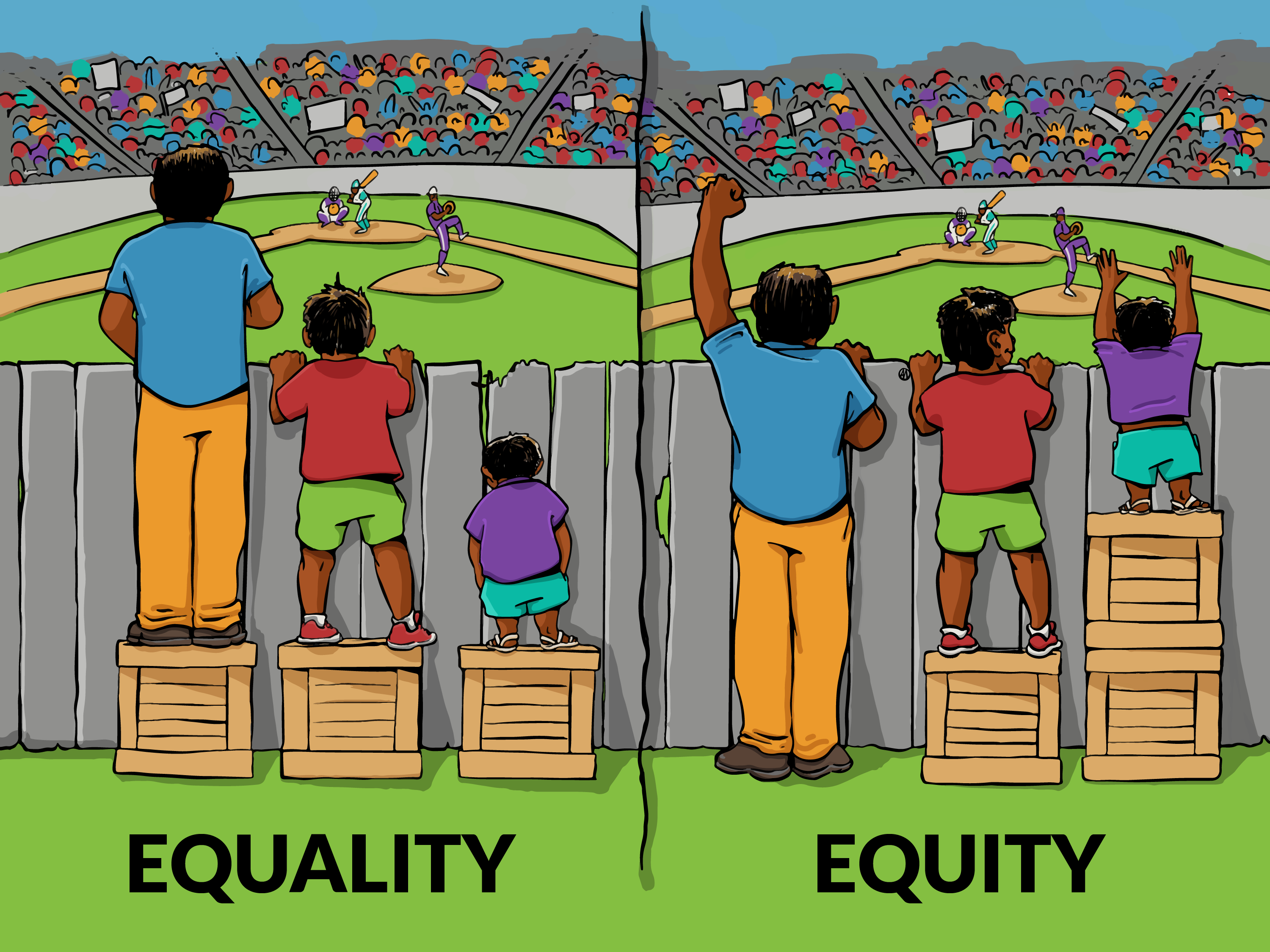

From the Interaction Institute for Social Change, by Angus Maguire.

✠     ✠     ✠

III.

Thanks be to God and my brother-in-law, I have a car again! I was in an accident late last year and my sedan was totalled, and my grandmother allowed me to borrow her minivan for a few months (she lives on the west coast, but had been considering moving out here, so the car was just here gathering dust otherwise). Then one night, my sister’s husband and I got together for beers, I mentioned in passing that I needed a car, and he offered to sell me his (or, more accurately, gave it to me at a stealing price, which will allow me to do other exciting things like register and insure it).

✠     ✠     ✠

IV.

As I believe I’ve mentioned in passing here before, I am slowly entering on a fresh attempt at celibate chastity. I’ve been seeing a counselor at Regeneration Ministries in Towson for a while, which has been really helpful. I was pretty skittish at first, because Regeneration used to have ties to Exodus, and I am six hundred percent done with ex-gay nonsense; but apparently they detached themselves even before the grand ex-gay implosion back in 2013, and the counselor I’m seeing has proven himself genuinely accepting of me as a gay man, and a trustworthy source of wisdom. There’s been no demonization of gayness, no language war, no homosexuality-equals-addiction lectures, no imposed farther-and-smother pseudoscience.

All the same, it’s been a challenging experience, just because dealing intimately with any profound element of ourselves is challenging. Our deepest impulses are powerful, and usually quite unfamiliar—after all, we live on the surface of our minds most of the time. Coming to understand the things that draw me to other men, sexually, affectionally, spiritually, that’s mysterious stuff. Not impenetrably so. But it is difficult; particularly because we bury so much pain in the recesses of our minds, and going in there with a lamp makes it start hurting again.


But that’s how healing works. And if I really do propose to be celibate, I need a healthy soul to do that with, an integrated soul, whose passions and instincts are under the governance of my will; and, both morally and practically, government must be by the consent of the governed.

✠     ✠     ✠

V.

God is weird and amazing. I mean, just think about it: the Mind that made, contains, and sustains literally everything wants to give Himself to me. That’s nuts. I wonder whether a lot of the darkness, pain even, that goes with pursuing God—or allowing yourself to be pursued by Him—is more a matter of being ‘stretched’ so that His infinity can inhabit your smallness, than it is of sin or imperfection or even mere immaturity.

I wouldn’t say that I’ve had locutions exactly, but if there’s anything I think He has wished to convey to me, it’s this: Do not do; simply be. Which is great, because it sounds all Eastern and shit, but it’s remarkably hard to not do. Of the two sisters, Martha’s behavior is far more obvious to all of us, in spirituality as much as everything else. I don’t think this is because of the ‘works righteousness’ theory of most Protestantism, the idea that the most basic human impulse (apart from grace) is to earn our salvation; I don’t find that idea justified by Scripture or by the observable facts of human religion. I think it’s just because doing things is easily graspable to our minds, and being is not. Consider for a moment that Descartes’ notorious Cogito ergo sum literally reasons from the fact of doing to the fact of being—which is about as cart-before-the-horse as you can possibly get.

The MediƦvals are underrated here. They had learned well from their Master that Mary had chosen the better portion, that doing proceeds from being, and that contemplation was a deeper thing than action. To be, that is, to be still in intentional receptivity to God, waiting upon Him to act, is quite the challenge. Which is ironic, since challenge implies doing, and … sigh

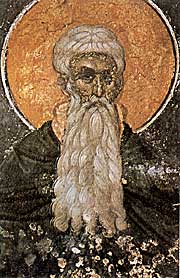
Abba Lot went to see Abba Joseph and said to him, ‘Abba, as far as I can I say my little office, I fast a little, I pray and meditate, I live in peace and as far as I can, I purify my thoughts. What else can I do?’ Then the old man stood up and stretched his hands towards heaven. His fingers became like ten lamps of fire and he said to him, ‘If you will, you can become all flame.’1

✠     ✠     ✠

1The Sayings of the Desert Fathers, Joseph of Panephysis §7 (p. 103), trans. Sr Benedicta Ward, SLG.

Tuesday, July 26, 2016

The Terrible Prospect of a Civilized Country

‘What does he want?’ I asked a group of men gathered around the cake table as I set down the pot. ‘This man in Germany, does he want war?’ I knew it was poor talk for a party, but somehow thoughts of Willem always set my mind on hard subjects.
A chill of silence fell over the table and spread swiftly around the room.
‘What does it matter?’ a voice broke into it. ‘Let the big countries fight it out. It won’t affect us.’
‘That’s right!’ from a watch salesman. ‘The Germans let us alone in the Great War. It’s to their advantage to keep us neutral.’
‘Easy for you to talk,’ cried a man from whom we bought clock parts. ‘Your stock comes from Switzerland. What about us? What do I do if Germany goes to war? A war could put me out of business!’
And at that moment Willem entered the room. … But every eye in the room had settled on the figure whose arm Willem held in his. It was a Jew in his early thirties in the typical broad-brimmed black hat and long black coat. What glued every eye to this man was his face. It had been burned. In front of his right ear dangled a grey and frazzled ringlet, like the hair of a very old man. The rest of his beard was gone, leaving only a raw and gaping wound.
‘This is Herr Gutlieber,’ Willem announced in German. ‘He just arrived in Hilversum this morning. Herr Gutlieber, my father.’
‘He got out of Germany on a milk truck,’ Willem told us rapidly in Dutch. ‘They stopped him on a streetcorner—teenaged boys in Munich—set fire to his beard.’
Father had risen from his chair and was eagerly shaking the newcomer’s hand. I brought him a cup of coffee and a plate of Nollie’s cookies. …
Herr Gutlieber sat down stiffly on the edge of a chair and fixed his eyes on the cup in his lap. I pulled up a chair beside him and talked some nonsense about the unusual January weather. And around us conversation began again, a hum of party talk rising and falling.
‘Hoodlums!’ I heard the watch salesman say. ‘Young hooligans! It’s the same in every country. They police’ll catch up with ’em—you’ll see. Germany’s a civilized country.’


—Corrie ten Boom, The Hiding Place1


✠     ✠     ✠


I’ve come to a decision that I’d like to share with my readership, in hopes of persuading you to do the same if you’re in a position to do so. Said decision is about Donald Trump, and what I mean to do about him, and what I will beg God to do about him.


Normally, I do not vote. This is because of my anarchist beliefs. Since I believe that government ought to be as limited and decentralized as possible (and, correspondingly, that countries as big as the US—or a whole lot of others—ought to be broken into multiple entities), I consider direct participation in its politics a kind of hypocrisy on my part. If what you want is a new system, implicit coƶperation with the normal functioning of the old system is, at best, a pretty mixed signal.


However, if there seems to be a real danger that Donald Trump will win the presidency this November, I will vote.


Now, since I live in Maryland, I don’t think there’s any real reason to fear (or hope) that my vote will sway the state one way versus another. It’s a solidly blue state, and can probably be called for Hillary Clinton even now, in the midst of the scandal of the DNC’s sabotage of the Sanders campaign. Partly for that reason, if I vote, I plan to vote for the Green Party candidate, Jill Stein2; because if I vote at all, it’ll be to make a point to a possible Trump administration.


That point being: I dissent; I reject; everything about such a government that is not merely ridiculous is abhorrent to me, and I will not give it the smallest hint of my approval.


Except this. This can stay.


Trump is unfit to lead this country. Trump is unfit to run a sandwich shop. His business ventures have been bankrupted five times in twenty-three years; nor, as he likes to imply, did he build his business from scratch—he inherited it from his father, which wouldn’t matter except that he so badly wants to fudge any and all facts he dislikes. His numerous lawsuits for defamation (of which he has lost many) suggest it, as do the thirty-odd liens acquired against his properties by the New York State Department for nonpayment of taxes. All this even apart from the mere fact that it’s hard to understand any honest man, in any business, being engaged in over three thousand lawsuits. He is a chronic liar. Tony Schwarz, Trump’s ghostwriter for The Art of the Deal, recounted the headache of getting any kind of facts out of Trump for the ostensible autobiography they were writing.


After hearing Trump’s discussions about business on the phone, Schwarz asked him brief follow-up questions. He then tried to amplify the material he got from Trump by calling others involved in the deals. But their accounts often directly conflicted with Trump’s. ‘Lying is second nature to him,’ Schwartz said. ‘More than anyone else I have ever met, Trump has the ability to convince himself that whatever he is saying at any given moment is true, or sort of true, or at least ought to be true.’ … ‘He lied strategically. He had a complete lack of conscience about it.’ Since most people are ‘constrained by truth,’ Trump’s indifference to it ‘gave him a strange advantage.’


He has been accused of multiple rapes, in conjunction with Jeffrey Epstein, a confirmed sex offender against underage girls. He has declined to dissociate himself from—often enough, actively justified—acts of violence on the part of his supporters, notably against blacks and Muslims. He has frankly refused to dissociate himself from neo-Nazi organizations and the Ku Klux Klan. He has ordered security guards at his rallies to confiscate (that is, steal) the property of protesters. He has openly discussed plans to commit war crimes, up to and including the mass murder of women and children. There is simply no truth, no law, no decency, and no right that this man can be trusted to respect.


The only cases I’ve seen made for him are these. First, that he’s a political outsider and therefore a welcome relief from the corruption and cynicism of Washington. Far be it from me to praise the corruption and cynicism of Washington, but replacing a familiar crook with an incompetent egomaniac and professedly worse crook on the grounds that it’ll make a change is, well, not technically a false line of reasoning.


Second, that he’s pro-life. He isn’t. The evangelical vote has been tied to the pro-life cause since the early seventies, and in my view with good reason, though I would point out that a holistic pro-life outlook requires certain attitudes toward social welfare and war, as well as abortion. Unfortunately, that’s led to the delusion that, because pro-life politicians have usually been Republicans since the Reagan era, therefore any Republican politician is pro-life and any Democratic one is pro-choice, and therefore an evangelical must always vote for the GOP. But even if this had been true through the 1990s and 2000s, which it wasn’t, it has no bearing on Trump. The most he’s been able to say is that he is pro-life ‘with qualifications’: i.e., not pro-life.


Third, that all his demagogic rhetoric must be merely a tactic; that it conceals some deeper personality and thought. Well, the man who wrote his autobiography doesn’t think so. And since all we’ve had so far is the aforesaid demagoguery, I think it argues an immense faith to seriously believe that there’s more; and I don’t like to make human beings the object of that kind and degree of faith.


And why would I vote for Jill Stein? Well, the only stance of hers that I know I disagree with is that she is pro-choice: her general social policy is attractive to me. That she is pro-choice is a serious problem for me—I don’t, can’t, believe that any human right is more fundamental than the right to live, or that the liberty of one person can reasonably be thought of as abrogating the life of another. However, she has also made a point, when asked about her views of abortion, of discussing the needed improvements in the welfare and resources of pregnant women, improvements that (in her words) would make abortion ‘less necessary.’ If implemented, that would save more lives than any legal act since the partial-birth abortion ban of 2003; and that makes me able to countenance the compromise involved even in a professedly symbolic vote for a pro-choice politician.3


But, if I decide to vote, it won’t be because I think President Stein could be sworn in in 2017. It will be to say, loud and clear: This is the America I’d want to live in. Not Trump’s. I reject, loathe, and defy everything about him.


If he’s elected, I fear for my neighbor’s safety: my black neighbor; my Muslim neighbor; my immigrant neighbor; my international neighbor on the other side of the world. I want it known for whom I will lift my hands in prayer—and for whom I will do whatever I’m able, to help them lead safe, happy, long lives.


✠     ✠     ✠


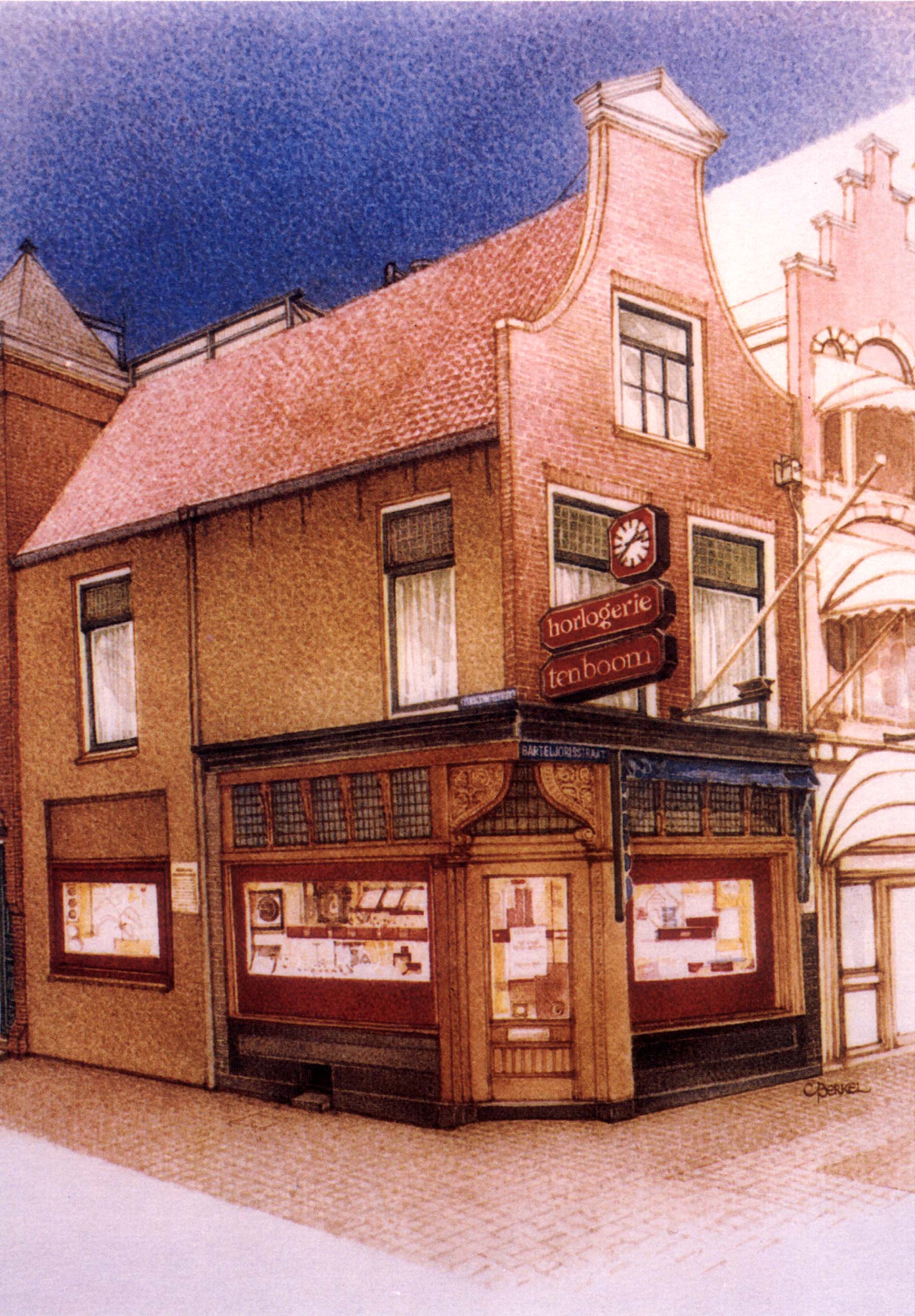
1This party, celebrating the one hundredth anniversary of the Ten Boom Watch Shop, took place in 1937. The state of Israel gave Corrie, and later her sister Betsie and father Casper (who died during the war, the former in the Ravensbrück concentration camp), with the title Chasidey umot ha-Olam, ‘Righteous Among the Nations,’ for their work in concealing Jews and helping them escape during the Holocaust.
2Most probably. I haven’t ruled out Darrell Castle, the Constitution Party candidate, who is credibly pro-life; however, his isolationist words about securing the US border (gotta watch those hooligan Canadians) and withdrawing from the UN and NATO are rather alarming to me.
3The USCCB guidelines for Catholic voters are that, when every plausible candidate advocates a grave evil, the voter may either conscientiously abstain from voting, or decide on practical grounds which one is likely to do the least evil. Since the only plausible candidates are precisely Clinton and Trump, both of whom advocate grave evils—abortion access in Clinton’s case, basically everything he says in Trump’s—I am considering the pragmatic option, though only as a symbolic protest.

Tuesday, July 19, 2016

Utopia vs. Hope

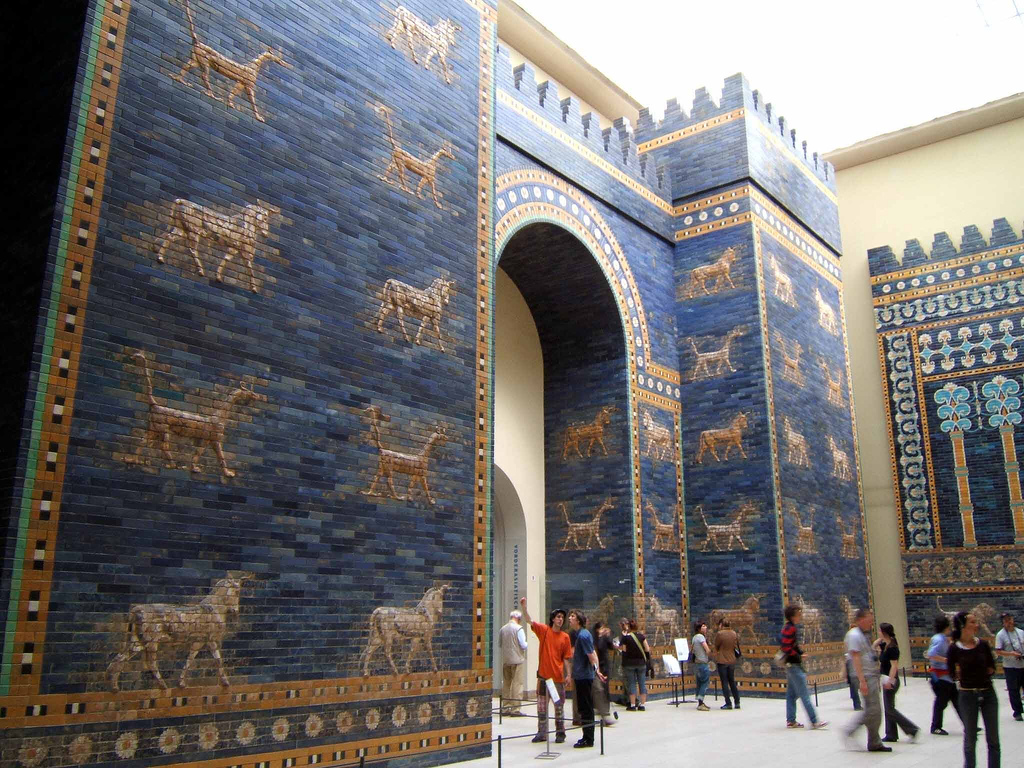
The translatour of Orotius
In tyll his Cronicle wryttis thus
That quhen the Sonne is at the hycht
Att nonne when it doith schyne most brycht
The schaddow of that hydduous strenth
Sax myle and more, it is of lenth
Thus may ȝe iuge in to ȝour thocht
Gyfe Babilone be heych or nocht.


The translator of Orosius1
In chronicle has written thus,
That when the Sun is at the height,
At noon, when it doth shine most bright,
The shadow of that hideous strength,
Six miles and more it is in length;
Thus may ye judge within your thought
If Babylon be high or not.


—Sir David Lyndesay, Ane Dialog betuix Experience and ane Courteour


✠     ✠     ✠


2016 has been a rough year so far, and seems poised to go on being rough. There was the mass shooting in Orlando in June, the single largest mass shooting and the biggest hate crime in our history.2 Rather a disappointment than a tragedy is the fractured outworking of the pan-Orthodox Holy Synod in Crete last month. A failed rebellion in Turkey has caused hundreds of deaths, thousands of arrests and detentions, and has brought about talk of reinstating the death penalty from the Turkish president. The hideous spectacle of the Trump campaign goes on (brightened somewhat by his hilarious choice of logo): this egotistical and bullying piece of human slime, threatening to sit in the Oval Office and apply his long history of bankruptcies, lying, and incompetence to the government of a nation of hundreds of millions and the second-largest nuclear arsenal in the world. Less immediately disastrous, though to me even more sickening, is watching masses of evangelical Christians, the people who raised me and first taught me to know and love Jesus,3 talk themselves into voting for Trump on the fantasy premise that he is in some way pro-life or otherwise better than Mrs Clinton4; or, more nauseating still, watching them embrace him with enthusiasm as a populist and a nationalist, not to say a xenophobe and an aspiring war criminal (as it is written, the name of God is blasphemed among the Gentiles because of you). And worst of all, maybe, are the ISIS attacks in Zliten, Jakarta, Brussels, Baghdad, Istanbul, and Nice, and their continued terrorization, enslavement, and mass murder of Christians, Jews, Shiites, Yezidis, Kurds, Copts, women—anything with a pulse that isn’t themselves—in Syria and Iraq.


It’s a challenge to believe in any earthly justice, peace, or decency in times like these. It’s a challenge to hope for them, even. The merely rational desire to erect a good, free society looks from here like it’s coming to pieces. The only alternatives, to my knowledge, are despair and mysticism, each of which comes in two forms.


The most obvious is despair in its simplest, plainest form. Give up on the notion of a good society, now or ever, and submit to the darkness: by trying to carve out an enclave for yourself that can’t be defended but might go unnoticed, if you’re careful; or by trying to become the biggest, or smartest, or fastest, or richest bastard around so that you can at least have the advantage; or by just accepting the horror and committing suicide, literally or spiritually. Hope deferred maketh the heart sick, but if you let the heart die, you don’t feel sick any more, right? So you … win?


This form of despair seems relatively uncommon among Americans. We are an incurably upbeat people; there’s a reason that lines like ‘We must do without hope’ didn’t make it from the Lord of the Rings books to the silver screen. What we are very prone to is the complex and deceitful version of despair, which is utopianism.


We all know the person, liberal or conservative (but let’s be honest, probably liberal), who believes that enough education, enough democracy, enough gender equality, enough freedom for the market, enough regulation of the market, enough gun control, something, will bring our society blissful harmony. Let us build a city and a tower, whose top may reach unto heaven; and let us make a name, lest we be scattered abroad upon the face of the whole earth. You see this constantly in the United States today. The frequent expressions of astonishment that we haven’t come further away from barbarity with respect to racism, or sexism, or social responsibility, are a symptom of it; How can this awful thing be happening in 2016? rests transparently on the premise that evil should weaken and fade of its own accord as time goes on, which is as utopian as premises get.


It may sound strange to call this despair but that is what it is. Utopianism has no hope; that is, it lacks the supernatural virtue of hope, which looks to the next world both after and within this one for a pattern and a purpose. It fails to recognize two things: first, that no matter how healthy, smart, well-adjusted, and entertained we get, human beings are always going to want something that this world can’t satisfy—a fact attested by the impulse toward religion and mysticism that, while not present in every person, is observably present in every age, culture, class, and vocation. And second, that no matter how well-off we get, human beings have that pesky little problem of being free to do (or at any rate attempt) what we like; and another observable fact is that, sooner or later and no matter how nice things were to start with, somebody decides to exercise that freedom to screw the pooch. Or, more briefly: nice things don’t stay nice forever, because people.


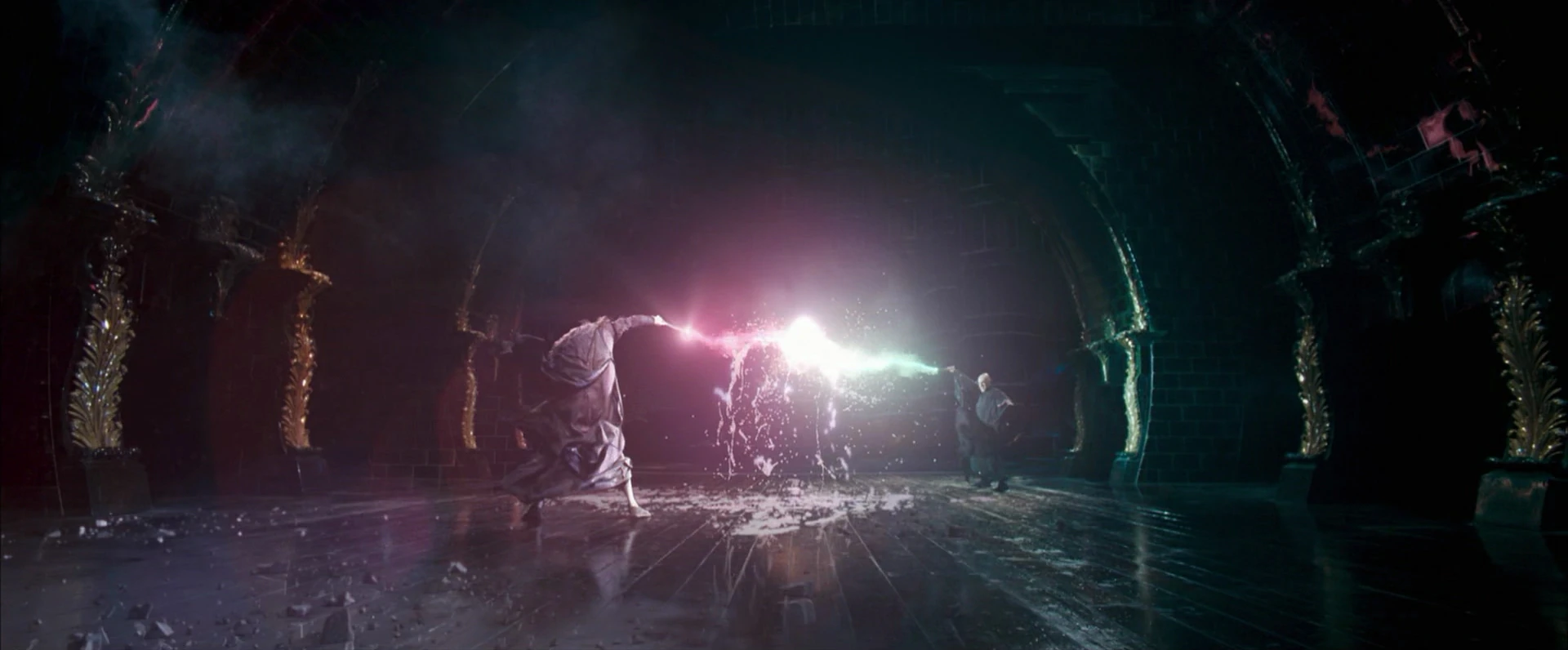
That’s the appeal of utopia. It holds out the darling illusion that, if you just fine-tune the system enough and have all the right parts, it can solve the problem of people being people. That the system was designed, and must be built and operated, by people is generally not much attended to; which is how you get things like the Committee of Public Safety (bodycount: approximately 42,000). But the idea that the misfortunes and pain of the world can be eliminated by adequate control—and that the only alternative to thus eliminating them is to be overcome by them—dies very, very hard. And that idea is born of despair, like that J. K. Rowling represented in Voldemort.


‘You do not seek to kill me, Dumbledore?’ called Voldemort, his scarlet eyes narrowed over the top of the shield. ‘Above such brutality, are you?’
‘We both know that there are other ways of destroying a man, Tom,’ Dumbledore said calmly, continuing to walk towards Voldemort as though he had not a fear in the world … ‘Merely taking your life would not satisfy me, I admit—’
‘There is nothing worse than death, Dumbledore!’ snarled Voldemort.
‘You are quite wrong,’ said Dumbledore, still closing in upon Voldemort and speaking as lightly as though they were discussing the matter over drinks. … ‘Indeed, your failure to understand that there are things much worse than death has always been your greatest weakness—’5


I’m a leftist myself, and, more to the point, a human. I get the appeal. Indeed, part of the reason I’m an anarchist is to steer clear of utopian statism,6 because it’s only too plain from history, and my own heart, that neither human beings nor the institutions we build can be relied upon in the long run. Sometimes not even in the short run. The thing that worries me about fellow leftists today, especially the younger ones, is that, when utopianism comes crashing down around their ears—when their world less regresses, than gives in to the temptation, of barbarism—it may just break their spirits. The path of least resistance for the disillusioned utopian is to succumb to the simpler form of despair; it’s easier to move from one kind of despair to another than it is to move from despair to hope.


If the foundations be destroyed, what can the righteous do? cried the psalmist. The alternative to despair is mysticism: i.e., in this context, seeking for or appealing to some kind of meaning and rightness that lies outside the world we experience,7 that isn’t subject to the corruptions and waverings of humanity. All of us seem to be born with this bent, all or as near as makes no difference—the playground cry That’s not fair is as dogmatic as a papal bull, and as unmoved by mere brute fact as the most pie-in-the-sky utopianism. In those who stick to it, or return to it, mysticism seems to take two chief forms.


First, there’s the kind that most people think of when they hear the word mysticism, the Quietistic form.8 Many Eastern religions are representative of this: Buddhism and Jainism, with their emphases on escaping suffering by renouncing and ignoring those concerns that most mortals spend their energy on and whose notion of bliss is the eliminating of all passion, are representative. The philosophy of Epicurus, whose views on pleasure defined the simple absence of pain as higher than any positive pleasure, has a family resemblance too.


There are lots of intellectual arguments against that kind of mysticism, but my gut reaction to it is simply that it seems horribly boring. If bliss not only requires but consists in forsaking literally everything I’ve always cared about, why is bliss desirable?9 Why is it even called bliss? An apple sounds more interesting; even, or especially, if every apple is the Forbidden Fruit to such philosophies. The Beatific Vision that Catholicism claims to offer is admittedly thought to be different from an apple, but any any rate it’s more like an apple than it is like nothing. I can be interested in something that surpasses my imagination, but not in something that’s just irrelevant to it.


The final response may loosely be called prophetic mysticism. It resembles mere despair, to the extent that it admits, even insists, that this visible world is a vale of tears, and while it can be temporarily improved it cannot be permanently perfected. It resembles Quietistic mysticism, to the extent that it seeks the ultimate purpose of humanity in a realm that transcends the visible world. It even resembles utopianism, in that it is willing to fight or toil for real improvement in the visible world. But it is none of these things, nor is it just a compromise or an alternation between them.


The mark of prophetic mysticism is that, rather than just forsaking or ignoring this world for the sake of the transcendent one that meaning resides in, it locates this world within that one. What we do in this world is not ultimate, and there is more to life and existence than what we see. But that invisible world, that ultimate world, sustains and animates and exalts this visible one. Because the there-and-forever matters more, therefore the here-and-now matters in its own way, for the latter participates in the former, like an apple blossom participates in the tree.


This kind of mysticism is usually theistic, for obvious reasons, though I don’t know that it needs to be. Regardless, I think it’s (1) true, and (2) the only practical response to the world as we see it. To accept all these evils is abhorrent; to pretend they aren’t there, or aren’t powerful, is stupid; to ignore them is repulsive. The only alternative is prophecy.


And what does that mean in the here and now? Primarily this: strive to improve things, because real improvements, while they won’t last forever, are possible. But remember that they won’t last forever, nor be perfect; you’re doing this because better-ness is, as the word implies, better, and small things count too. Don’t pin your hopes on the idea of perfecting this world—it isn’t going to happen, and when you realize that, if you’ve invested everything in a perfect world, that realization will crush you to pieces. But, if prophetic mysticism communicates with any invisible world of ultimate truth at all, then the small things, the marginal improvements, the decision to act on principle instead of merely on advantage, those things are all worth it.


✠     ✠     ✠


1Orosius was a priest, historian, and theologian from Roman Spain, active chiefly in the early fifth century, and a personal acquaintance of St Augustine and St Jerome. His Seven Books of History against the Pagans, a formative work for MediƦval approaches to history, is probably what Lyndesay has in mind here, though what translator he means I can’t account for.
2Unless you count all that theft, deportment, and genocide we did to the Cherokee, the Lakota, the Massachusett, the Shawnee, the Ute, &c. But I think they’re cool about it.
3Not, thanks be to God, the people who literally taught me these things; in fact, my mother specified that the only Mothers’ Day gift she wanted from her children was a promise not to vote for the blonde-toupĆ©ed beet.
4My parents suggested that this election was paralleled, not to say foreshadowed, by the tale called The Lady or the Tiger.
5Harry Potter and the Order of the Phoenix, p. 718. Cf. basically everything else in the Harry Potter series. (I can’t help wondering whether the simple bluntness of Dumbledore’s You are quite wrong here owes something to Mark 12.24-27.)
6Not that there isn’t a superabundance of utopian anarchists as well.
7I’ve used the term mysticism rather than religion here for a few reasons. One is that, while most forms of mysticism (in the sense I’m using the word) arise in a religious context, that context is sometimes irrelevant and occasionally hostile; Plato, who has been the largest non-Christian influence upon Western mysticism, sought an entirely philosophical form of mystical truth and experience. We now say that Plato’s concept of the Forms ‘has a religious flavor,’ which is really a testament to what a different thing religion is to us than it was to him.
Another is that, while only a minority of individuals or societies are generally irreligious, the number of people who are not consciously or deliberately mystical—i.e., engaged with some idea of the purpose of life that goes beyond security and contentment—is probably much higher. Put more simply, there are plenty of people who subscribe to religions but aren’t noticeably mystical. And conversely, although they probably wouldn’t describe it as mysticism, there are plenty of agnostics and atheists who are thus engaged with a transcendent purpose in life.
8Quietistic, rather than just Quietist, because the Quietists were a thing of their own. History’s annoying sometimes.
9This may betray a failure to understand the (apparent) examples of Quietistic mysticism that I’ve given, such as Buddhism. However, to the extent that these examples don’t treat the annihilation of all familiar desires as the ideal, to that same extent they’ve ceased to have the Quietistic character I’m critiquing.